Printing and More Printing for Quilts

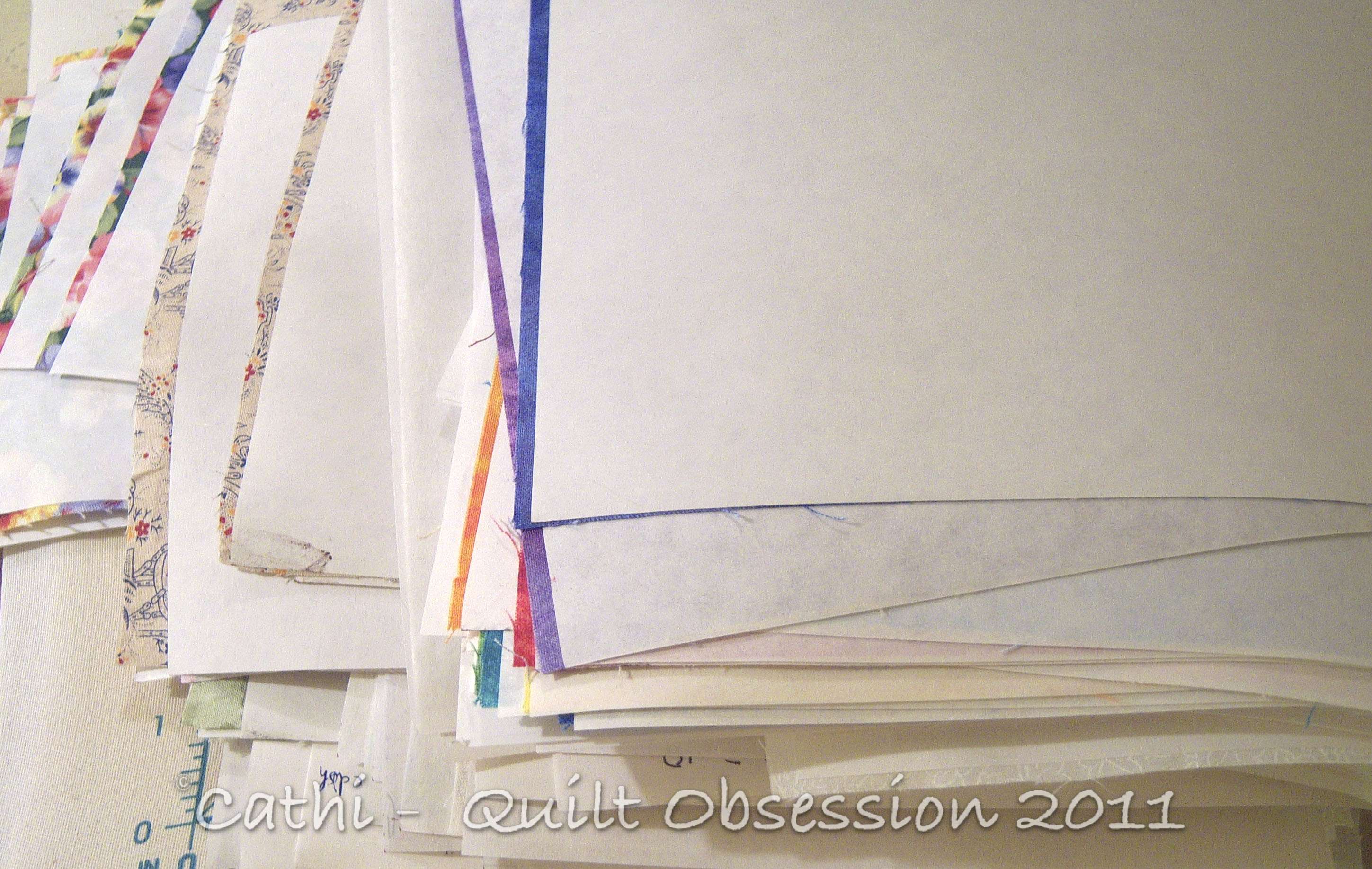
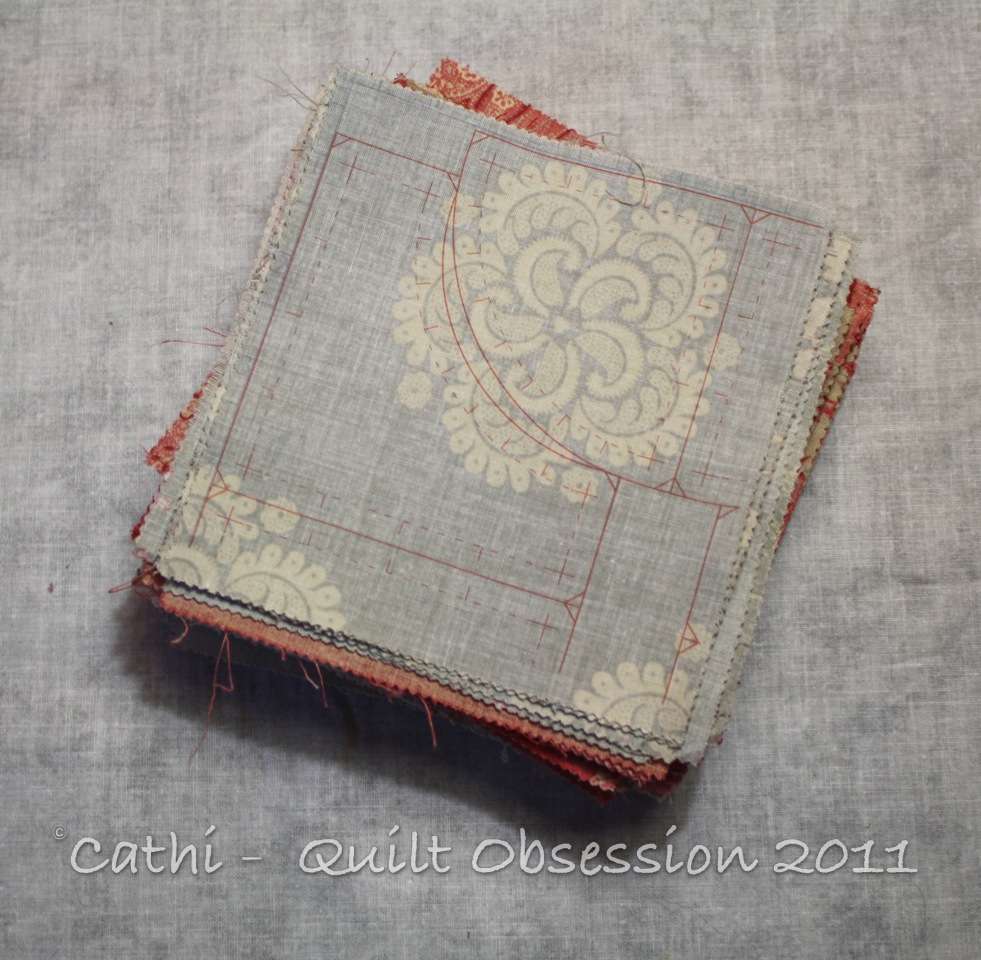
What’s that?  It’s the stack of fabrics I printed over the weekend for the Scrappy Star, Twinkling Stars, Summer Picnic Dish, Harpsichord and Joseph’s Coat quilts. The last couple of weeks I’ve been identifying the size I want certain projects to finish at. WIth the size of each determined, it took only a few minutes to figure out what I needed to print to reach that goal. Sometimes I print only a few of each shape for a couple of blocks until I’m sure I want to make it into a quilt. Once that decision is made, I prefer to get everything printed at once and get the shapes cut and into a box ready to stitch such as I’ve done for the Stormy Seas quilt.

This gives you a glimpse of the some of the shapes I printed for the Harpsichord, Joseph’s Coat and Summer Picnic Dish quilts.  Using the various Inklingo collections to prepare my templates makes it so easy to print on any number of fabrics, even black fabrics as most are markedly lighter on the back than the front and the templates will show up perfectly with one of the many choices of ink colours.

Almost all the shapes are now cut and ready to be put in a box, along with the matching threads, for the Twinkling Stars quilt, which I plan on trying to finish between now and the end of the World Series.

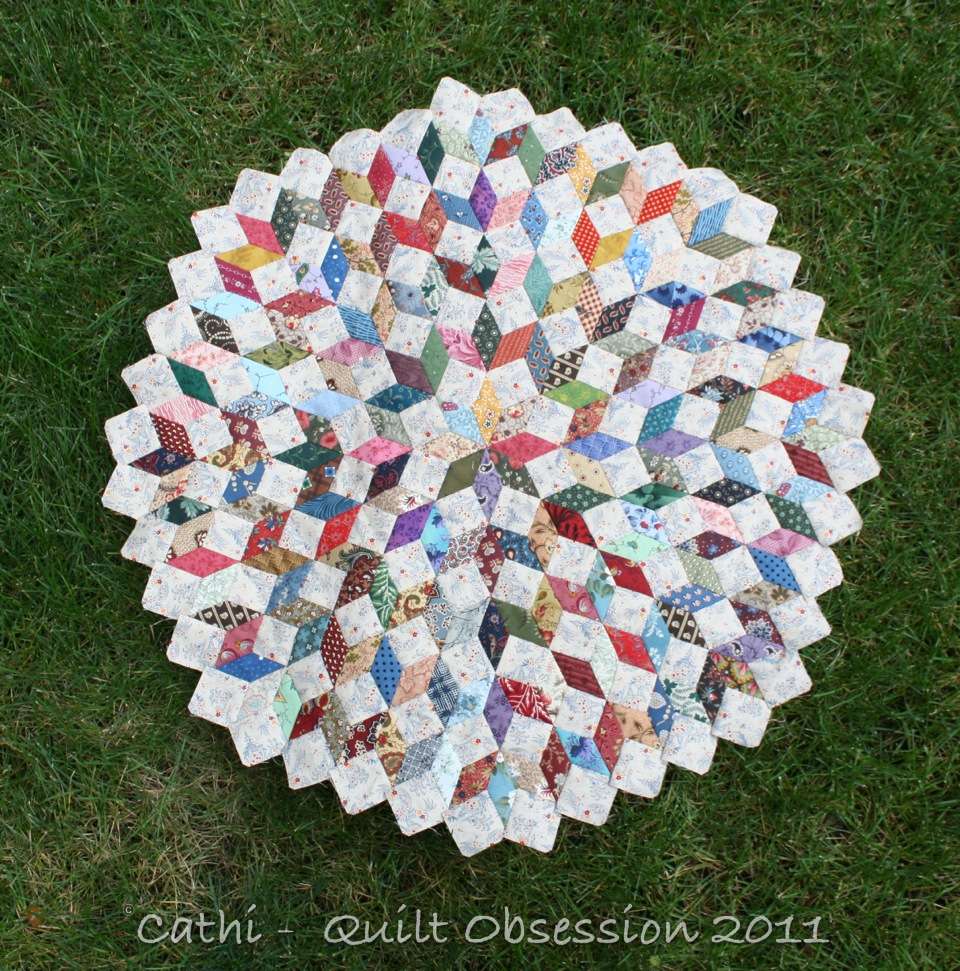
Because it was such a beautiful day on Monday, we took Scrappy Star out to the roof garden to photograph. It’s growing and is now 24″ across.  It will be at least twice that width before I’ll stop adding rounds. I needed more of the squares, which was another reason for all the printing that was done on the weekend.

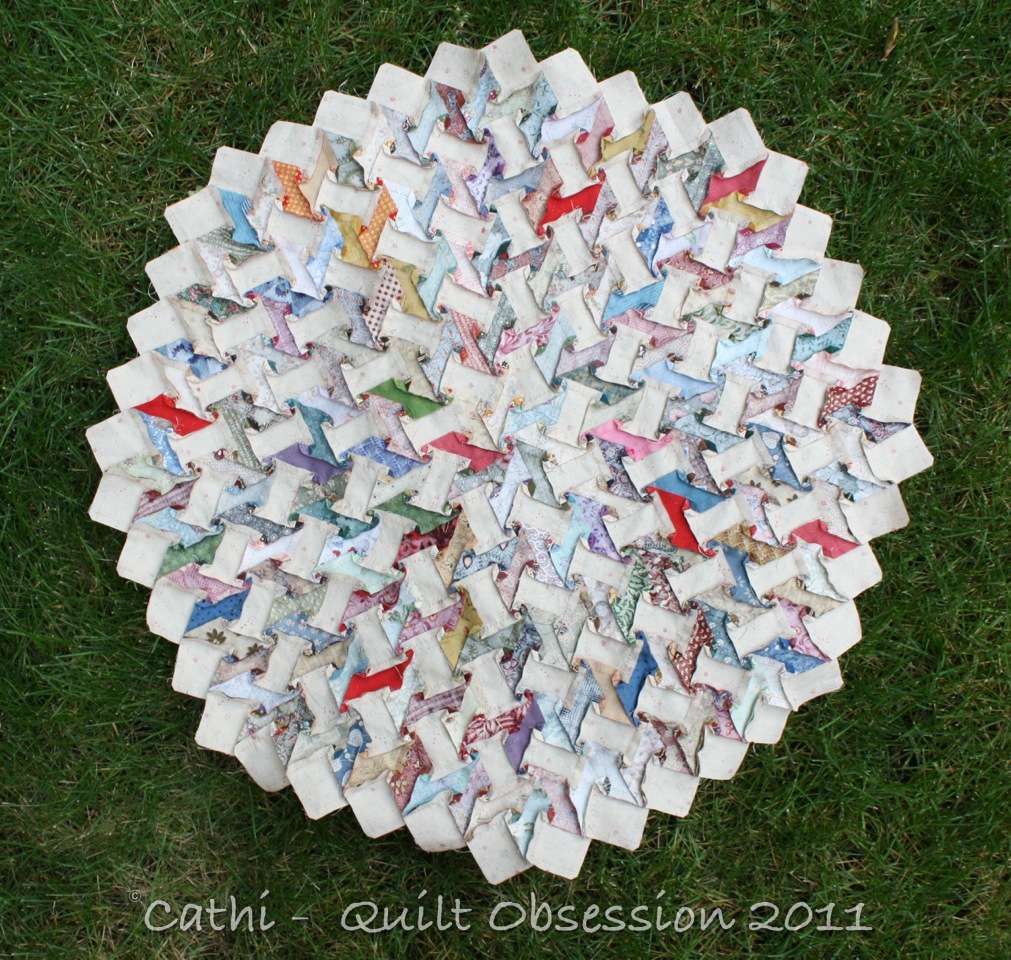
The back after pressing.

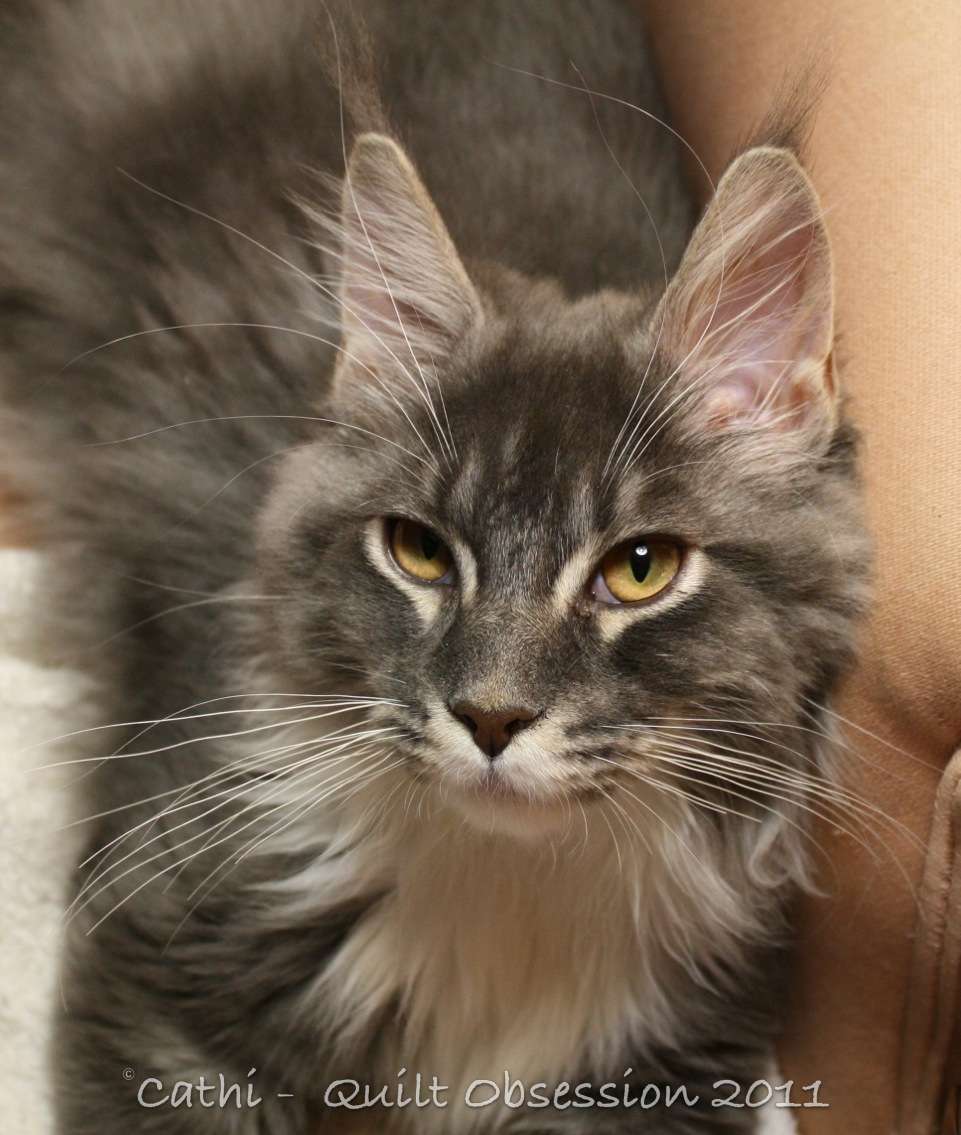
Baxter is starting to look like a grown-up kitty in some photos, although his antics are still pure kitten antics. I think he was trying out his hypnotic kitty look in this photo.

Stitching a Yin Yang Block Tutorial — Lots of Photos

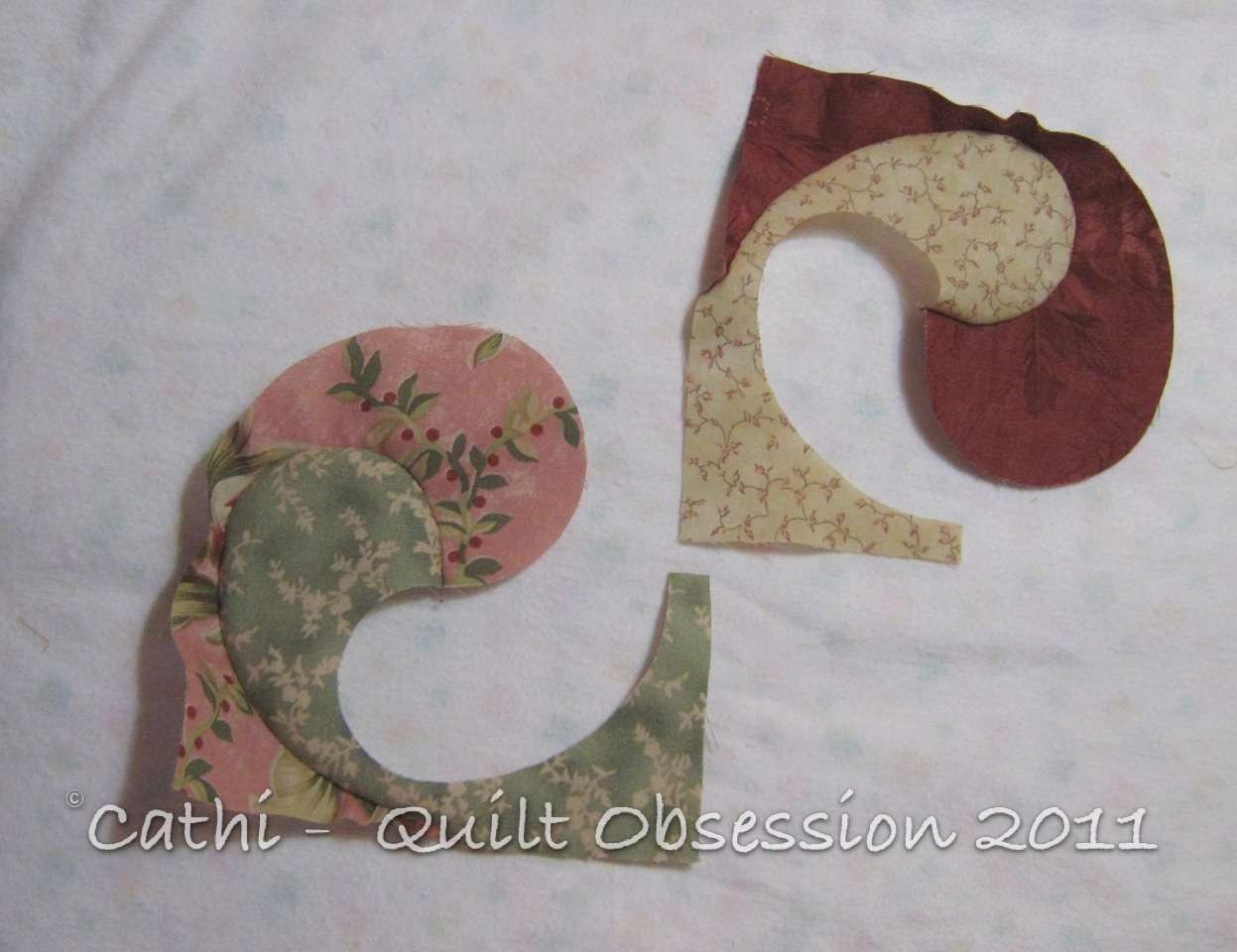
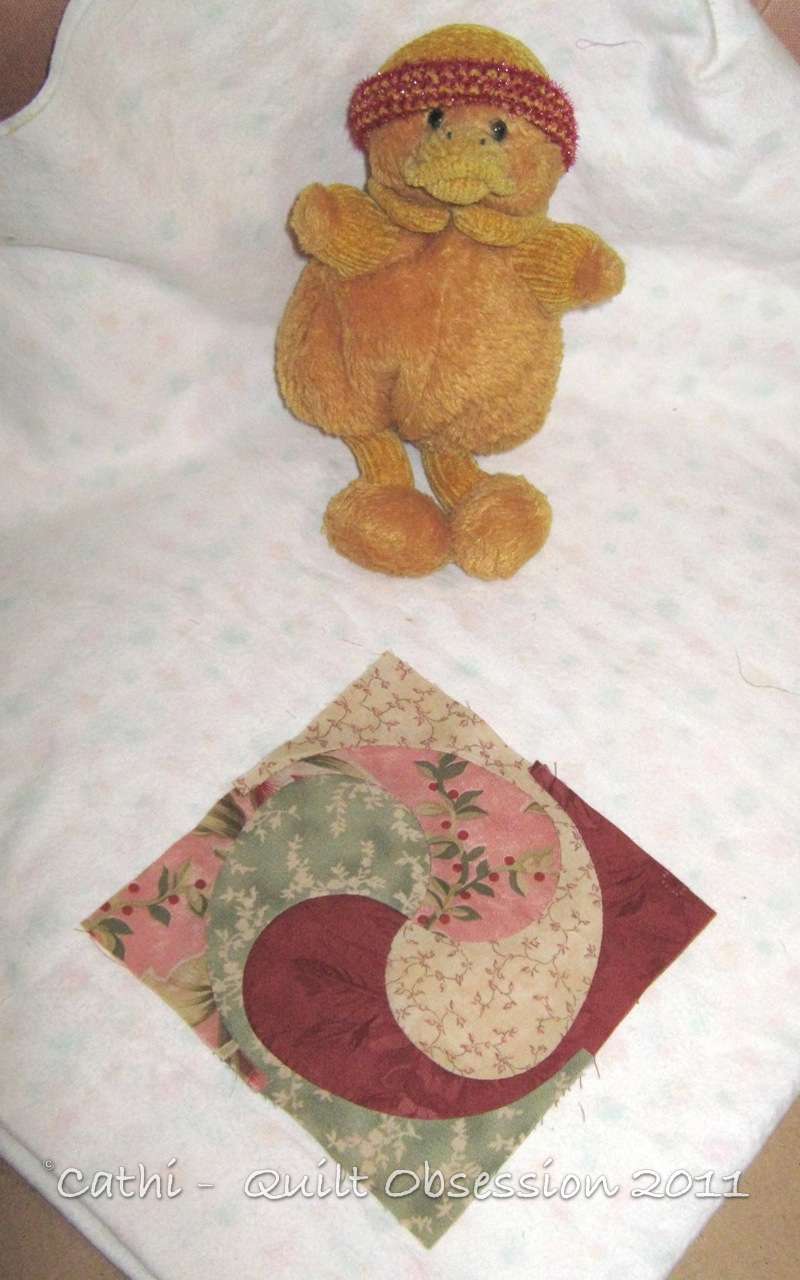
It was inevitable.  I had to try out a Yin Yang block in my favourite of fabrics, shabby chic. As I have been asked some questions about how I put these together, I decided to do this little tutorial. The block is composed of four pieces of one identical shape. All the photos can be enlarged by clicking on them.

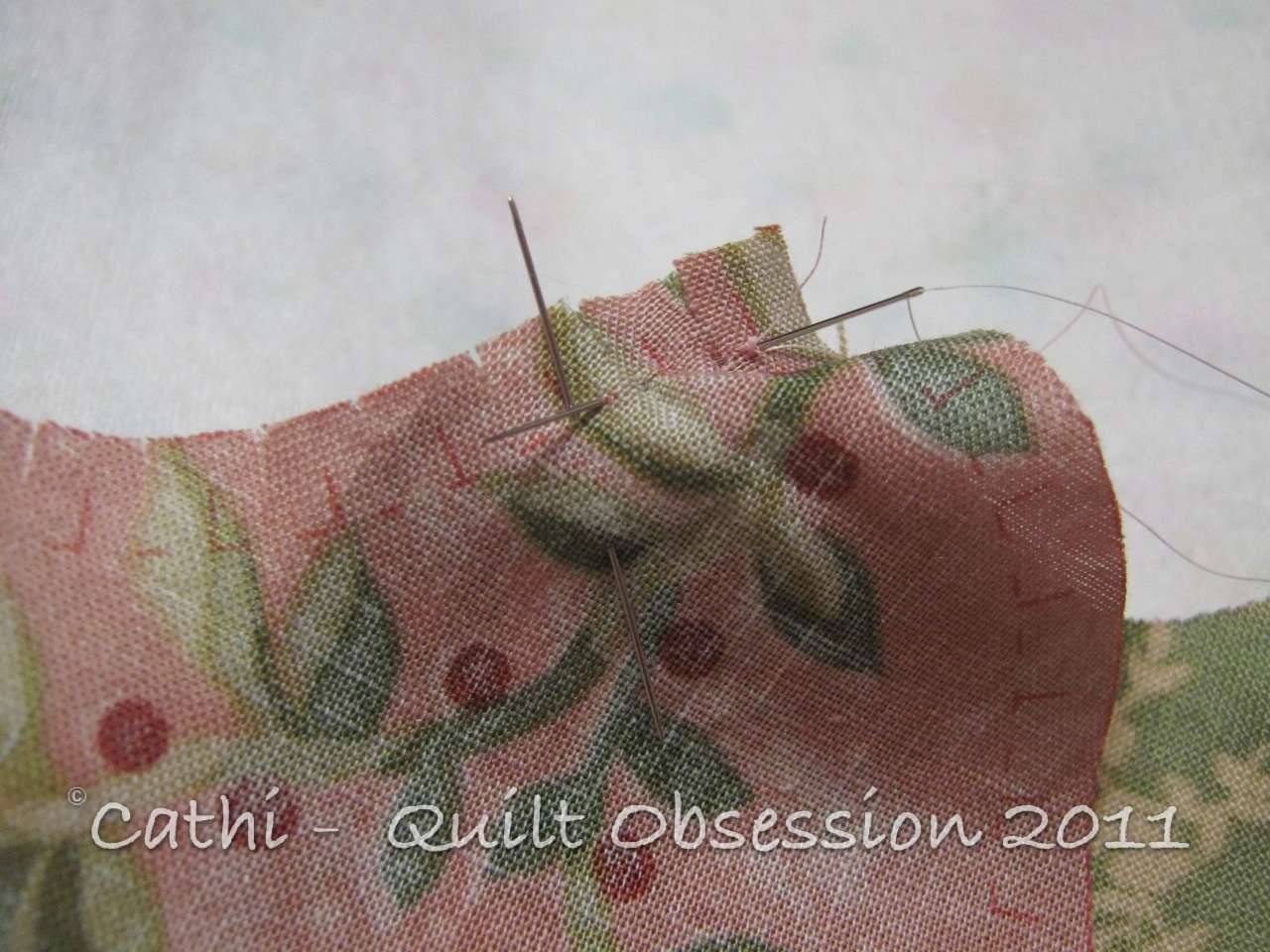
This shows the back of one piece and, if you click on the photo to enlarge it, you can see the matching points. They are what make this block go together like magic. I tried doing them before the Inklingo collection came out, and no matter how fine a line I drew or the matching points I put on, it just wasn’t fine or precise enough. With Inklingo printed matching points and crosshairs, there’s no worries at all — it all just fits together like a dream. I clip between the matching points on each concave curve to a few threads above the stitching line.
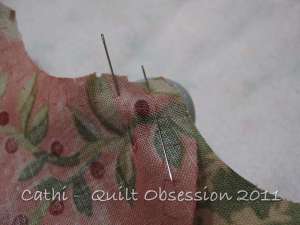
There are other ways to stitch these. My method is to start at the large curved end of the piece. I use two #12 sharps and pin at the crosshair and then at the first matching point.
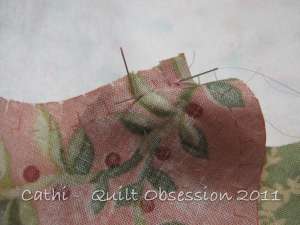
I start by making my quilter’s knot and inserting the needle a stitch length over from the crosshair. I’ve found this works well when joining other pieces as the knot is not right at the crosshair. Then I take the needle to the back, back through to the front at the crosshair, make a quick back-stitch and carry on down to the first pin/needle. There are a lot of matching points and they are the secret to making the curve as smooth as can be.

As each matching point is reached, I take a little back-stitch and keep stitching. With a curve like this, I try to use the smallest stitches I can.

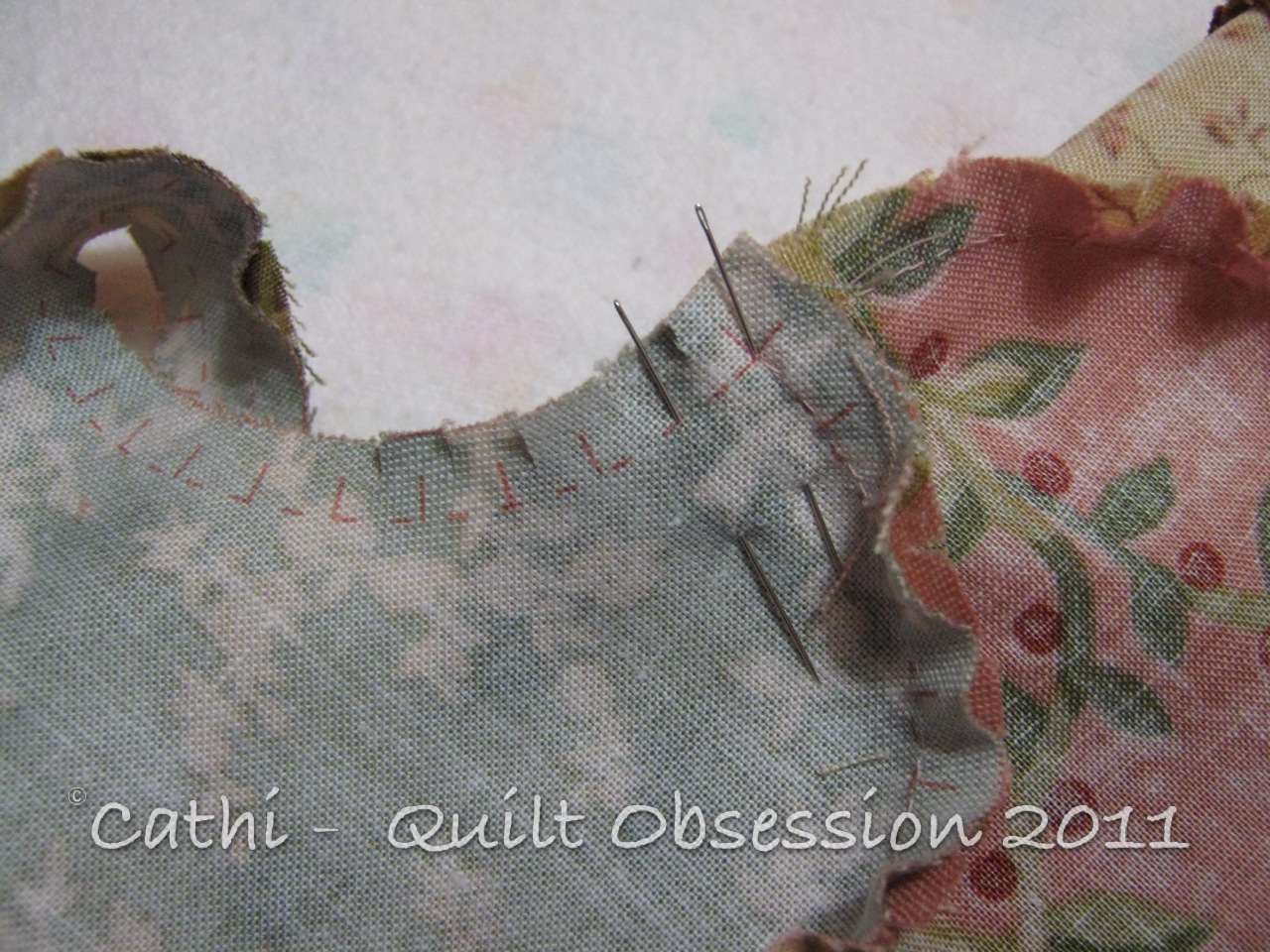
This photo shows the clips into the seam allowance done on the concave seam allowance of one of the pieces.
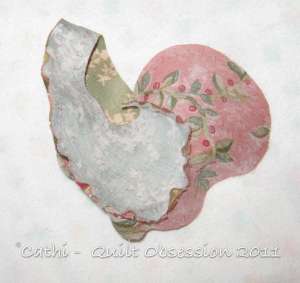
Once the first two pieces are stitched together, this is what they look like. As I’m hand piecing, I leave the pressing until the end.

Having stitched a few of these blocks, I’ve found that stitching them together into pairs and then joining those pairs works best for me.
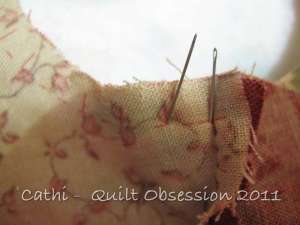
The next step is joining the two pairs together. Once again, I start at the large, curved end and pin with two #12 sharps — one at the crosshair and one at the first matching point.

After stitching the third seam, the block now looks like this.

I line up the fourth and final seam and pin through the crosshair and first matching point.

Start with the thread slightly over from the crosshair and take the needle to the back.

As this is the last of the seams to stitch, I circle the intersection by inserting the needle through the first pair of fabrics at the crosshair and drawing it through. Circling the intersection ensures that there’s not a little hole at the intersection of all four shapes.
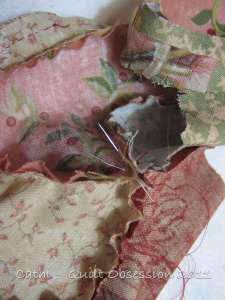
Then the needle is drawn through the next pair at the crosshairs.
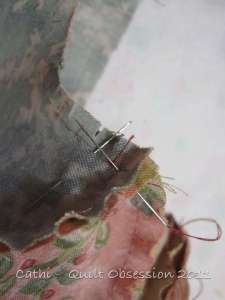
The needle is drawn through the final pair at the crosshairs, a quick back-stitch is made and all that’s left to stitch is the final seam.

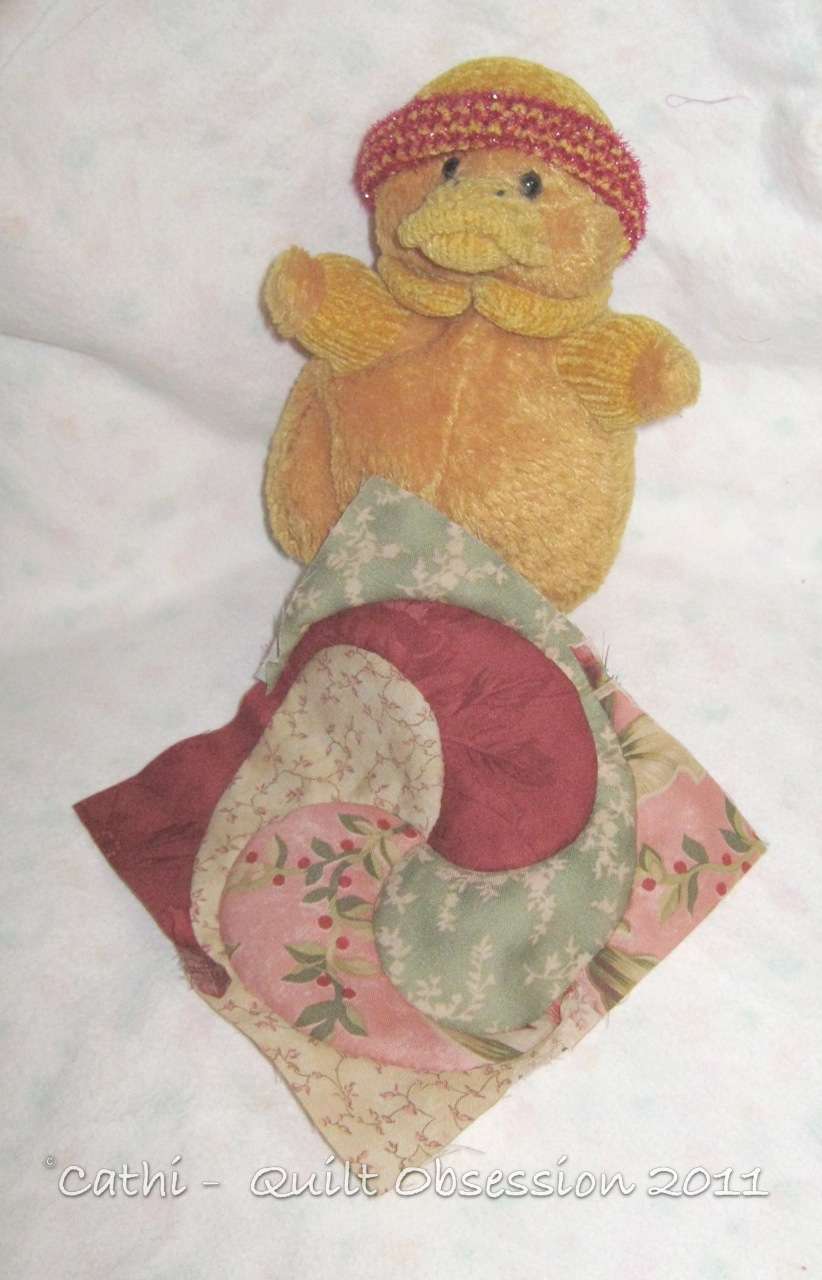
Daphne, who hasn’t been seen often since her flapper adventure on the roof garden a few years ago, showed up to see the block when the stitching was finished. At this point, the block hasn’t yet been pressed.

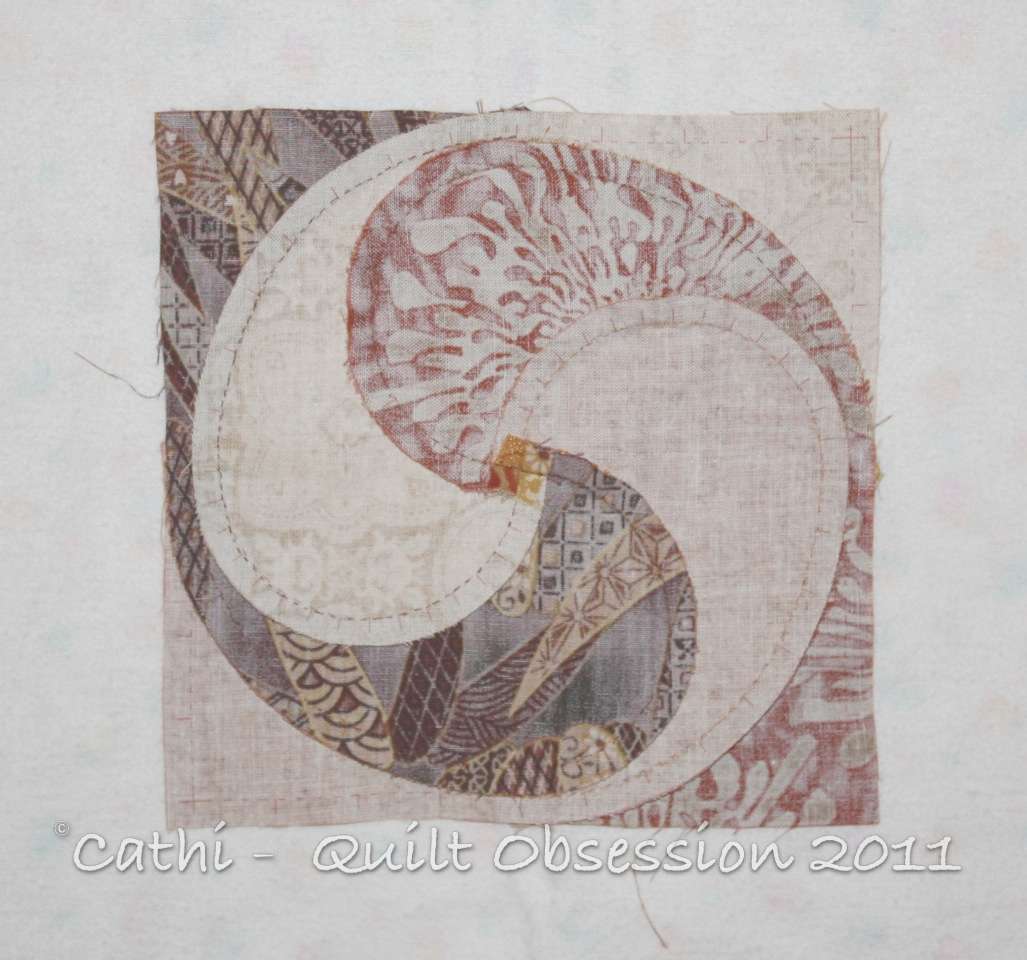
The block presses like a dream and the magic happens again. The block lies perfectly flat. No bump in the centre, no distortion.

The back of the block after pressing. Don’t you think it would be fun to stitch one of these? Be warned, though. They’re addictive as can be to stitch. You can’t stitch just one. I’ll be back with another post this afternoon with a giveaway that’s related to this tutorial.

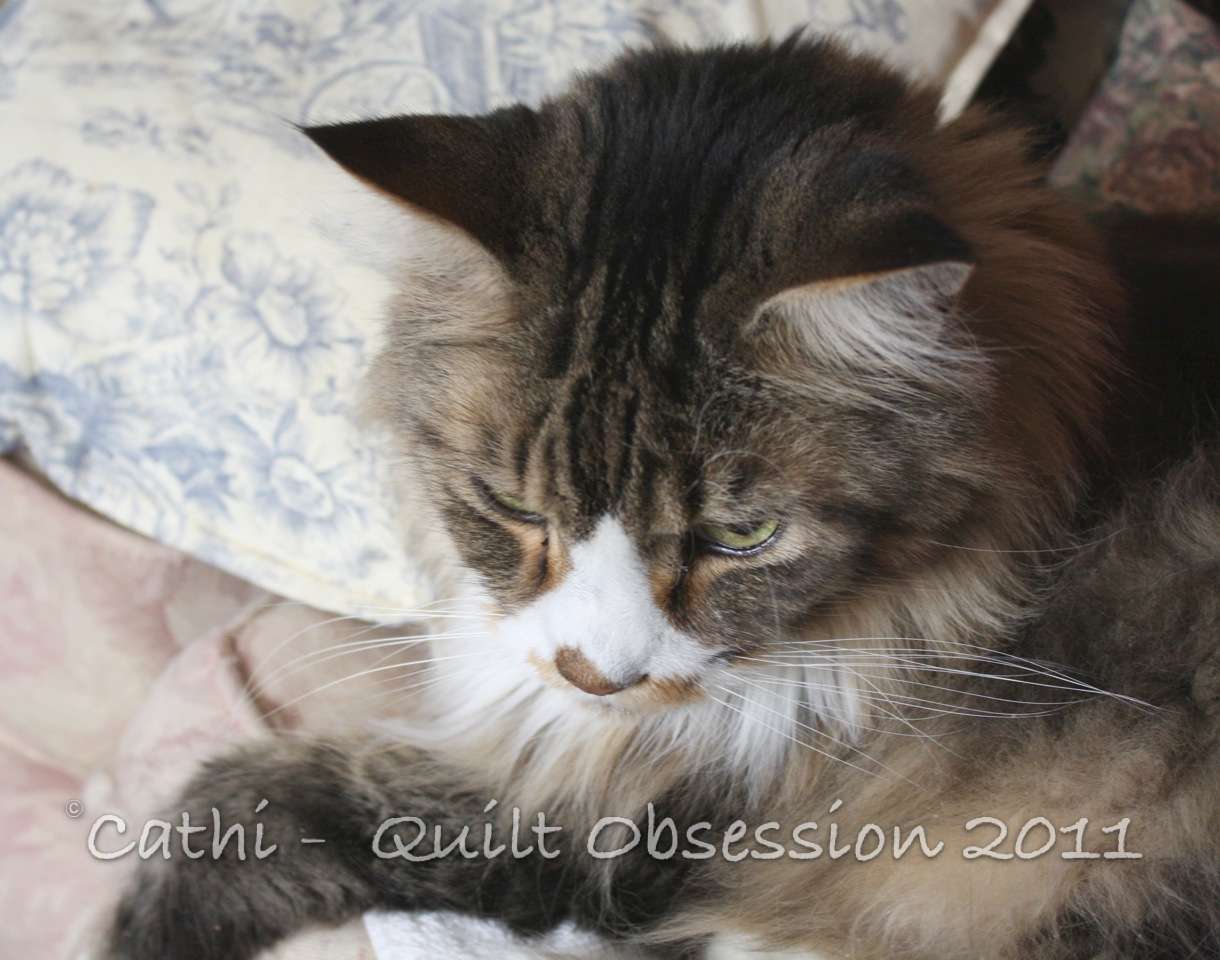
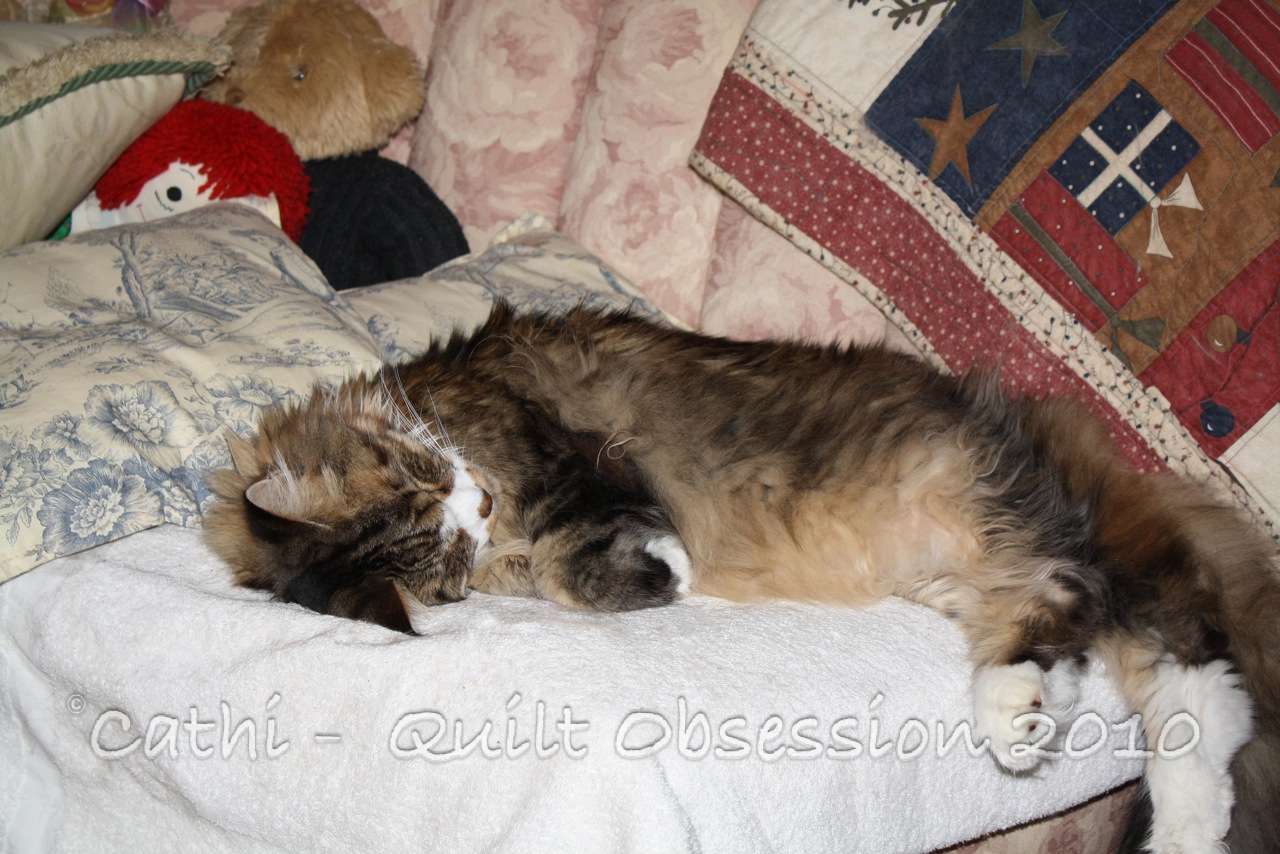
Smudge wasn’t all that interested and decided to have a nap on my desk chair.

Spice or Chocolate and Caramels Quilt Beginnings

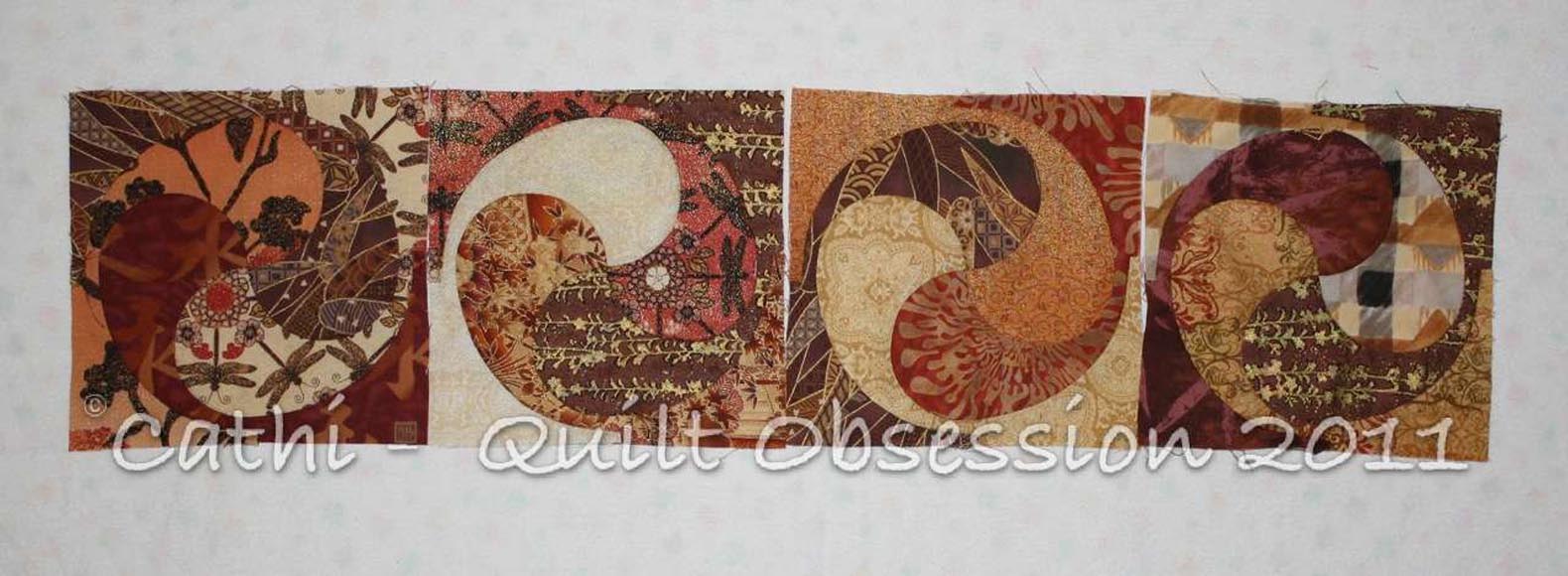
Ever since I saw the Yin Yang block on Barbara Brackman’s blog months and months ago, I’ve wanted to stitch it.  On Sunday, a new Inklingo Yin Yang collection was released and I had to dive right in!  The fabrics I had set aside for the Spice quilt were back out, I had the shapes printed and cut out in a matter of minutes and a few hours later, four blocks were done.

About a month ago, I tried to prep pieces to stitch this block with freezer paper templates.  In the past I’ve used freezer paper templates without problems, but for this shape?  It just wasn’t working at all.  When stitched together, the block had a rather tent-like look that was impossible to get rid of no matter how much I pressed it.  My stitching lines and matching points just weren’t anywhere near perfect or fine enough.  But with Inklingo printing the stitching lines and matching points, it was easy as could be.  So I was absolutely overjoyed when the collection was released.

They press like a dream and, once pressed, are perfectly flat.

I’m torn now between thinking of this as the Spice Quilt or Chocolate and Caramels. There are tons of fabric choices one could play with working with this shape — batiks and hand-dyed fabrics, ’30s repros, shabby chic, black and white, primary colours. The list just goes on and on.  I have an idea for a baby quilt made with this shape which will be very fast to stitch as the blocks almost put themselves together.

Smudge was nowhere near as excited as I was about these new shapes.  He’s happy as long as he’s curled up in his kitty bed with the toy basket nearby.  Sunday night I was watching him as he ever so slowly put both front paws in the toy basket and dragged it over closer to the kitty bed.

Small Log Cabin Blocks

Last week, a new Inklingo collection for a log cabin using .50″ logs was released.  Up until recently, I have never been inclined to make a log cabin but I loved having the rectangles with all the matching points and stitching lines, as there are a lot of uses for rectangles.  On Thursday, though, I started playing with some ideas and printed 2 sets of the logs on 16 pink and 16 green fabrics.  As I’m contemplating stitching this by machine, I printed with a somewhat darker ink than I would use for hand piecing.

After cutting out a few of the logs, I started playing with laying them out using my design book.  I hope to spend some time on the weekend stitching at least a couple of these blocks.  It won’t be a large quilt, probably only a small table topper or teddy bear quilt, but I’m looking forward to seeing the blocks come together.

If I actually stitch these by machine, it’s possible I’ll have made 2 quilts by machine within a couple of weeks.  That’s rather hard to believe!  Today I’ll be working on the baby quilt all day and evening.  It has to be finished up to the point of getting the binding on by the time the night’s over as I’m heading off to the Creativ Festival Saturday afternoon.   I can tack the binding down Saturday night and then wash it on Sunday morning in time for the baby shower.  Then I get to play with the log cabin blocks.

Smudge was posing for the camera Thursday night.  We’re seeing quite a change in him.  He’s much more vocal and wants to have us within his range of vision at all times.

Ready to Stitch

A quick half hour or so and this 2.5″ stack of charms was printed with Drunkard’s Path shapes.  They are so amazingly quick to stitch that I’m hoping to have at least 25 or 30 blocks done today.  Maybe even more.

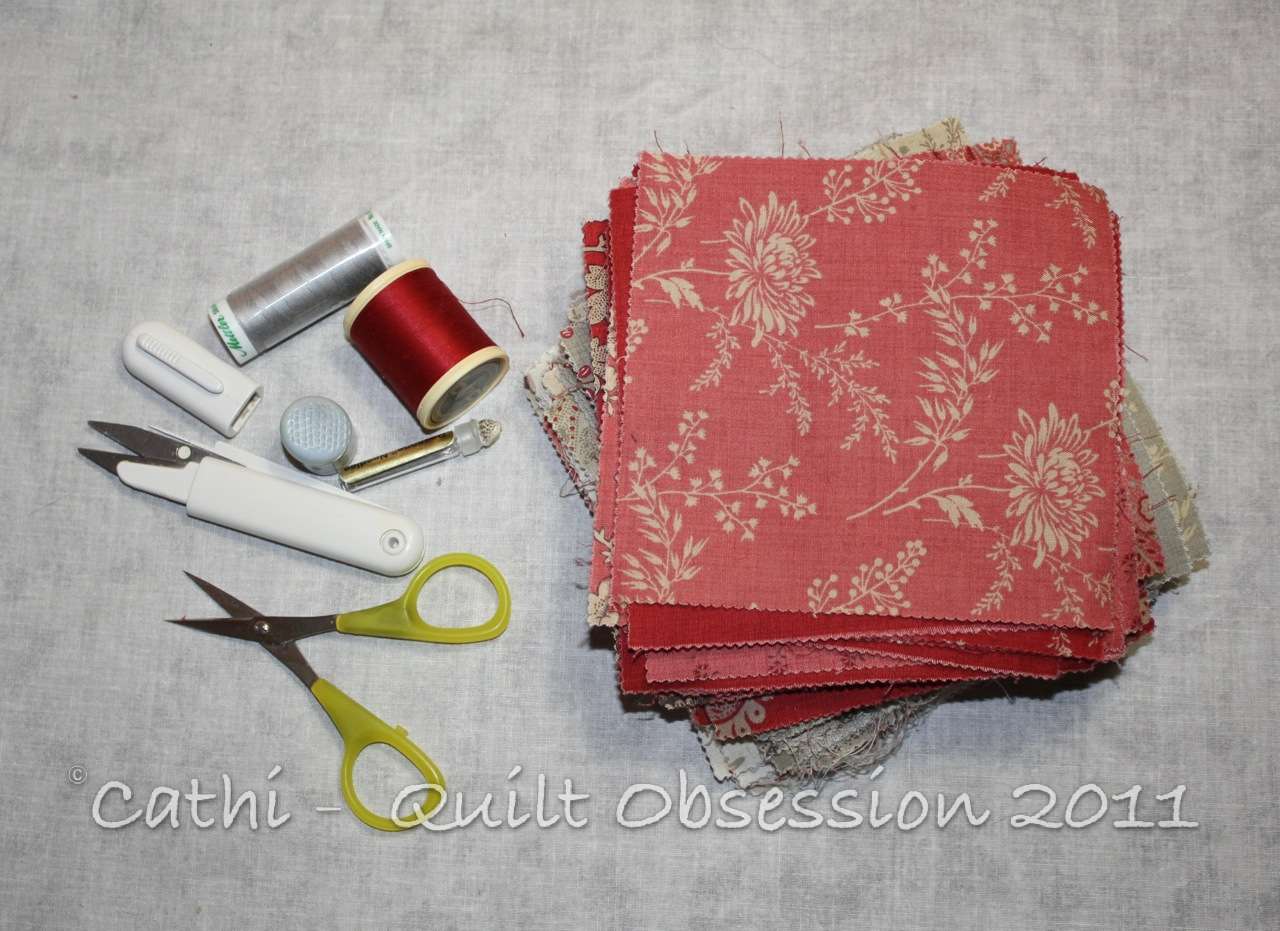
My stitching kit has scissors to cut the shapes, thread snips, needles, my thimble and two colours of thread.  Must remember to toss in a finger pincushion as well — as I cannot stand stitching without it.

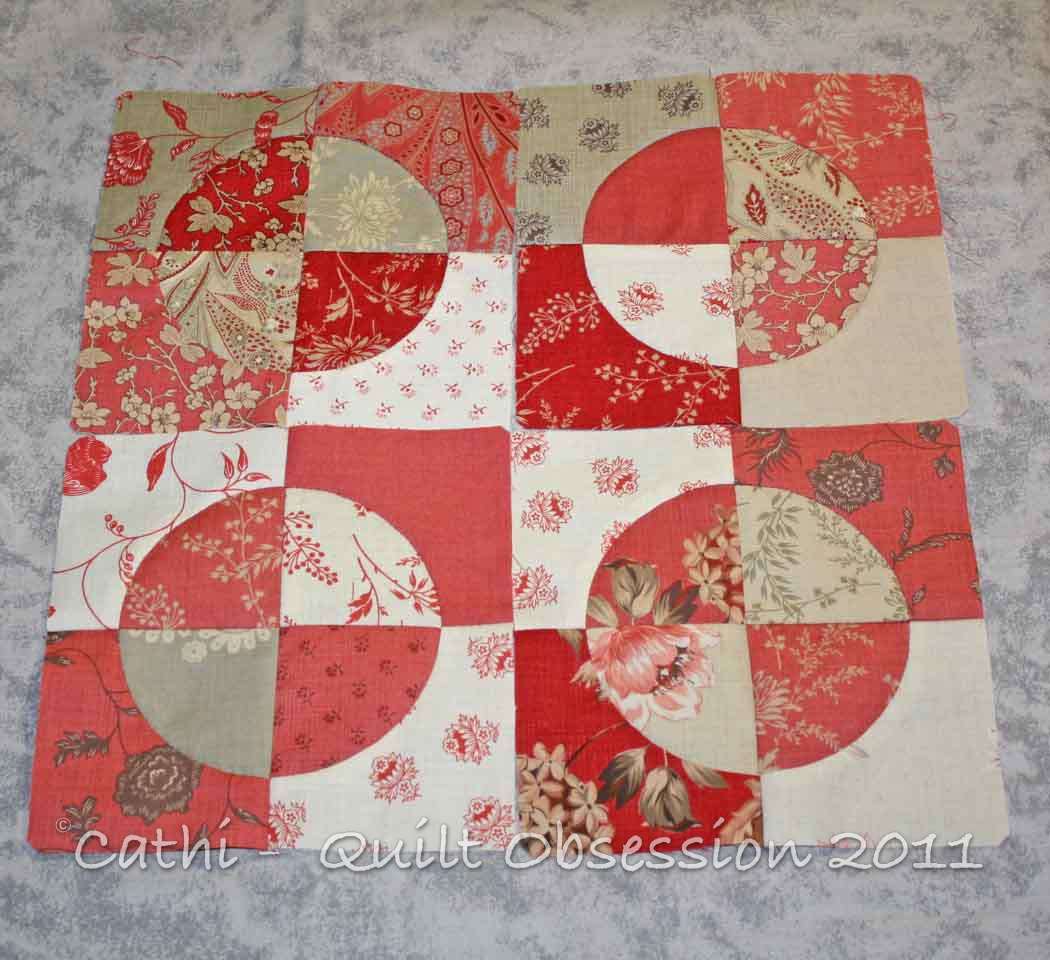
It has been a long time since I’ve worked on these, but this is a sample of the blocks I’ve made so far.

By the time this posts (I’m writing it Tuesday evening), we’ll be on our way to the hospital.  We have to be there by 6:30.  6:30???  We’re night owls in the Q.O. household, so 6:30 sounds almost like the middle of the night.  However, a friend assures me there are many people up and about at 6:30 a.m. (this I have to see!) and that they’re even coherent at that hour.  All I’m hoping is that the Tim Horton’s shops in the hospital lobby are open and I can get some coffee when we get there.

I’ll throw my eReader in the bag in the middle of the night morning when we get up so that if the lighting really is not conducive to stitching I can at least read.  I should point out that at that hour it will take us less than 10 minutes to get to the hospital, so we likely won’t even leave here until about 6:10 or so.  That’s a strange hour for a night owl.  Very very strange.  However,  there is a good side to this ridiculously early hour and that is that he’ll likely be ready to come home sometime in the afternoon.

I must remember to leave the television on for the kitties — it’s going to be a long day for them.   Hopefully they just have a nice calm relaxing day and Smudge is like this when we get home.

While Lester is stretched out like this.

Preparing for Next Week’s Piecing

The last of the Farmer’s Delight blocks will be finished this weekend so I decided it was time to get some shapes for other quilts ready.  First up were some more of the shapes I need for the Summer Picnic Dish quilt.  It took only a few minutes to print enough for another 4 blocks.

While I was at it, I decided to print some more shapes for the Pastry Shop quilt. Again, it took only a few minutes and now I have quite a few ready to stitch.  There are, of course, other shapes that are already printed and ready to piece for a few other quilts but this way I have lots of choices.

It was cold again on Thursday and was even snowing a bit.  I keep telling myself it’s March and it can’t last, but it would be nice to see the end of this cold weather.

Smudge didn’t care.  He found a cozy spot to curl up.

As did Lester.

Feathered Star for Christmas

This is what I worked on over the weekend.  For me it’s an enormous block as it will finish at 20″.  Feathered Star is a pattern I’ve been fascinated by and, over the years, I’ve thought about making one but the idea of the acrylic or mylar templates, specialty rulers, tracing and on and on made it less appealing.

On Friday night, three Inklingo collections for a 15″, 20″ and 30″ Feathered Star were released along with an absolutely fantastic Design Book.  Because the centres of these feathered stars are 4.5″, 6″ and 9″ respectively, one could use any number of blocks in the centre rather than the octagon.  Saturday morning, I had this stack of shapes printed and cut out, ready to make my first block.

The instructions in the Design Book are for both hand and machine piecing.  I read through the machine piecing section and felt like I could make one of these by machine.  That said, all the continuous stitching that putting the feathers together offers was irresistible to me and hand piecing was my choice.  Putting the HSTs together by machine would be so easy the Inklingo way; just stitch on the line and cut.  No paper to remove, no bias to handle.   The Design Book is free to download for a limited time.  If you’ve ever thought about making a Feathered Star, this is definitely a book you want to add to your library.

This could be the beginning of a Christmas quilt for next year or perhaps I’ll finish off this one block, add a border, quilt it and use it as a table topper this Christmas.  That may be a bit too optimistic to think I’ll finish it by Saturday, but I’m tempted to try.   I’m amazed at just how quickly it goes together.  It won’t take long now to finish the star and then add the setting squares and triangles.

Smudge is on a tablet that helps the liver.  He has a habit of spitting the pill out when I turn my back.  Saturday morning, he did that very thing and I didn’t notice it until we took this picture.  If you look closely, you can see the little pink pill on the towel.  He seems to be doing better.  Tomorrow we take him in for another antibiotic shot and his weigh-in and colour check.

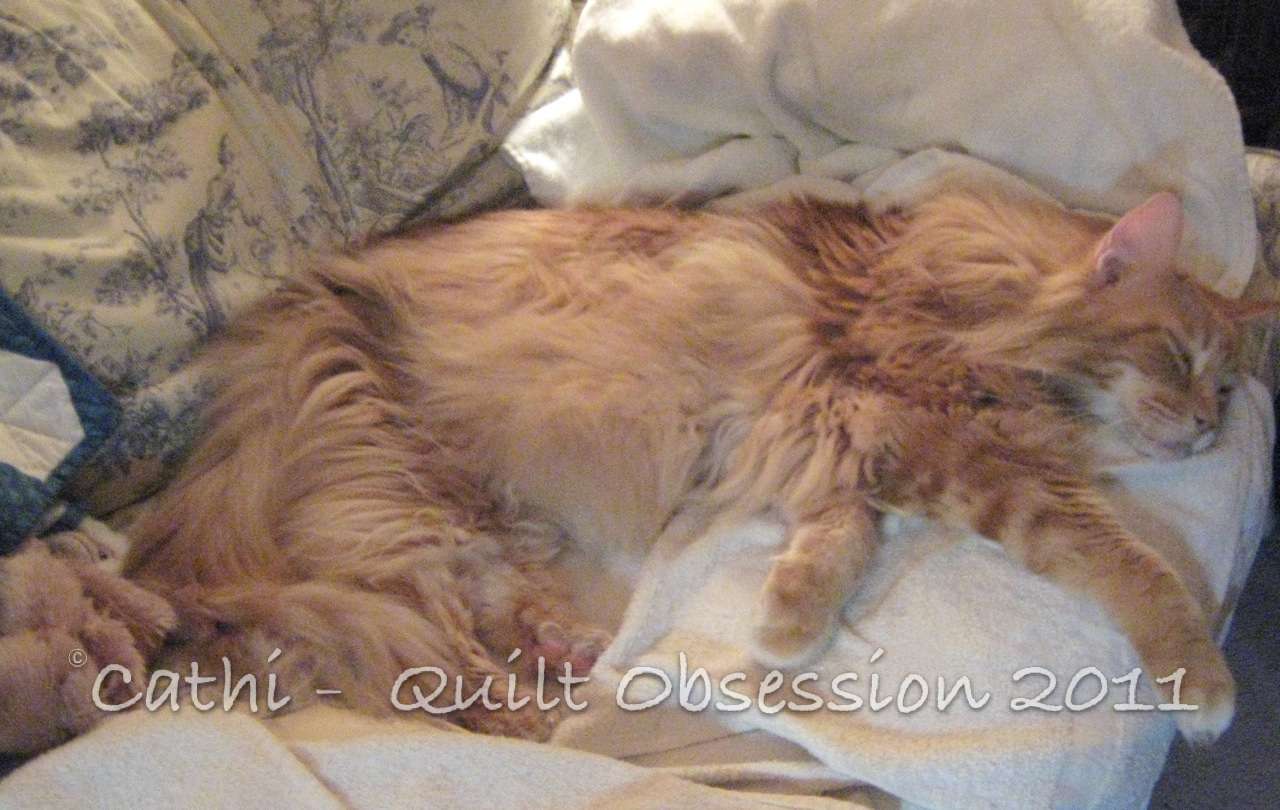
Lester has been enjoying the variety of foods that have been showing up as we try to get Smudge to eat more on his own.

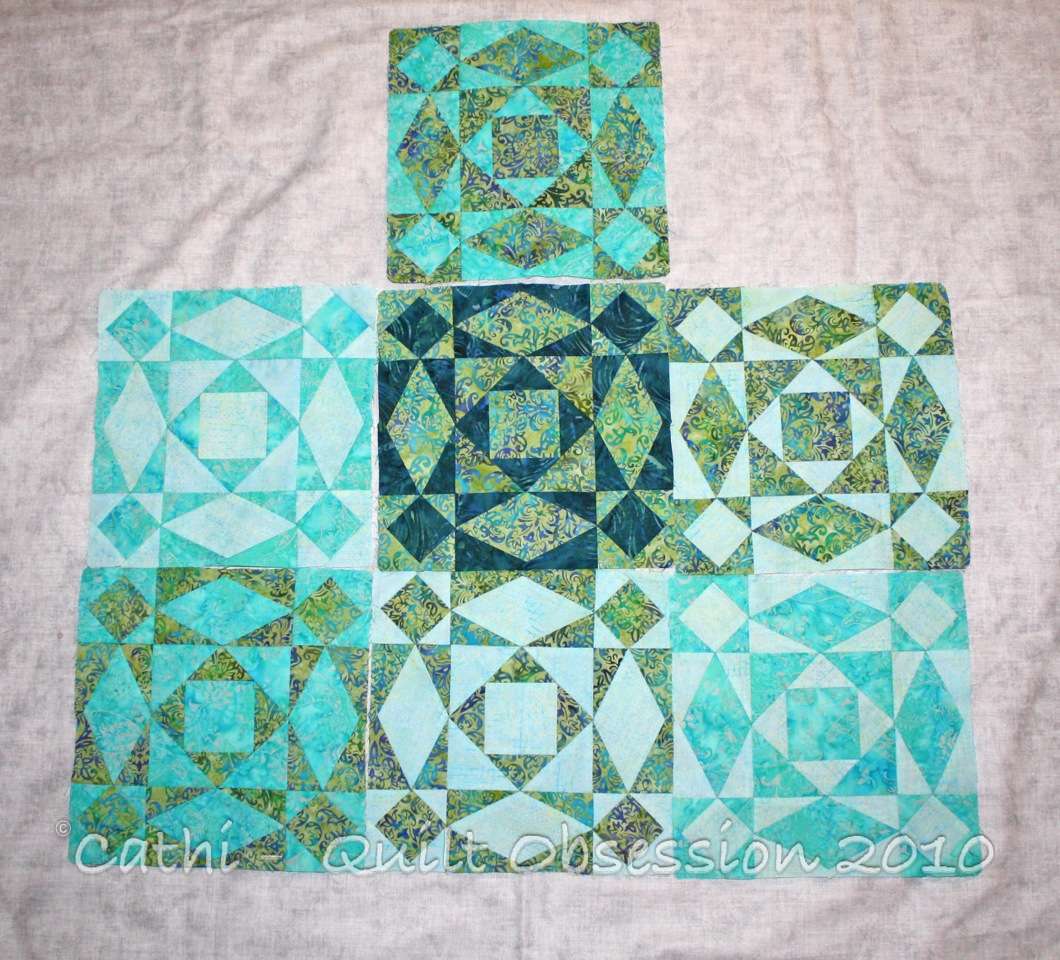
Seven Stormy Seas Blocks

The first seven blocks are done and the eighth is close to being finished.  The circular effect that these blocks give is something I absolutely love.  I can’t wait till they’re all done and I can lay them out and decide on placement.

I got all the remaining fabrics printed.  In just slightly over 2 hours I had all the fabrics ironed to freezer paper, printed and cut out.  Then I started sorting them into glassine envelopes in sets for each block.  This box has all the pieces for each of 17 or 18 blocks, ready to stitch.

This box has the remaining pieces, all sorted in envelopes by fabric, ready to be pulled and put into block envelopes to join those in the first box.  I love having lots ready to stitch like this.

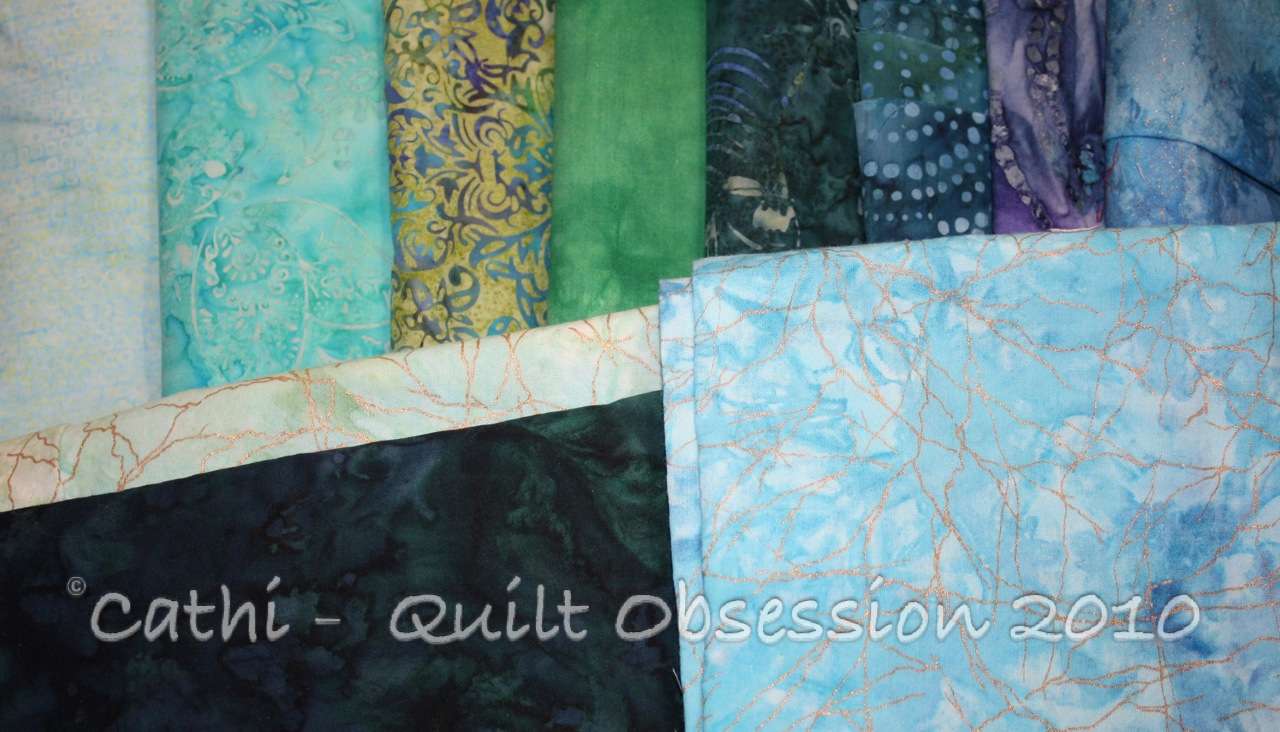
I wanted to get all the Storm at Sea shapes printed on the fabrics and ready to stitch before I somehow or another “borrowed” one of those fabrics for use in something else.  Two of the fabrics I’ve picked for this are batiks with a slight dusting of a gold metallic that I think are going to look rather like light reflecting on the water.  The best part of this is I know I won’t get bored making the blocks as each one will be slightly different.  There will be 41 blocks to go once I get the current one finished.

We’ve yet to do any decorating for Christmas.  But our door decoration is up.  A few years ago we decided to find something that was a bit different than a formal wreath.  I think we managed to definitely find that something different.

The weekend was relatively mild, but we’ve had a real drop in temperatures that started overnight.  While there was a lot of snow around us, the city once again didn’t seem to get any.  I have a feeling the roads and sidewalks are slippery, though, as it rained on and off throughout Sunday and then the temperature dropped suddenly.

Smudge definitely seems on the mend.  Trying to figure out what he’ll eat on his own is becoming an adventure.  What he likes today, he won’t like tomorrow.  We’re fortunate in that he is still being quite cooperative with the syringe feeding.  I can’t wait until tomorrow when we take him in to the vet.  We can’t see any signs of jaundice now and I think he may have put on another pound.  He was very lively on the weekend and even had one of his play fights with Lester.   He also found a few spots to sprawl out and snooze.

Lester was also in snooze mode a lot of the weekend.

Fussy Cutting/Printing – Lots of Photos

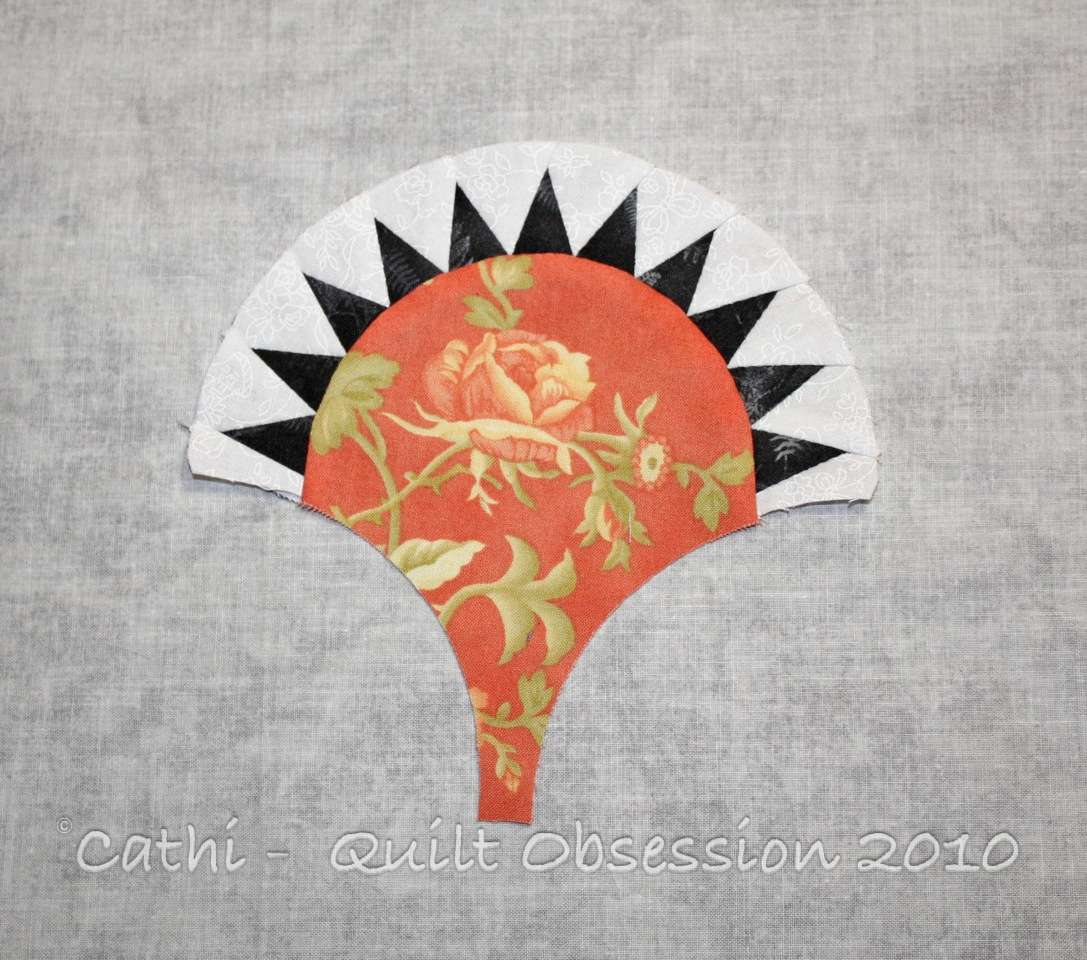
There have been a few questions about how I fussy cut and print the florals for the Pickled Lady blocks so I thought a short tutorial might be the best way to describe the method I use.   Lester is watching rather intently.

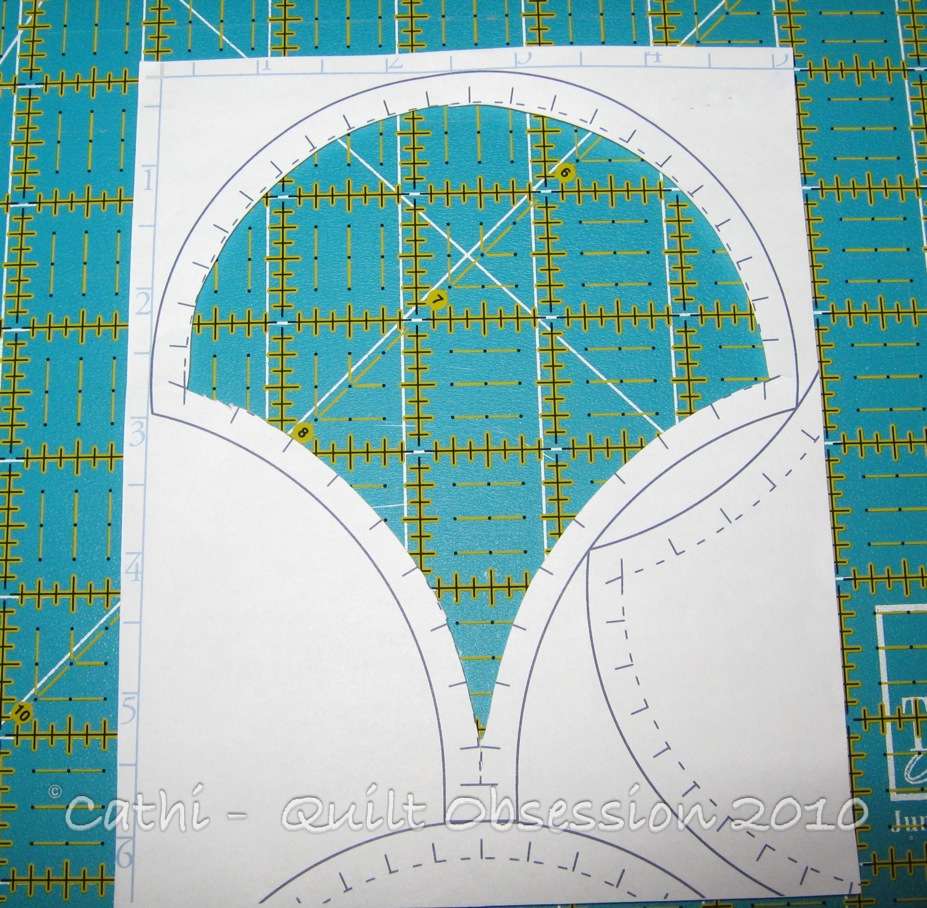
When I decided to make the Pickled Lady blocks, the first thing I did was print one of the clam shapes on a piece of plain paper which I had cut to the size I would be using.  Once that was done, the interior of the shape was cut out along the stitching line and I had my window template.

I identified a few flowers on this piece of fabric that were going to be perfect for fussy cutting.  Once that’s done, I start looking for one of the flowers that’s near the edge of the fabric.

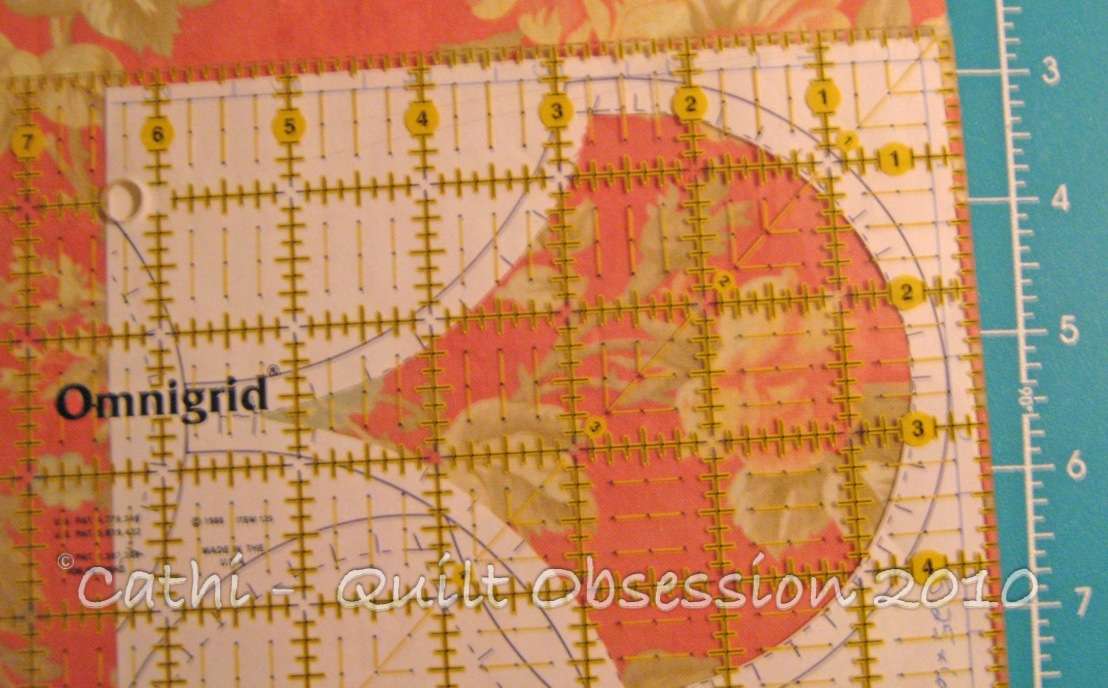
This is where the window template comes into play.  Once I’ve found a flower that I want to fussy cut, I place the window template over it and move it around until the flower is in the centre of the clamshell.

If you look closely at this shot, you’ll see that I’ve got the quarter-inch line on the ruler placed on the printed ruler line on the paper.  When I cut out my window template, I cut off about an eighth of an inch along two of the edges of the paper so that I could use the printed ruler line on the paper to line up with rather than trying to line up the edge of the ruler with the edge of the paper.

Here I’ve cut along two sides of the fabric, once again using the quarter-inch line on the ruler lined up on the printed line on the fabric.  The printed line is directly above the cutting line of the shape and that gives me the perfect placement when it comes to ironing the fabric on to freezer paper and getting it ready to print.

The selvedge is still attached.  I leave it on when I’m fussy cutting as sometimes there will be a flower at an edge that I want to use and I will need a sliver of it to have a large enough piece to iron on to the freezer paper.  I know it will be cut away once the shape is printed, so I don’t worry about it.  In this case, the majority of the selvedge will be cut away even before pressing it to the freezer paper.

Once I’ve cut the top and right side, I remove the window template and cut the bottom and left side of the fabric piece.  At that point, all I need to know is the size of freezer paper I’m using to cut the fabric to the right shape.  Then it’s simply a matter of pressing it on to the freezer paper and printing my shape.  Here you can see that while the selvedge was still attached, once I cut out my shape there will be none of it left.

Once that’s done, it takes only a minute to cut the shape out and then start stitching.  Smudge hopes you found this as relaxing as he did.  In fact, he was unimpressed when the printer started as I think it woke him up.

A bit of stitching and a  few minutes later, I had a Pickled Lady block finished to add to the stack.

The back.

Stormy Seas

Back in March, when the Inklingo Storm at Sea collections came out, I made this block and had a plan for a quilt using these 4 fabrics.

Why I’ll never know, but I didn’t sketch out my idea or make any notes about it. But, wanting to get the fabric cut and ready to print on the weekend, I sat down Saturday afternoon and tried to remember what I had in mind when I purchased the initial 4 fabrics.  I spent ages trying to sort out just what that plan was but finally realized that, whatever that initial idea was, it’s not going to happen.  Whatever it was I had in mind, I certainly didn’t buy enough of 2 of the batiks.  So I spent hours working on two different ideas, sorting out just how much of each fabric was needed for both those design ideas.  By Saturday evening, it was down to the point of calculating if I had enough square yardage of each fabric — and it went on and on. So instead of playing with needle and thread, I was working out fabric requirements with the calculator.

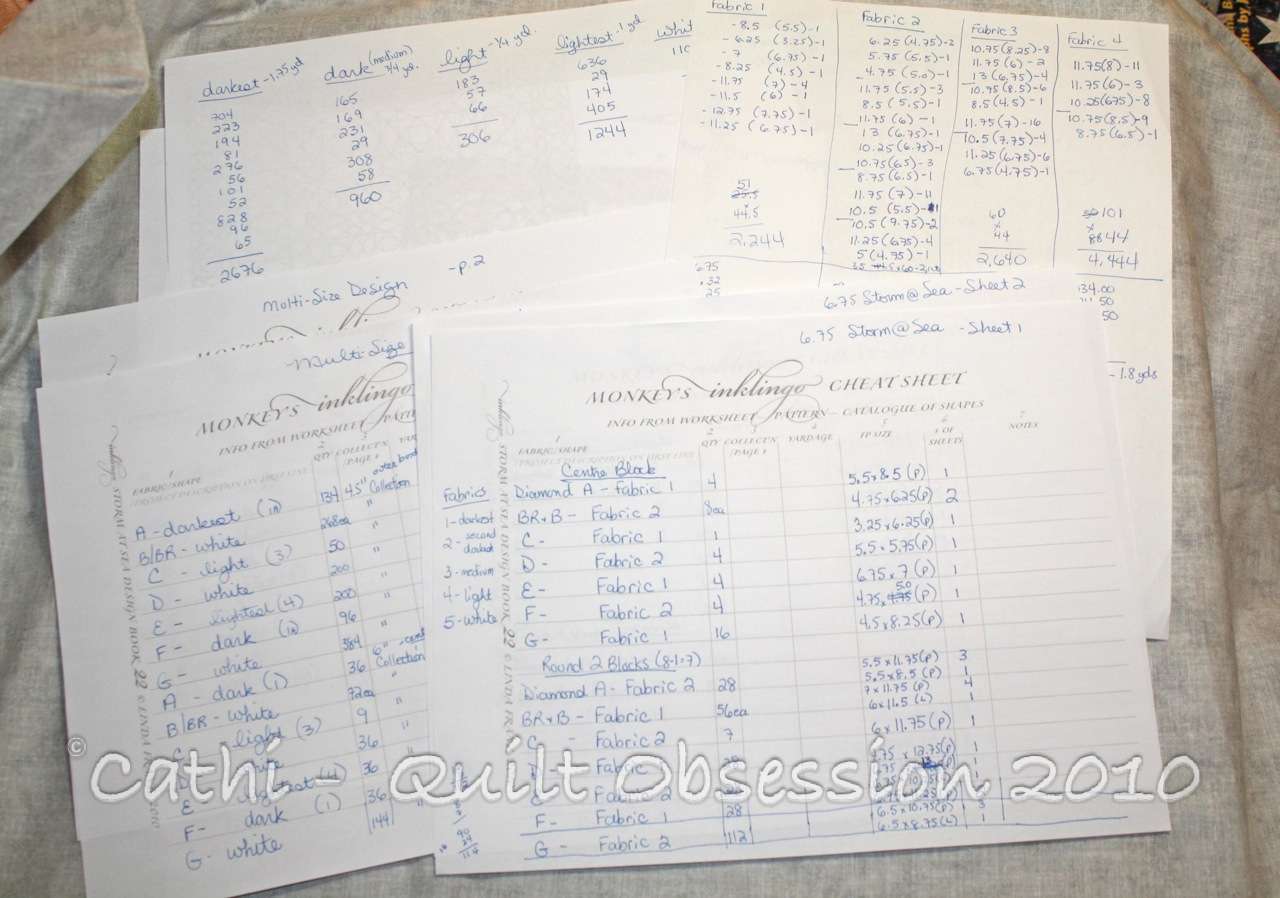
The pieces of paper headed “Monkey’s Inklingo Cheat Sheet” are invaluable when working out a quilt design and come with each collection as well as are available to download at the Inklingo Web site.  Once I get my design sorted out, I can make a note of exactly what size of fabric/freezer paper I need for each shape/each colour and am off to the races.  I use the cheat sheets all the time and keep them filed in an accordion folder with my freezer paper.  The four cheat sheets seen here, however, are destined for the recycling bin as neither idea is going to fly.

When I finally realized that neither idea would work with the initial 4 fabrics alone, I gave up for the evening.  On Sunday afternoon, I started going through batiks and pulled out some other blues and a green.  Now I know exactly what I’m going to do with these 11 fabrics and, with any luck, will have all the shapes I need for the stormy seas blocks printed sometime this week.  The only decision left to be made now is just how large I want to make the Storm at Sea quilt.  Once that’s decided I can have my cheat sheet filled out in no time.
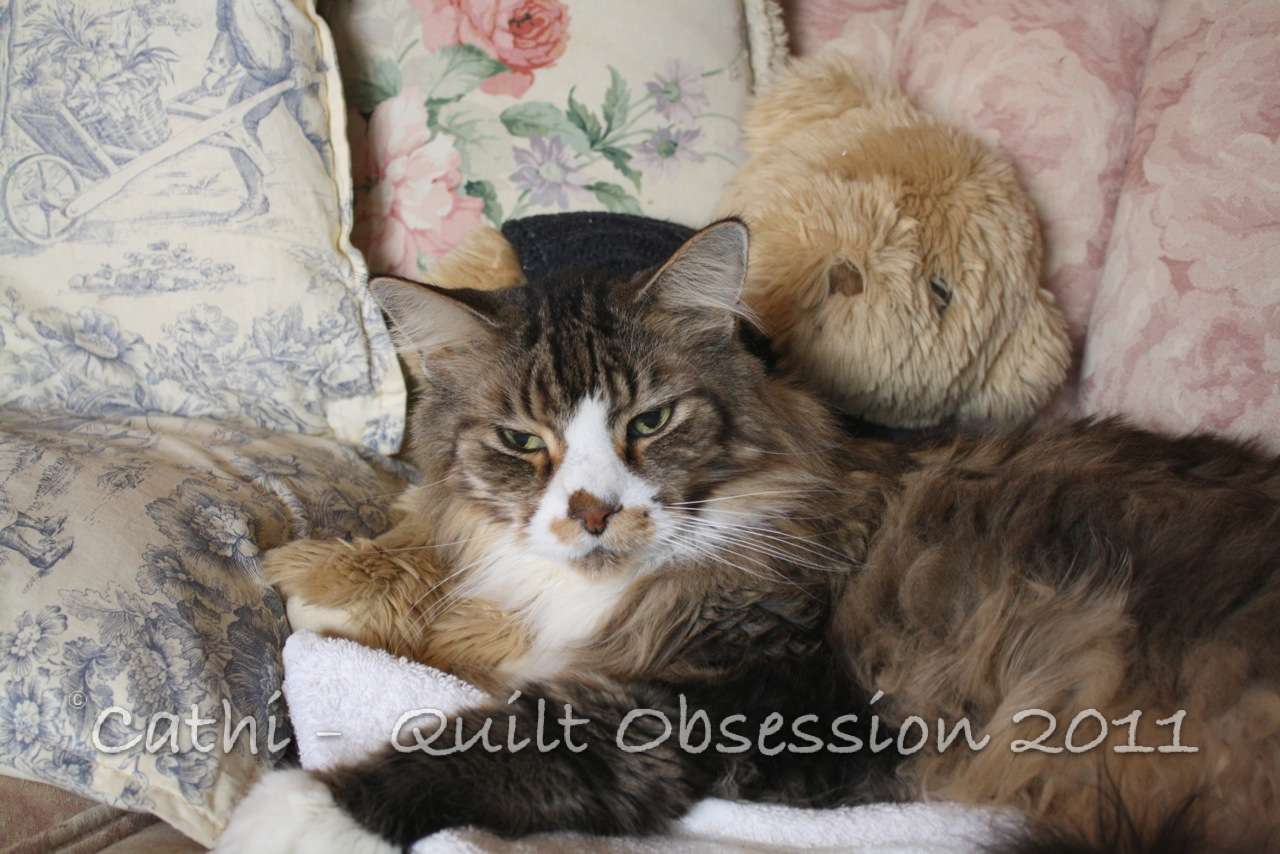
We were about to go out somewhere on the weekend, and I had left my purse on the couch for a minute.  I think this look says Smudge was hoping we were off to the pet store for kitty food and toys.

Lester was having some quiet time on the windowsill, although there isn’t much activity now for him to watch other than flying leaves.