Shabby Chic Yin Yang Blocks

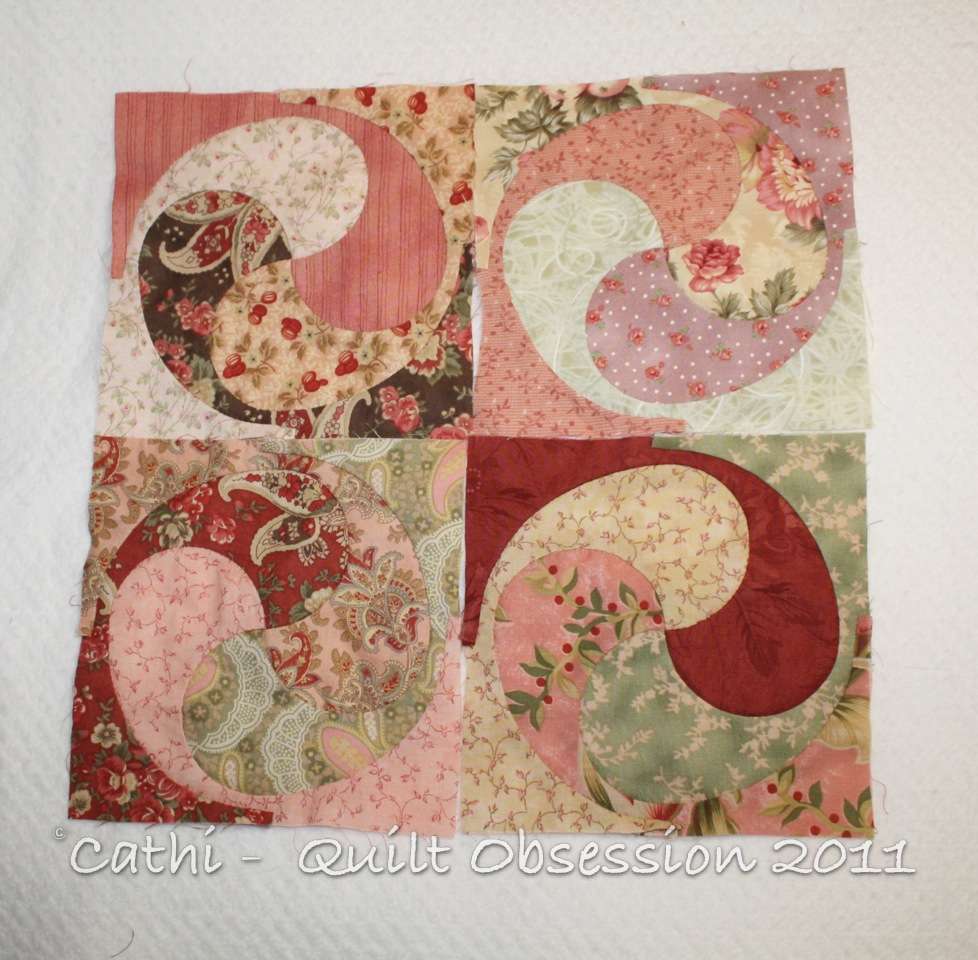
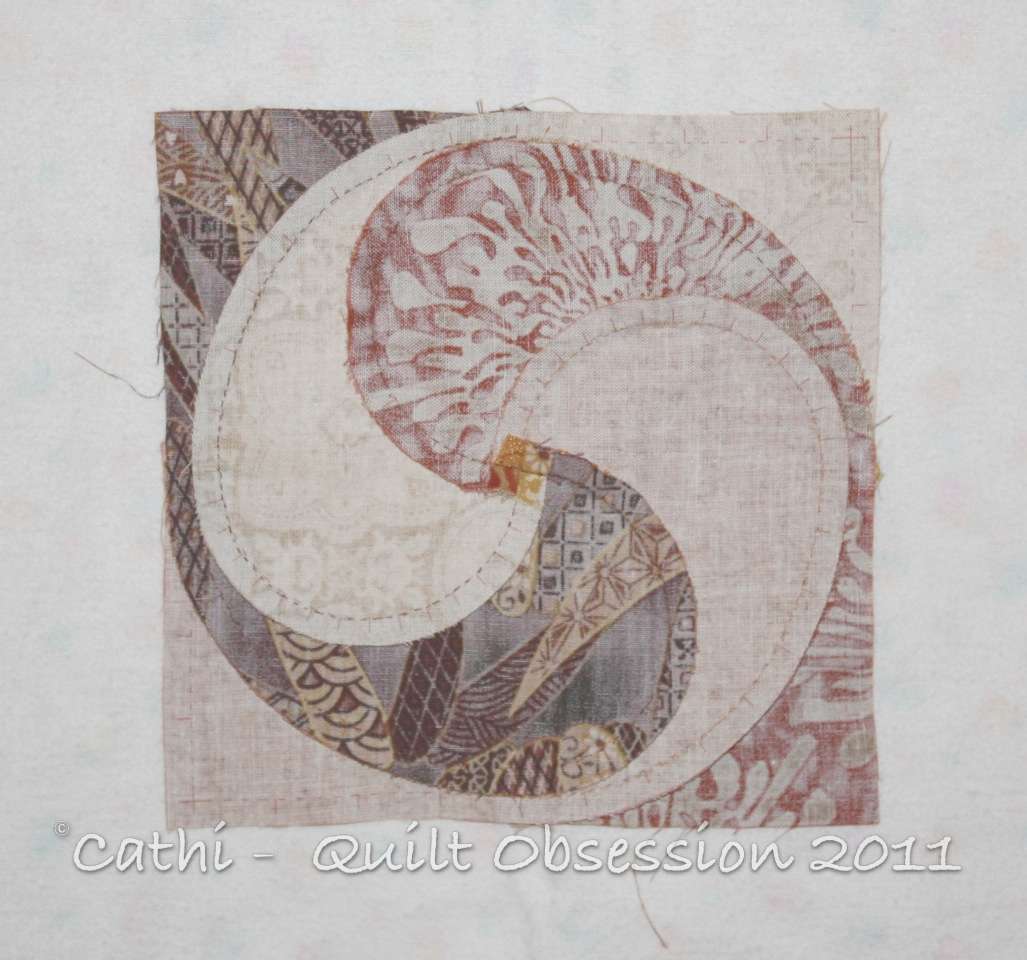
All it took was making one shabby chic Yin Yang block. I knew I was in trouble. Friday afternoon I found myself pulling out the shabby chic bin of fabric to print more. I think I’m aiming for  a lap quilt that is a true charm quilt. Once I sort out exactly how large a quilt I want to make, I’ll pull out more fabrics and print just what I need.

Summer’s definitely almost here. Friday the gardeners came and planted all the flowers on the roof garden, which to me is always a sign that summer is right around the corner and the risk of frost is gone.

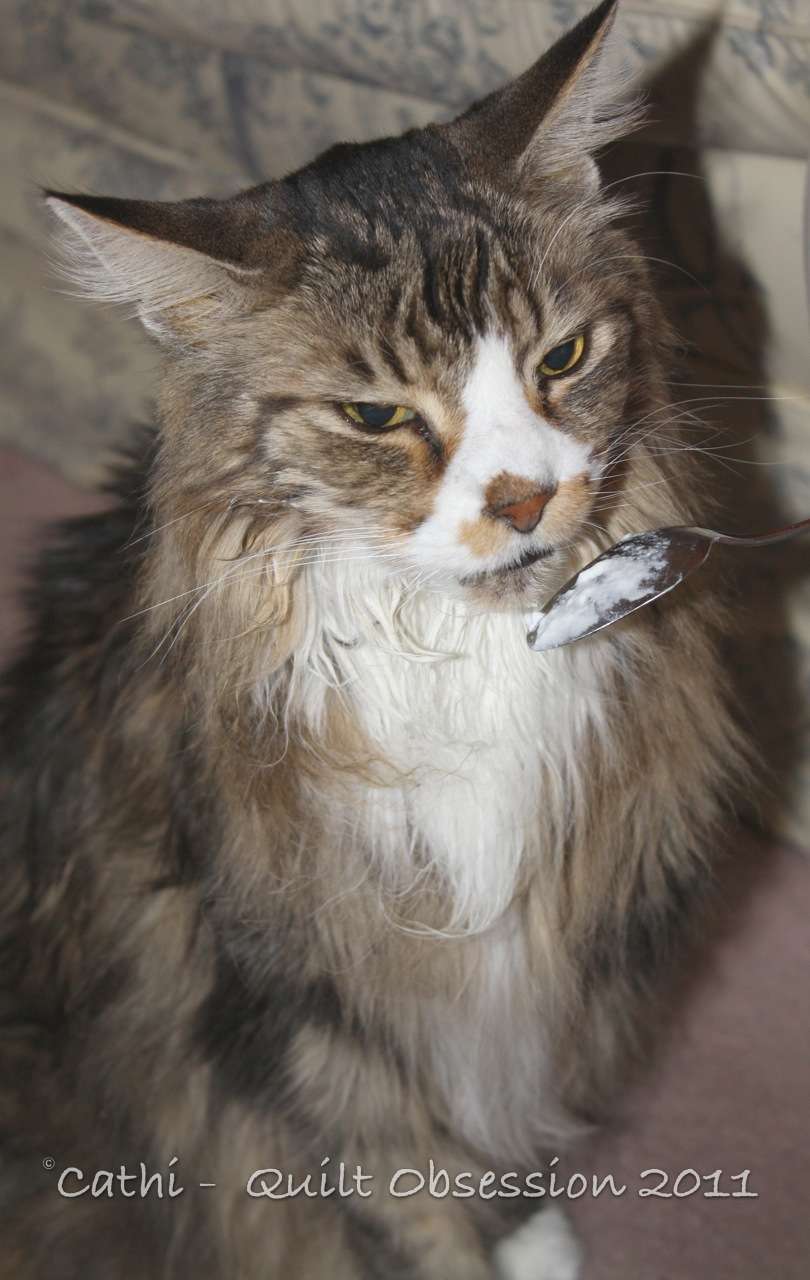
Smudge is back to being super finicky about his food, but he’s still loving his yogourt treat.

The Many Looks of Yin Yang Blocks & a Giveaway

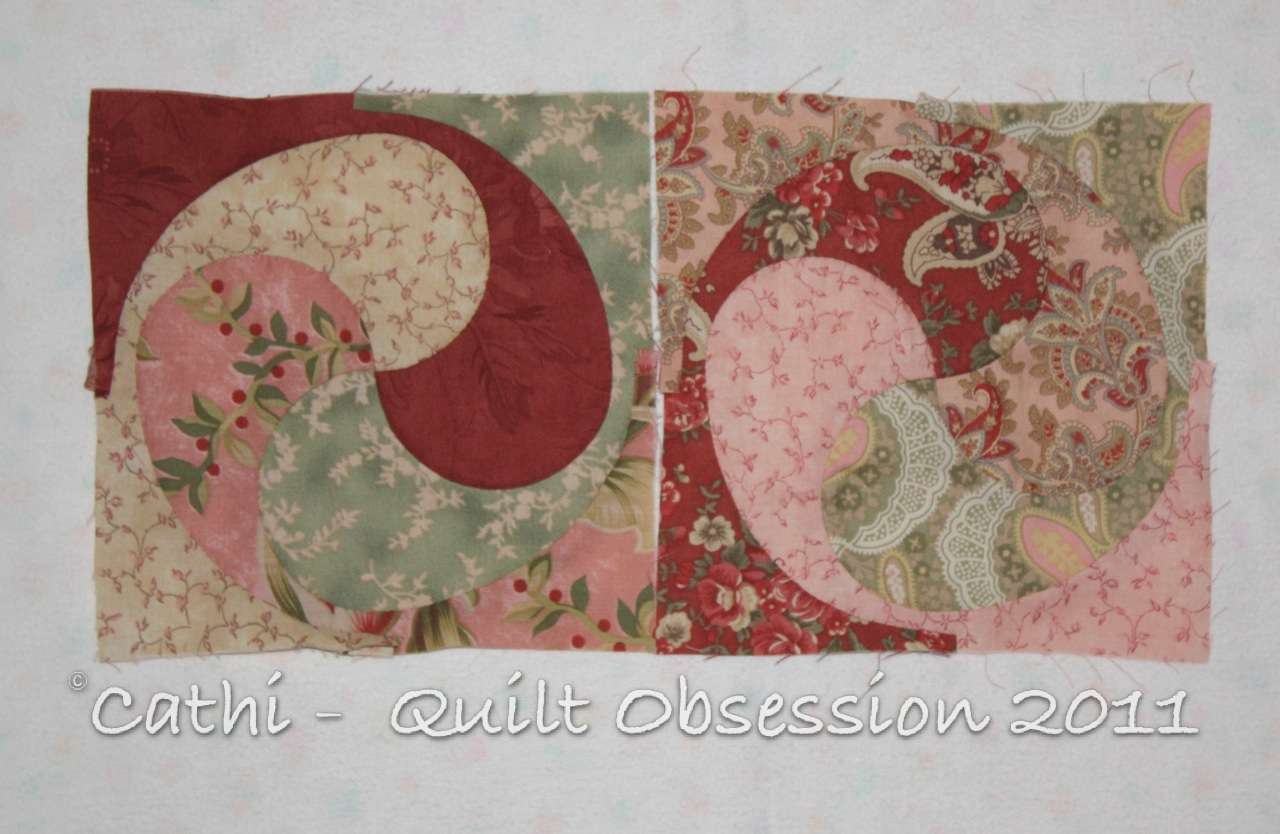
Three different sets of fabric equals three different looks. These blocks seem to look good in every type of fabric imaginable.  You can fussy cut/print too with a window template.

What’s the giveaway? It’s a $20 Inklingo gift certificate. You can use the gift certificate to buy the Yin Yang Shape Collection or any other Inklingo product.

Inklingo isn’t for hand piecers only. Not even close! There are lots of shape collections that are perfect for machine piecing. There are 60 and 90-degree diamonds (including the Free Shape Collection), Storm at Sea, Sunflower, numerous sizes of HSTs and QSTs and many others as seen in the Index of Shapes.

Inklingo Collections are downloadable PDFs. No software to install, no special printers or ink required. Just print the appropriate pages on your fabric with any inkjet printer or all-in-one and you have perfect shapes printed on your fabrics every time!

How do you win? It’s easy. Go look at the Index of Shapes. Then come back here and leave a comment telling me what your favourite collection is. The giveaway is open until midnight on Friday, June 10, 2011 and the winner will be announced on Saturday, June 11, 2011.

Stitching a Yin Yang Block Tutorial — Lots of Photos

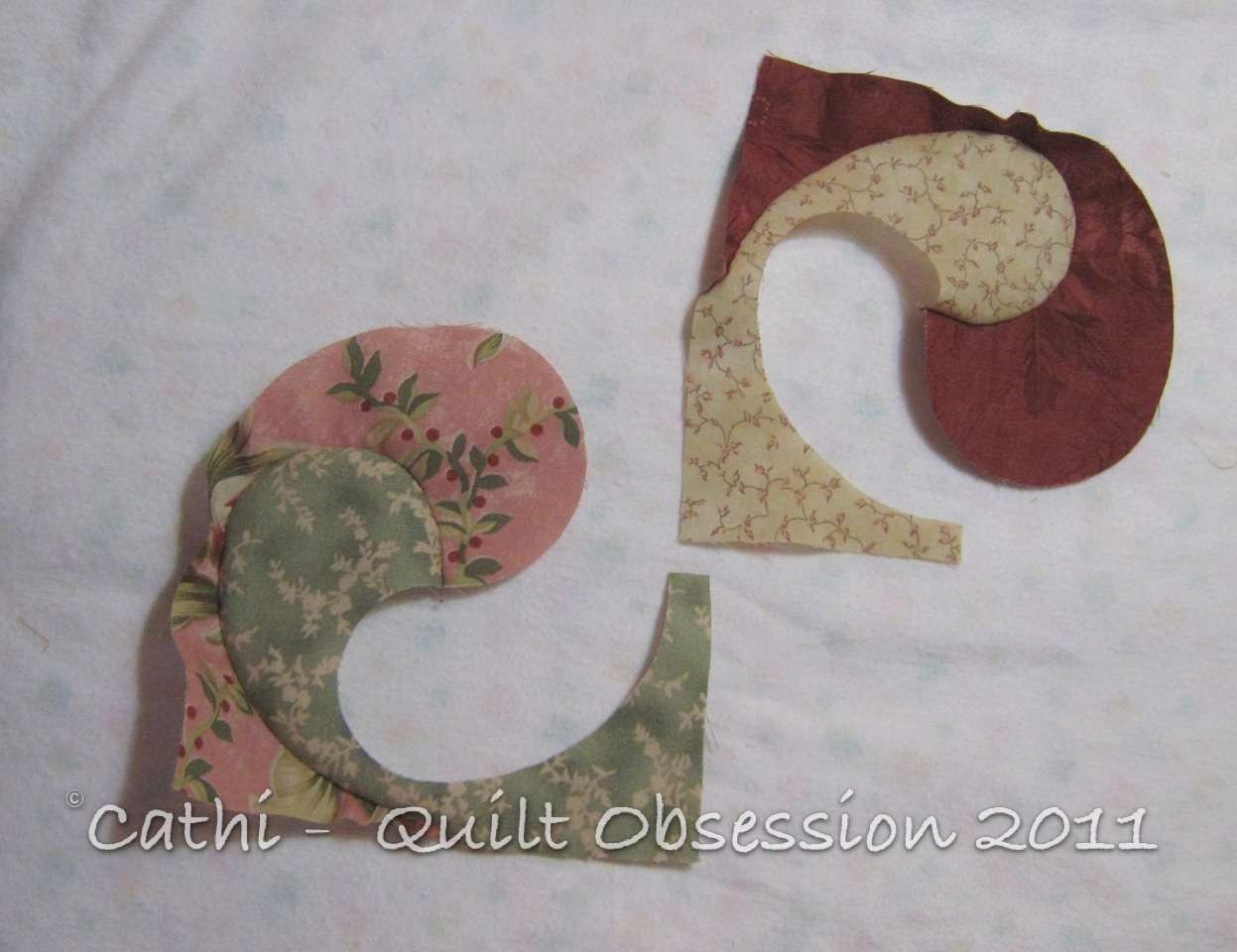
It was inevitable.  I had to try out a Yin Yang block in my favourite of fabrics, shabby chic. As I have been asked some questions about how I put these together, I decided to do this little tutorial. The block is composed of four pieces of one identical shape. All the photos can be enlarged by clicking on them.

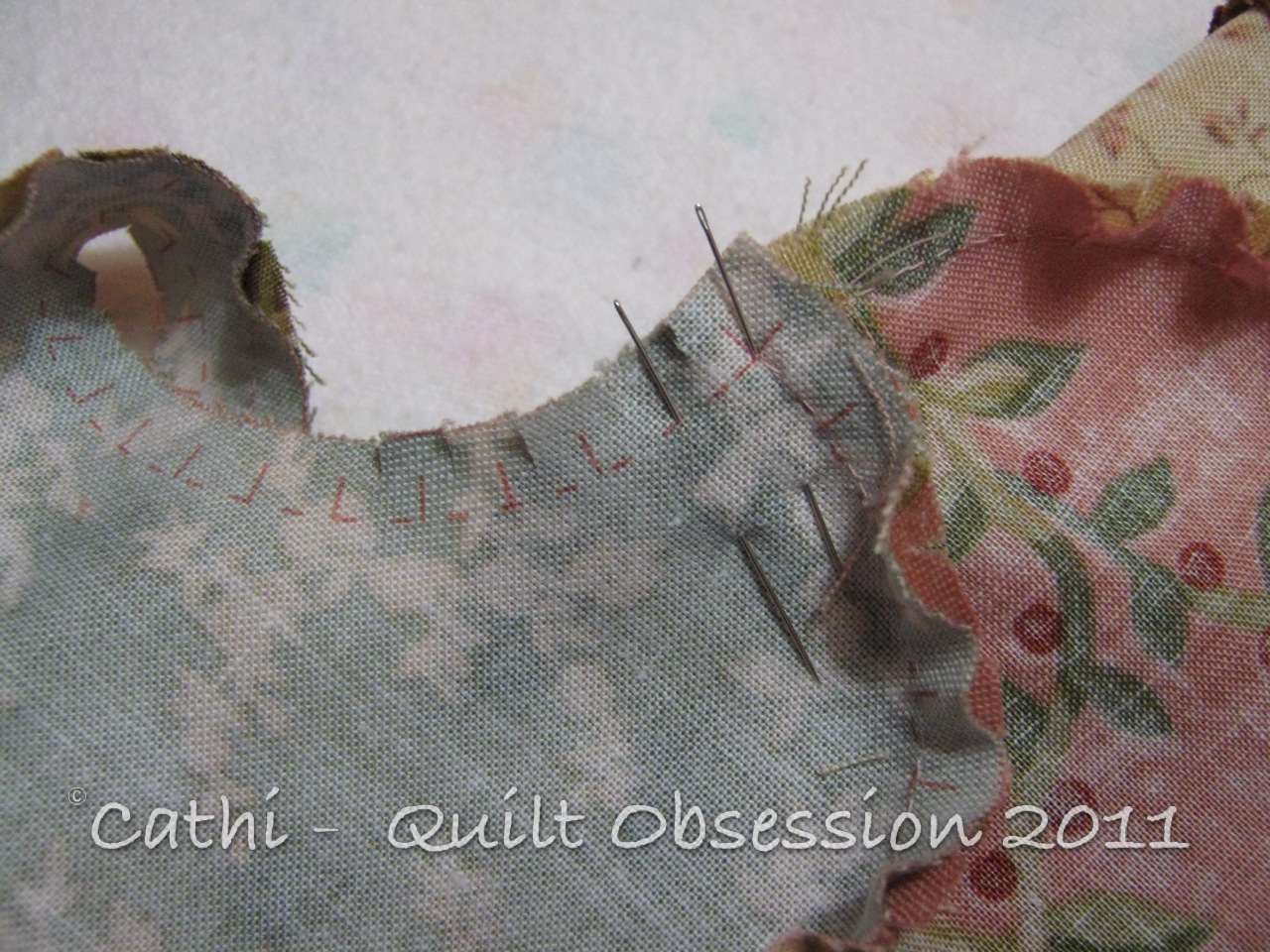
This shows the back of one piece and, if you click on the photo to enlarge it, you can see the matching points. They are what make this block go together like magic. I tried doing them before the Inklingo collection came out, and no matter how fine a line I drew or the matching points I put on, it just wasn’t fine or precise enough. With Inklingo printed matching points and crosshairs, there’s no worries at all — it all just fits together like a dream. I clip between the matching points on each concave curve to a few threads above the stitching line.
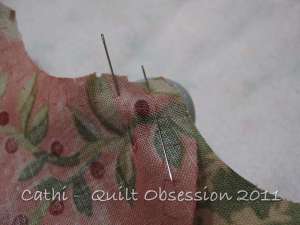
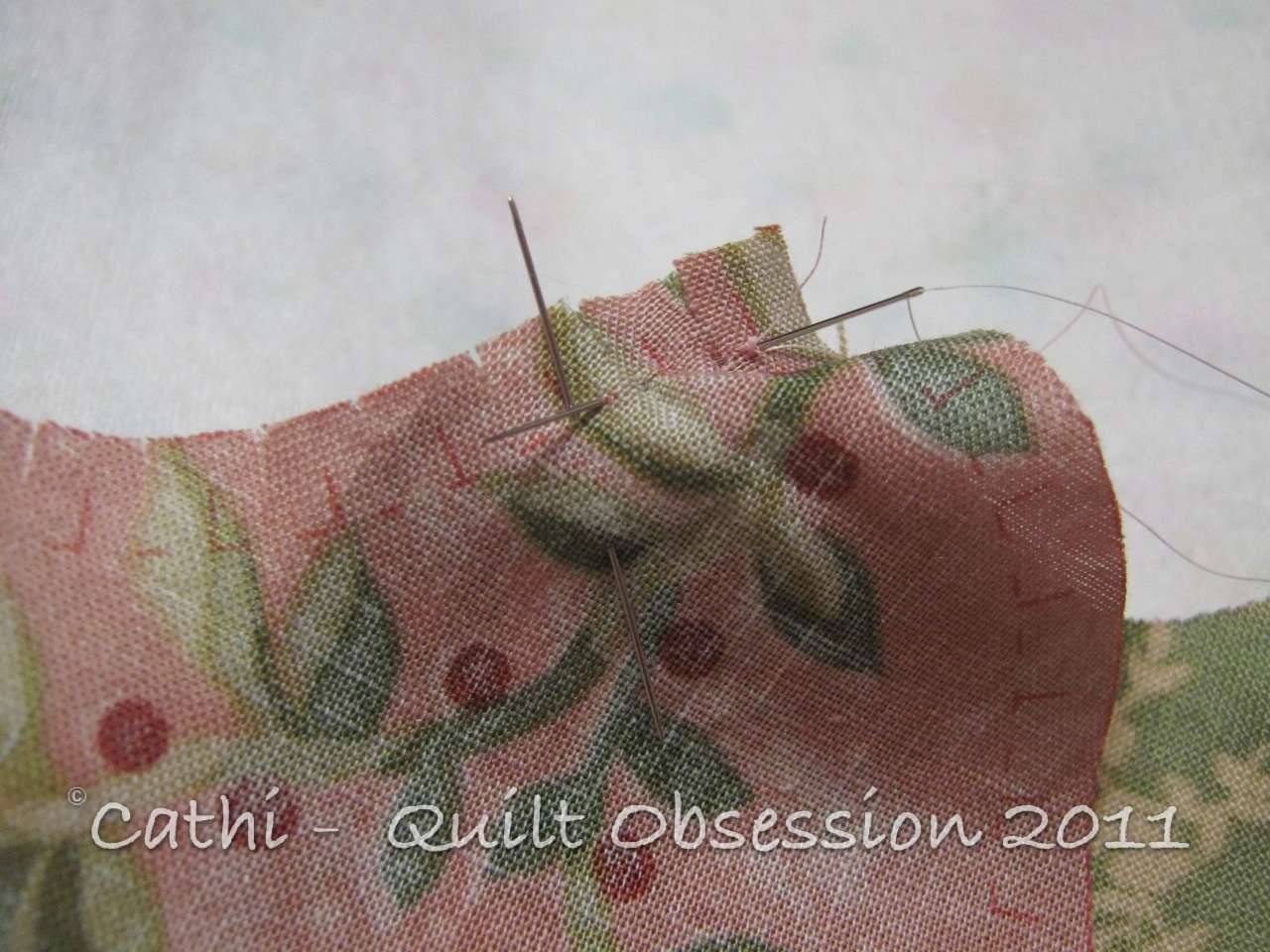
There are other ways to stitch these. My method is to start at the large curved end of the piece. I use two #12 sharps and pin at the crosshair and then at the first matching point.
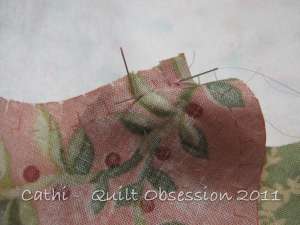
I start by making my quilter’s knot and inserting the needle a stitch length over from the crosshair. I’ve found this works well when joining other pieces as the knot is not right at the crosshair. Then I take the needle to the back, back through to the front at the crosshair, make a quick back-stitch and carry on down to the first pin/needle. There are a lot of matching points and they are the secret to making the curve as smooth as can be.

As each matching point is reached, I take a little back-stitch and keep stitching. With a curve like this, I try to use the smallest stitches I can.

This photo shows the clips into the seam allowance done on the concave seam allowance of one of the pieces.
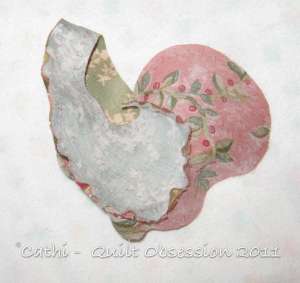
Once the first two pieces are stitched together, this is what they look like. As I’m hand piecing, I leave the pressing until the end.

Having stitched a few of these blocks, I’ve found that stitching them together into pairs and then joining those pairs works best for me.
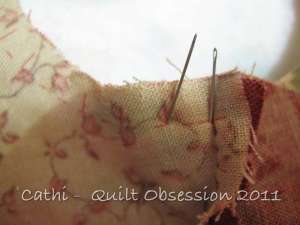
The next step is joining the two pairs together. Once again, I start at the large, curved end and pin with two #12 sharps — one at the crosshair and one at the first matching point.

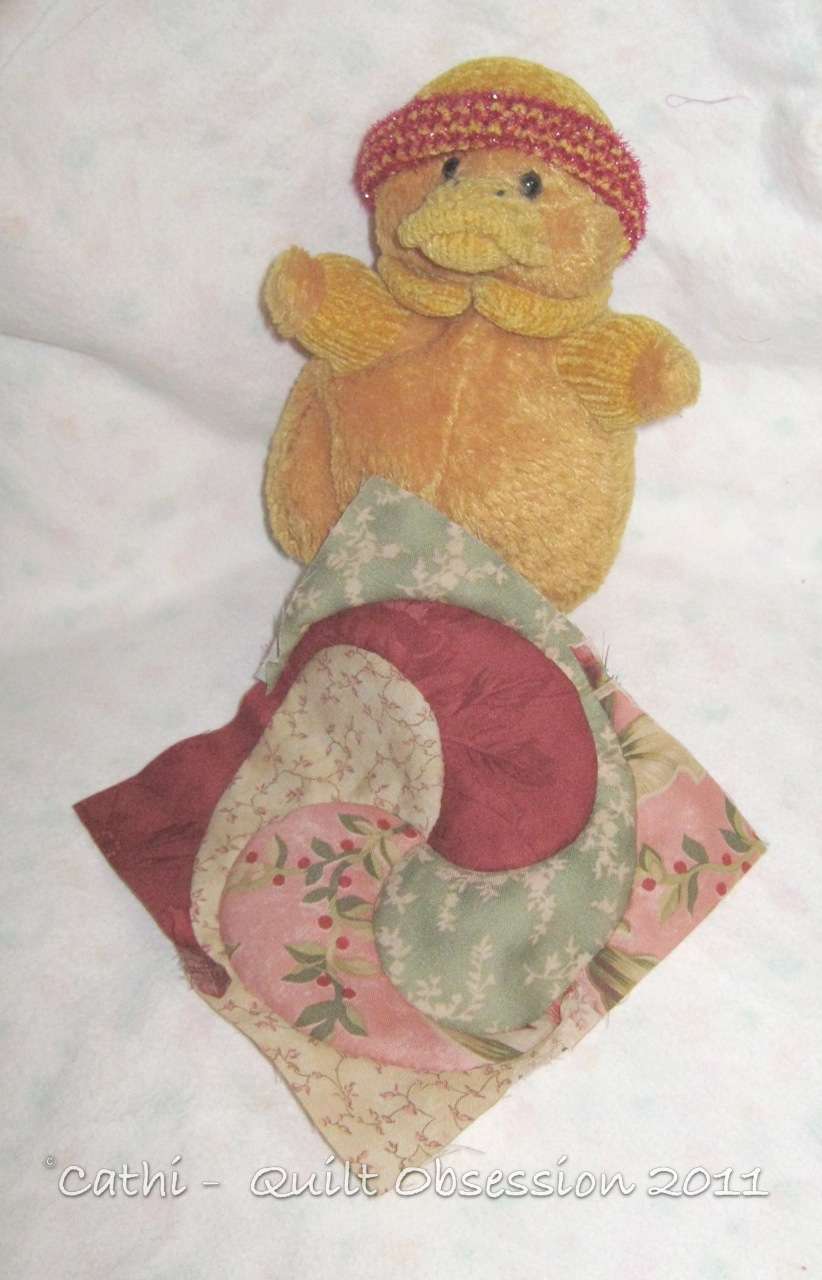
After stitching the third seam, the block now looks like this.

I line up the fourth and final seam and pin through the crosshair and first matching point.

Start with the thread slightly over from the crosshair and take the needle to the back.

As this is the last of the seams to stitch, I circle the intersection by inserting the needle through the first pair of fabrics at the crosshair and drawing it through. Circling the intersection ensures that there’s not a little hole at the intersection of all four shapes.
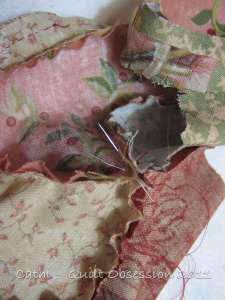
Then the needle is drawn through the next pair at the crosshairs.
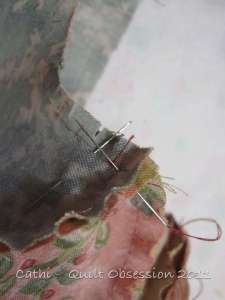
The needle is drawn through the final pair at the crosshairs, a quick back-stitch is made and all that’s left to stitch is the final seam.

Daphne, who hasn’t been seen often since her flapper adventure on the roof garden a few years ago, showed up to see the block when the stitching was finished. At this point, the block hasn’t yet been pressed.

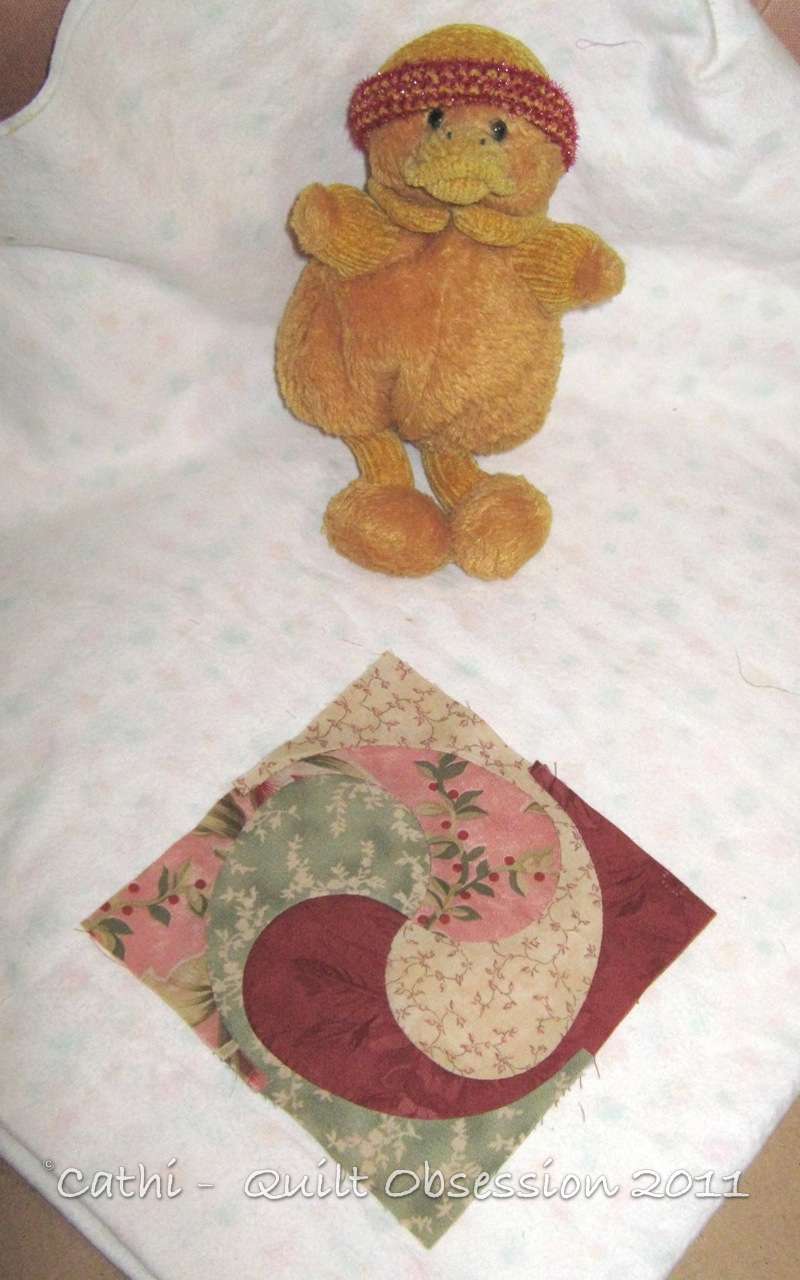
The block presses like a dream and the magic happens again. The block lies perfectly flat. No bump in the centre, no distortion.

The back of the block after pressing. Don’t you think it would be fun to stitch one of these? Be warned, though. They’re addictive as can be to stitch. You can’t stitch just one. I’ll be back with another post this afternoon with a giveaway that’s related to this tutorial.

Smudge wasn’t all that interested and decided to have a nap on my desk chair.

Contented Kitty Block

Much as I’m trying to concentrate on just one project right now, I can’t resist these Contented Kitty, aka Yin Yang, blocks. They are incredibly satisfying to put together and so quick to stitch. While I want to get the Contented Kitty quilt done fairly quickly, I’m contemplating doing some of the blocks in my favourite shabby chic fabrics. It’s so much fun to see how different they look when other fabrics are used. Then I keep thinking that they’d be amazing done in a variety of batiks and hand-dyed fabrics.

The possibility of doing a quilt using just 2 fabrics also intrigues me. I have a feeling the effect would be rather spectacular when the blocks were all joined together. The Inklingo Yin Yang collection makes the idea of doing a few different small quilts using this block completely possible. I wouldn’t want to try making these without it.

The press like a dream and the back looks almost as good as the front.

I laid out the pieces for another Contented Kitty block. Every time I stitch one, I”m as fascinated as I was by the first one.

Tuesday was incredibly hot, with a humidex reading of 39C. Out on the roof garden it was quite breezy and the heat wasn’t quite as oppressive.  I think today we’re going back to more normal temperatures, but it was sure nice to have that first real taste of summer.

Smudge was lounging.

Bright Yin Yang Blocks

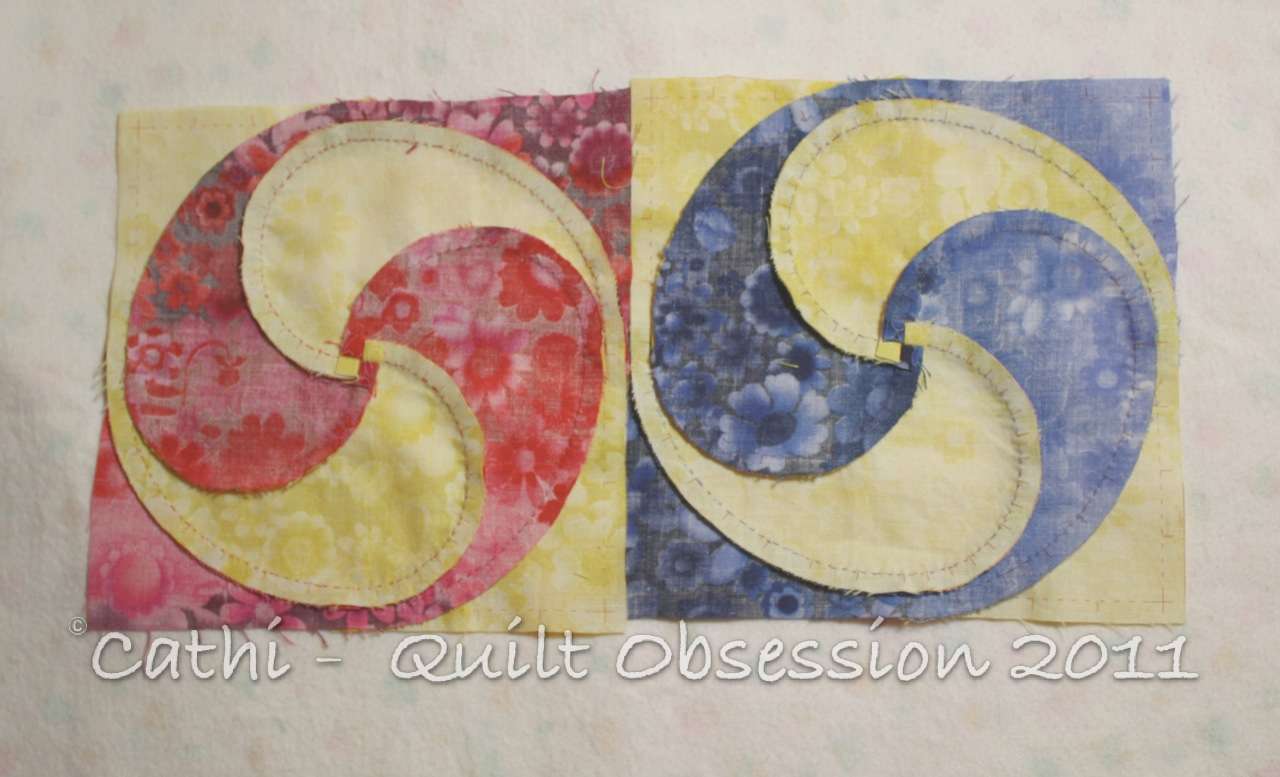
I just couldn’t resist and had to see how the Yin Yang block would look in brights as well as the spice fabrics. These blocks may be the beginning ones for a stitching book cover or, who knows, maybe I’ll make a small Yin Yang quilt of primary colours.

I still can’t get over how wonderfully the blocks press, so have to show the backs:

Yesterday I had a link to the collection in my post, but it didn’t work.  Here’s the correct link for the Yin Yang collection.

Sleepy Cat Hollow left a comment on yesterday’s post with a suggestion for another name for the Spice or Chocolates and Caramel quilt that I loved — Contented Kitty, saying that it looked like Smudge curled up in his kitty bed.  So now I think that quilt will end up being called Contented Kitty.

Smudge likes to lounge by the water bowls before he sticks his head right in the water.  Mr. Q.O. got this shot of him just before he moved over and put his head in one of the bowls and was dripping wet.

Spice or Chocolate and Caramels Quilt Beginnings

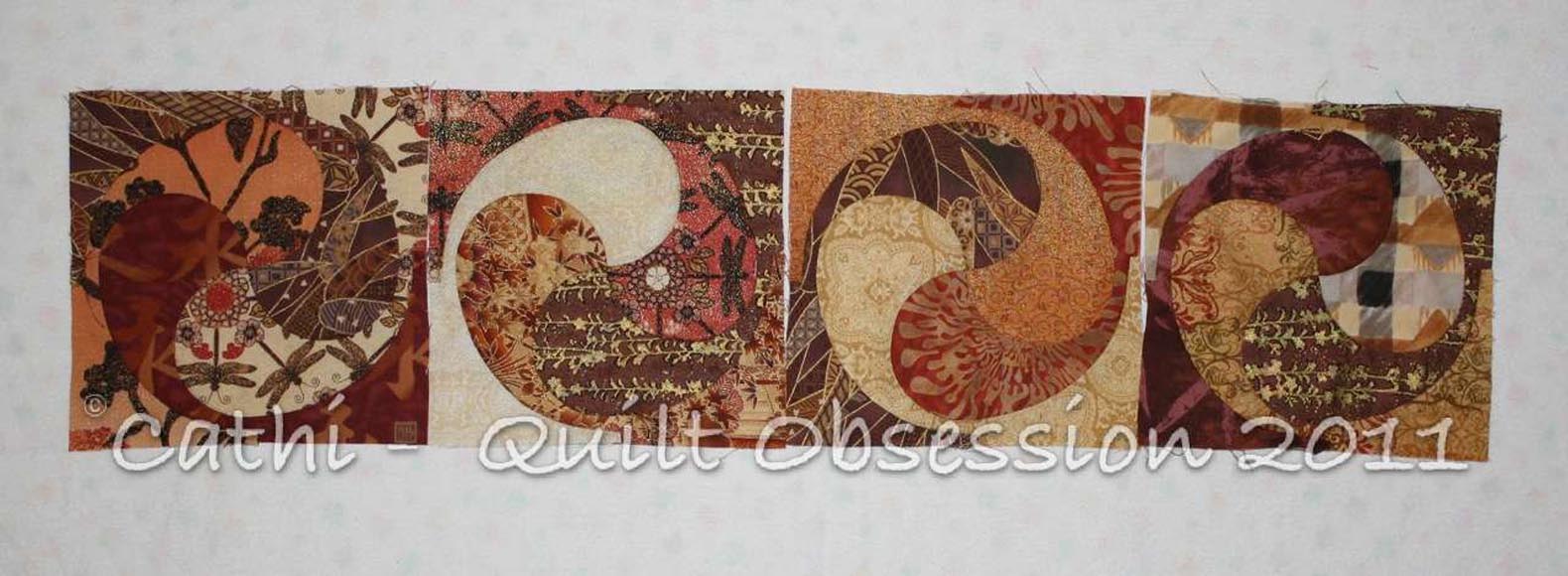
Ever since I saw the Yin Yang block on Barbara Brackman’s blog months and months ago, I’ve wanted to stitch it.  On Sunday, a new Inklingo Yin Yang collection was released and I had to dive right in!  The fabrics I had set aside for the Spice quilt were back out, I had the shapes printed and cut out in a matter of minutes and a few hours later, four blocks were done.

About a month ago, I tried to prep pieces to stitch this block with freezer paper templates.  In the past I’ve used freezer paper templates without problems, but for this shape?  It just wasn’t working at all.  When stitched together, the block had a rather tent-like look that was impossible to get rid of no matter how much I pressed it.  My stitching lines and matching points just weren’t anywhere near perfect or fine enough.  But with Inklingo printing the stitching lines and matching points, it was easy as could be.  So I was absolutely overjoyed when the collection was released.

They press like a dream and, once pressed, are perfectly flat.

I’m torn now between thinking of this as the Spice Quilt or Chocolate and Caramels. There are tons of fabric choices one could play with working with this shape — batiks and hand-dyed fabrics, ’30s repros, shabby chic, black and white, primary colours. The list just goes on and on.  I have an idea for a baby quilt made with this shape which will be very fast to stitch as the blocks almost put themselves together.

Smudge was nowhere near as excited as I was about these new shapes.  He’s happy as long as he’s curled up in his kitty bed with the toy basket nearby.  Sunday night I was watching him as he ever so slowly put both front paws in the toy basket and dragged it over closer to the kitty bed.