Pickled Ladies Again

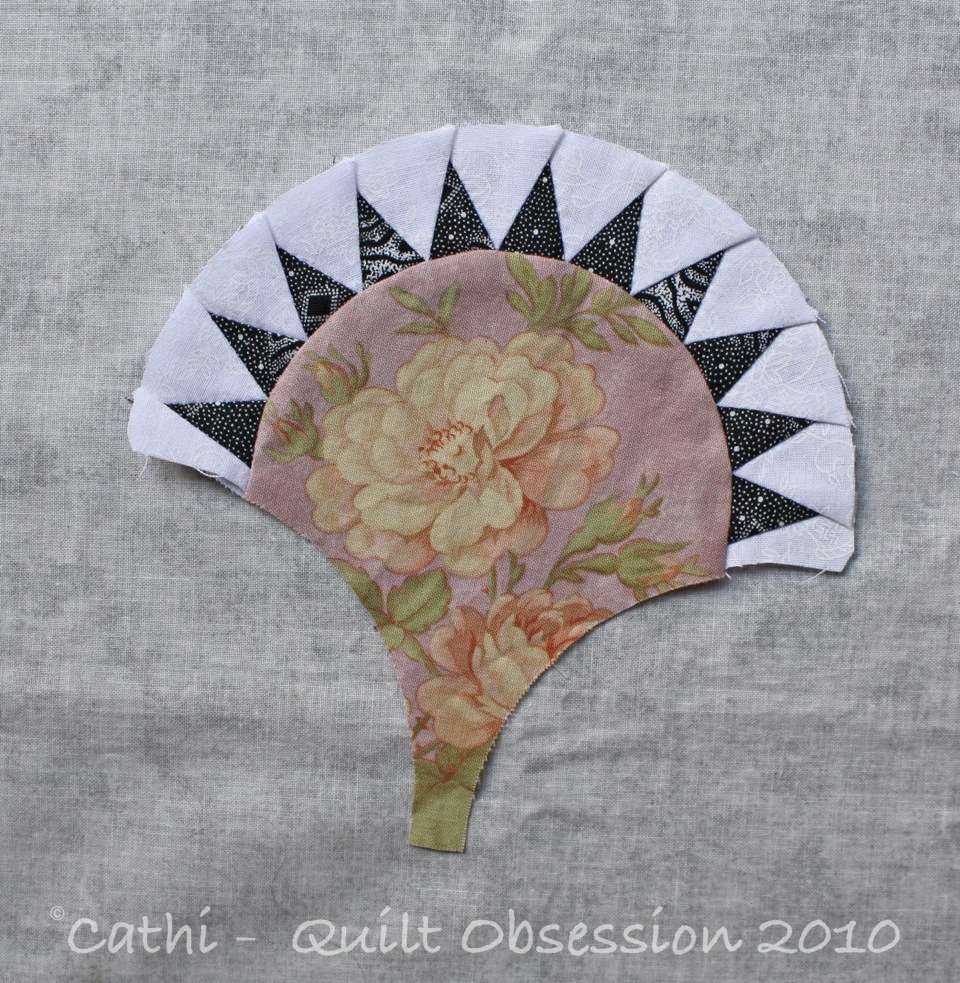
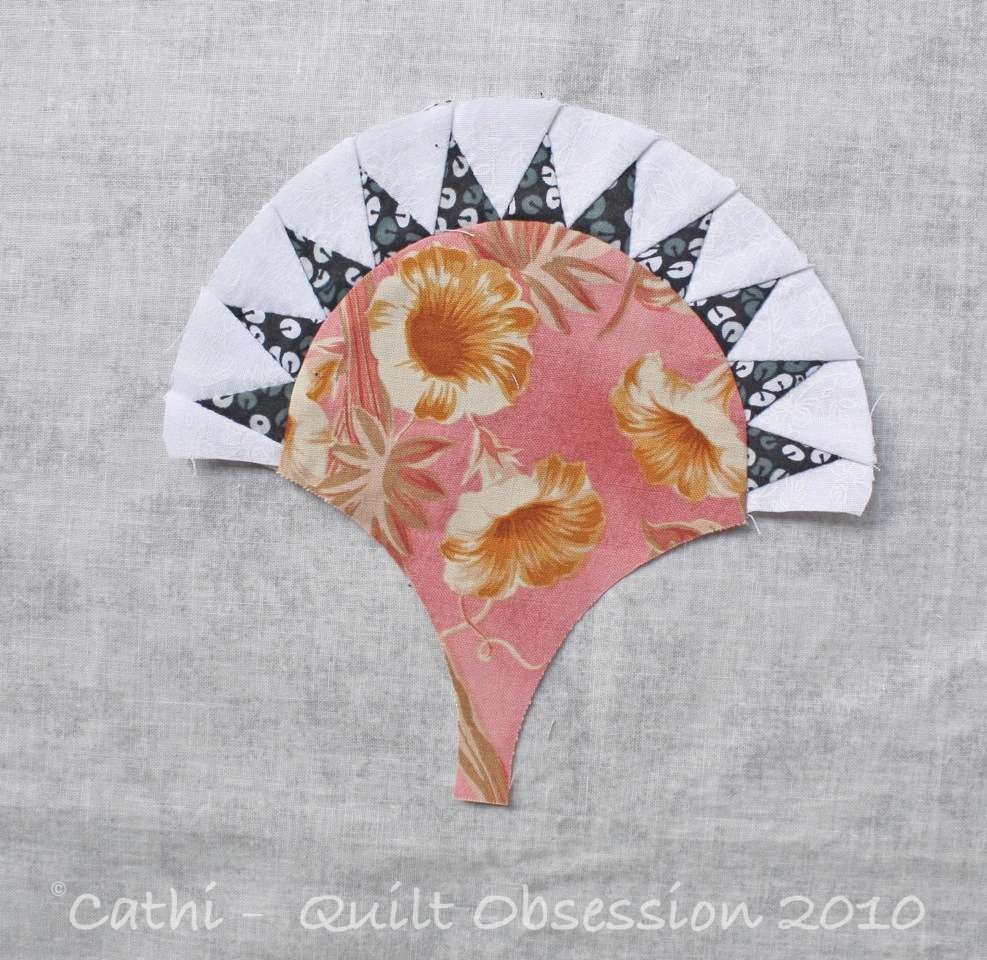
After having stitched a number of the arcs together, it felt like time to add a few to the clamshells.  Putting the arcs together is a bit more challenging than adding the completed arcs to the clamshells.  As the curve is so gentle, it’s really quite easy piecing to add an arc.  Some evenings are meant for the easier stitching — and it’s easier to do when watching baseball.

Another 35 of the clamshells have been fussy cut/printed.  I’m amazed at just how fast the process is using a window template.  I had the 35 fabrics cut in next to no time and the printing took only minutes.   I think if you click on this photo to enlarge it you can see the clamshell printed on the back of the fabric with the flower in the centre.

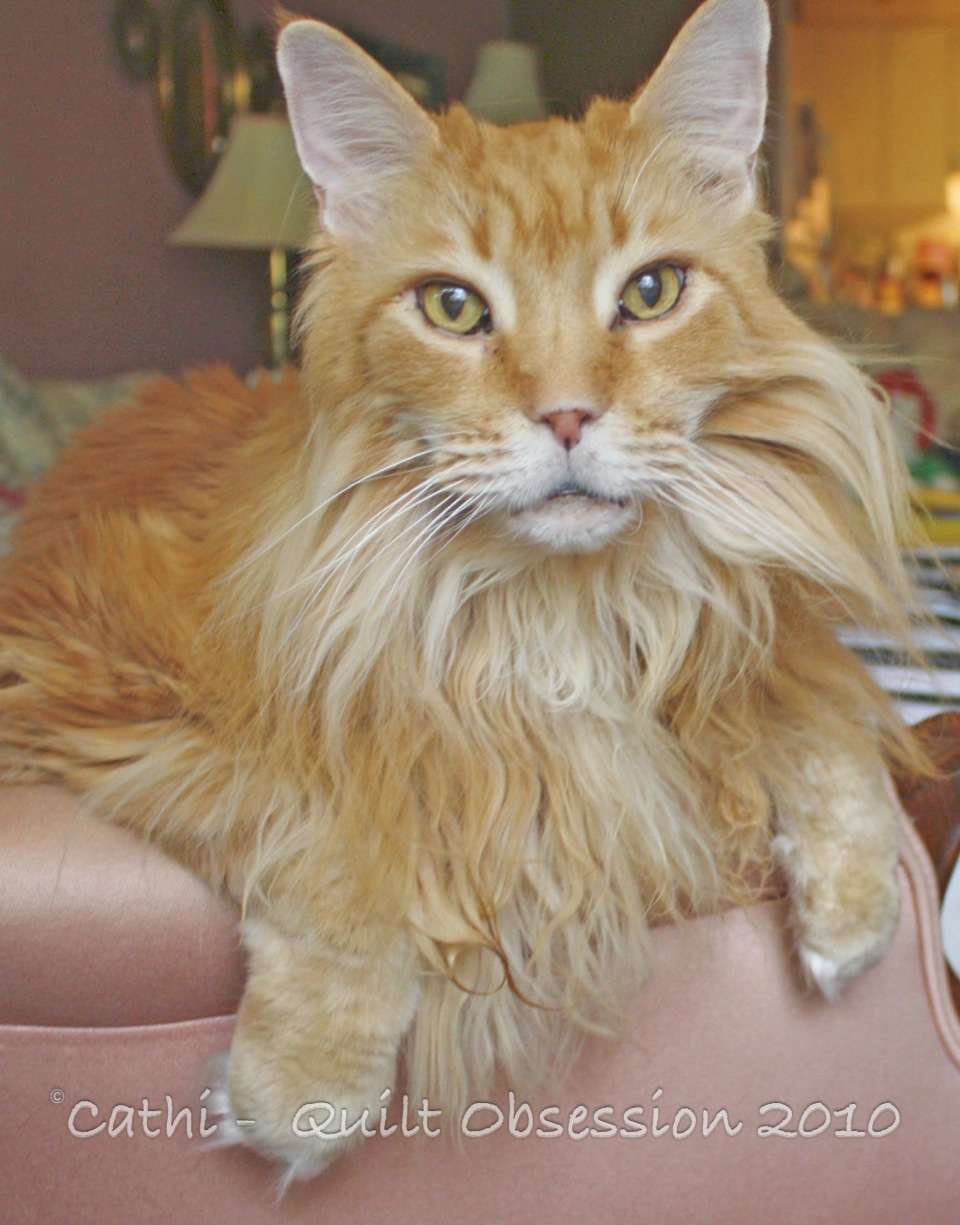
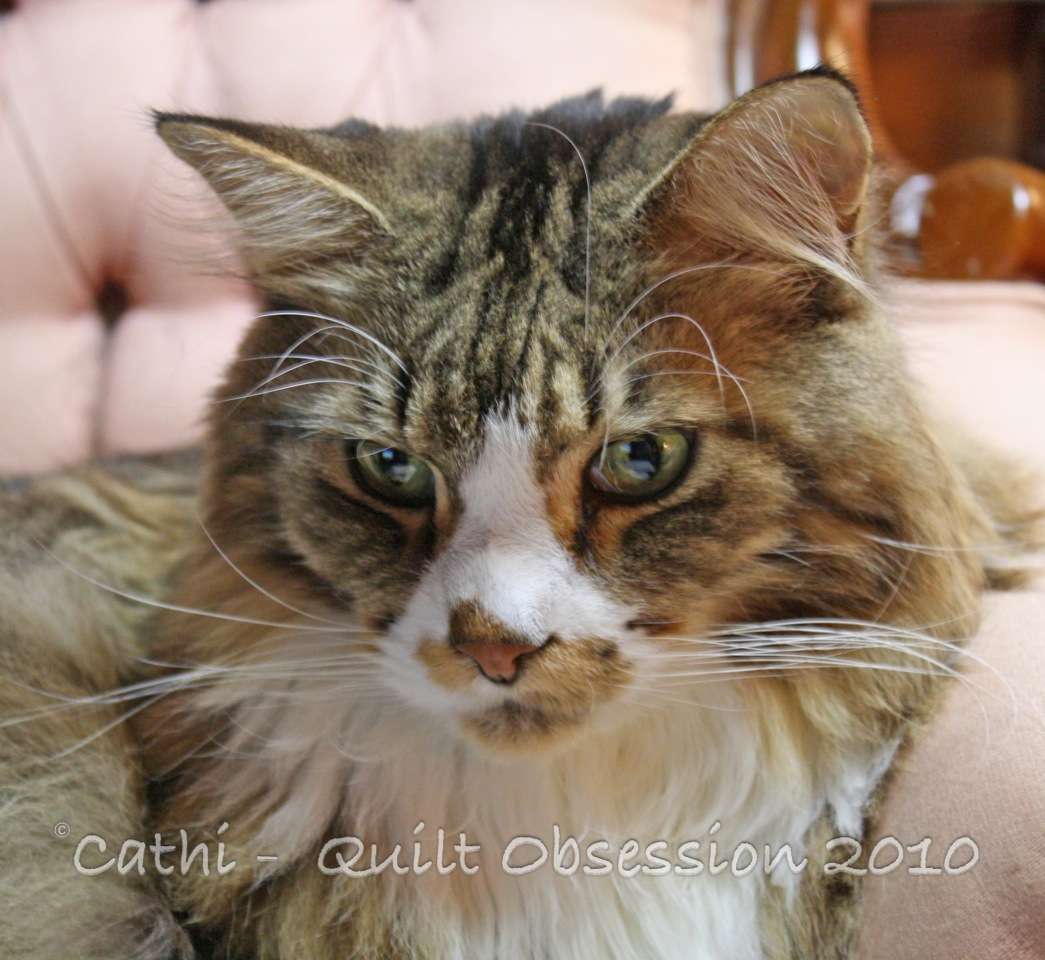
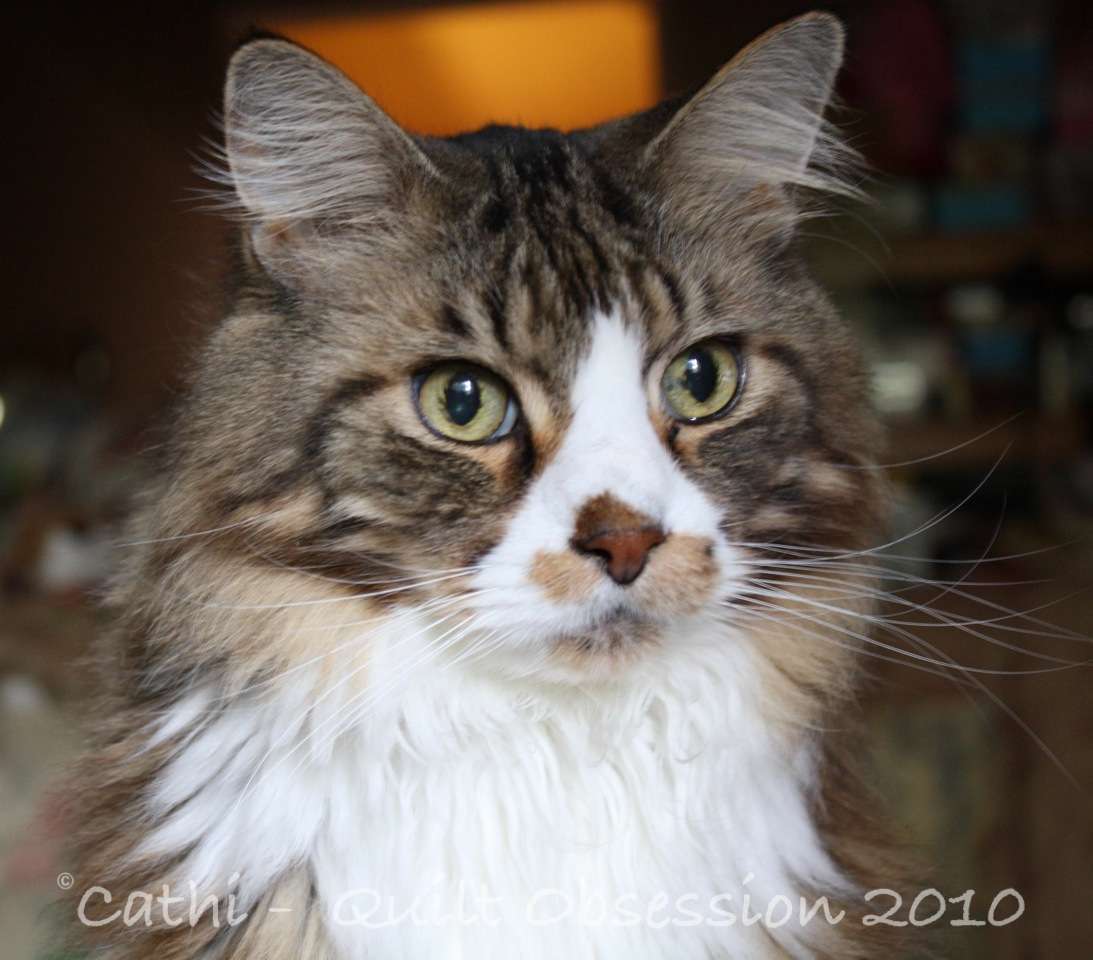
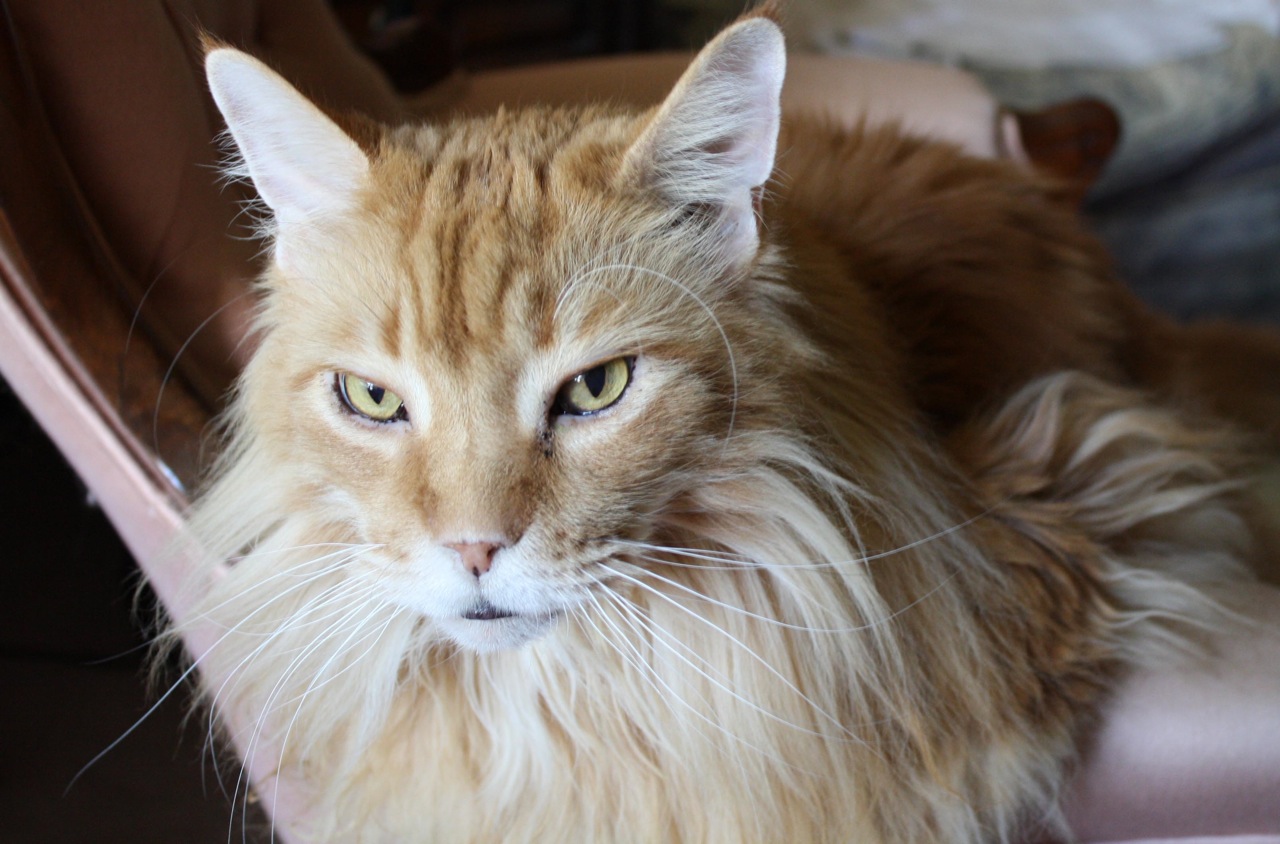
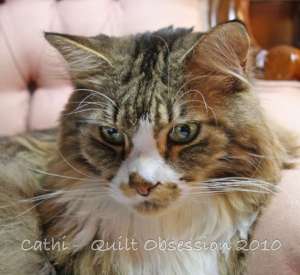
Lester likes to drape his paws over the arm of the chair.  This is a typical Lester pose during the day sometimes.  We’re off to the vet with him this afternoon as it appears he has a cold.  He had this last year and a course of antibiotics cleared it right up, so I’m hoping that’s all it will take this time.

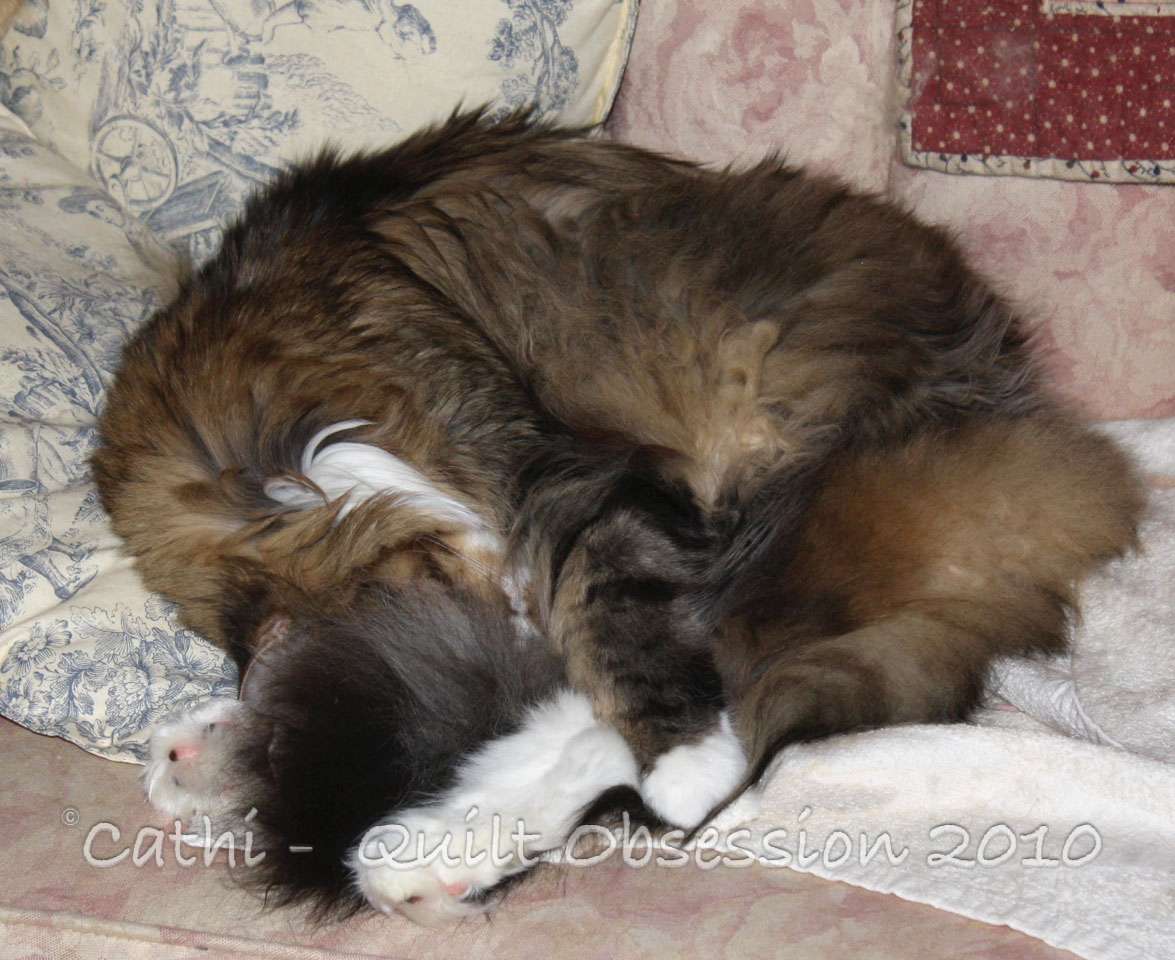
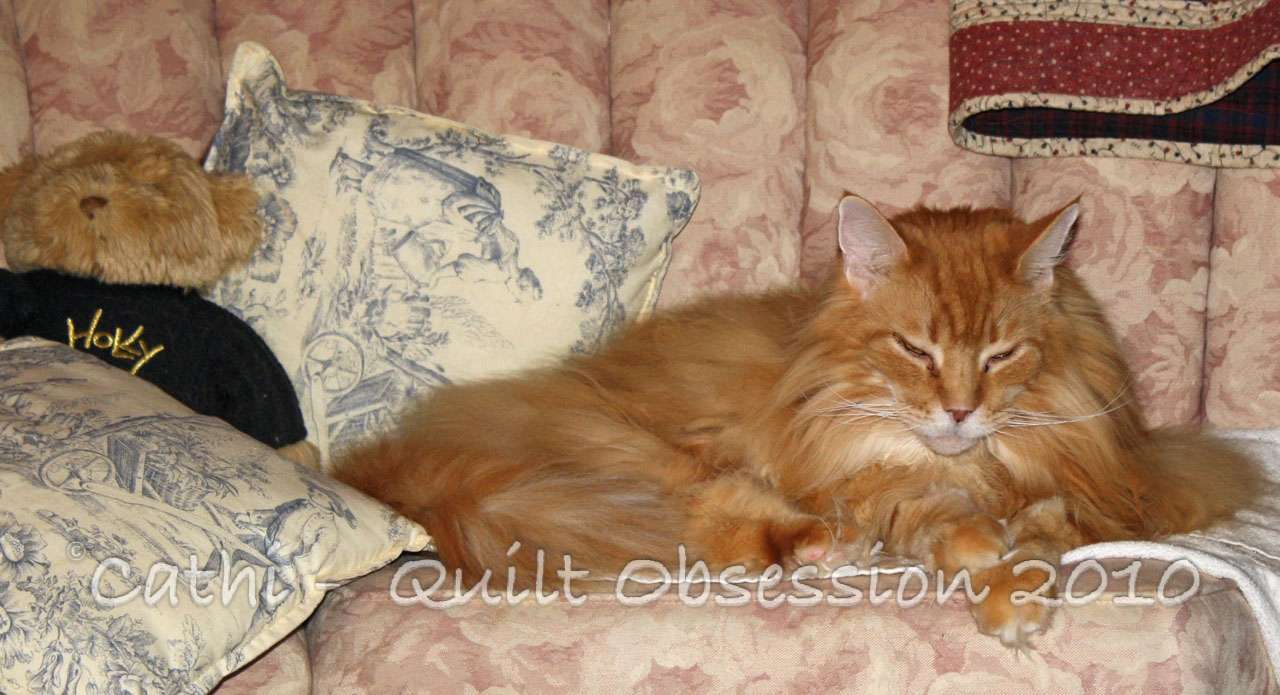
Smudge curled up and had a snooze on the couch.

Beginning of a New Project


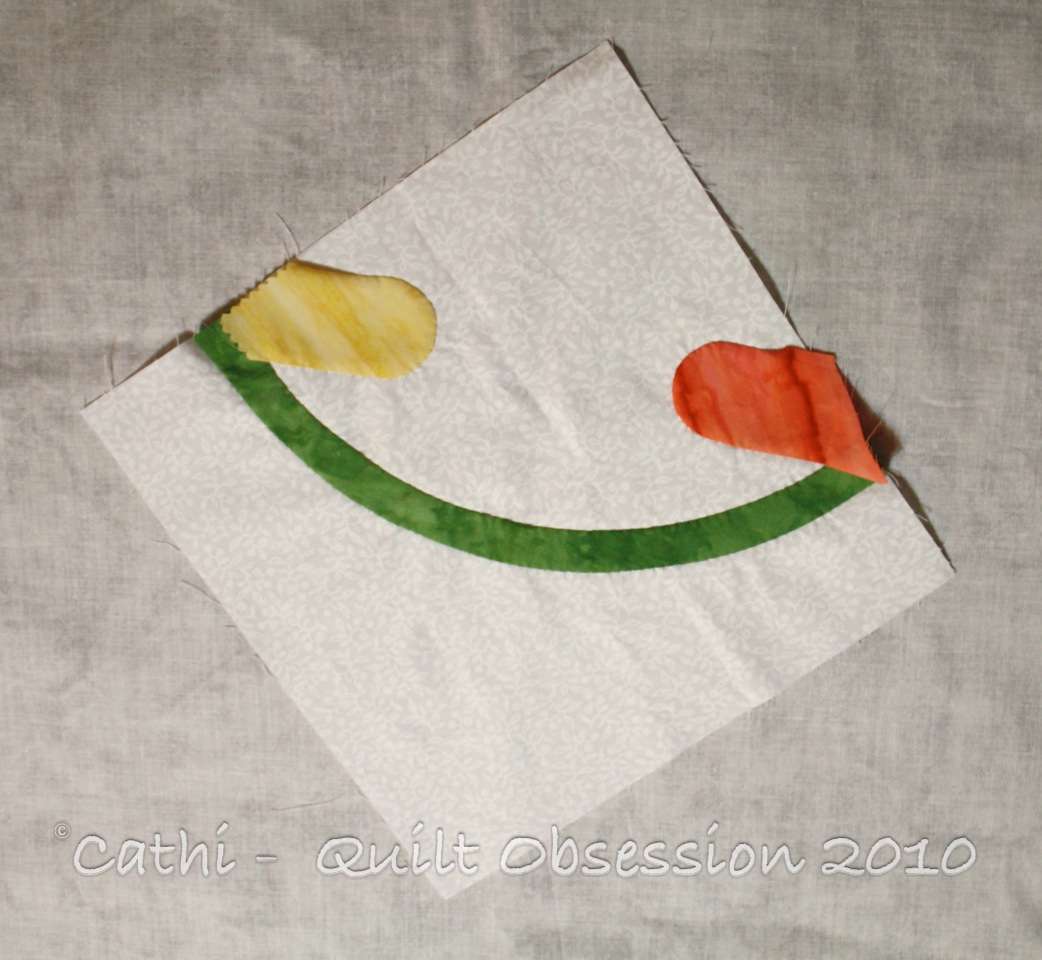
Last week’s list of priority projects clearly went out the window this weekend with this new project! The above is the beginning of a block that I can’t resist. It’s fairly quick to stitch, so I have some hope that I may have this first block done sometime tonight. I was going to use a muslin as the neutral but then remembered I had some Kona Bay cream, which is my favourite solid to use.  I still haven’t decided on a name for this one.

The back:

These blocks will grow quickly as they’re made using the 6-inch LeMoyne Star Inklingo collection.  Once I got the idea, I had  six pink and the cream fabrics printed within minutes with the diamonds needed.  A little while later, they were all cut out:

What is it about making these stars I find so irresistible?  No matter what else I’ve got going on, it seems I always need a star project of some sort on which to work. I have the centres of three more of the stars ready and waiting as well.

When I wrote the post on Friday about the making of Chintz Circles, it made me realize that it’s rather fun to have a post like that about a quilt.  Which, of course, meant I had to figure out a way to store my photos a bit differently.  So I am, as of now, starting to store photos about each specific project in their own folder as I think I’d like to do recap posts like the one on Chintz Circles every time I finish a project.  Although at the rate I’ve been starting and not finishing, the next one may be far off!

We’re definitely into fall weather.  Lots of leaves have fallen and, as it was a bit breezy on the weekend, they’ve been drifting past the window.  This is Smudge’s favourite time for watching out the window.  We got this shot of him on the weekend.

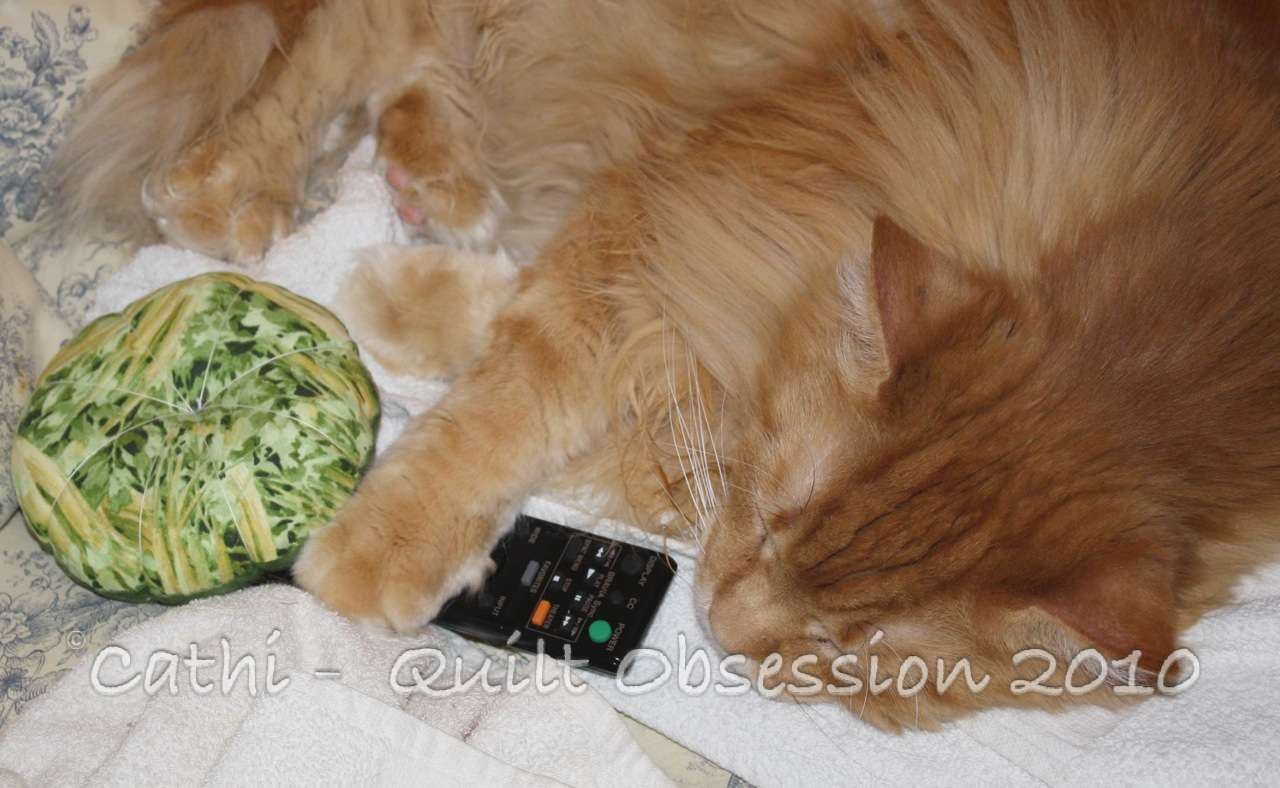
Lester seemed to be trying to make sure we didn’t change the channel when we had the baseball games on — notice the paw firmly planted on the remote control!

A Butterfly Block or a Dragonfly or?

When I saw Karen Dianne’s Alabama Beauty blocks, I saw butterflies.  I had to try playing with a bright print for the wings and a black for the body.  Mr. Q.O. thinks this looks more like a dragonfly while I’m thinking it’s a butterfly.  It was one of those blocks I had to make just to see how it would turn out.

The back:

I’m not sure how many more butterflies/dragonflies I’ll make, but I think probably at least enough to make a table topper.  It makes me laugh as I had decided earlier on the long weekend that I was going to limit myself to working on 4 or 5 projects for a few weeks and not start anything else.  Clearly I have limited no self-control when it comes to trying out ideas.

Our Thanksgiving weekend was wonderful with great weather, good food and lots of time to just relax.  We didn’t go for the standard Thanksgiving weekend drive to look at the foliage and, as very little has turned yet around here, have only a picture of one of the roses from the front garden to show.  Much as I do admire the fall colours, I rather like the idea that we still have roses blooming at this time of the year.

Smudge spent most of the time the turkey was cooking on Monday in the kitchen. The meowing wasn’t constant, thankfully.   But any time either of us walked into the kitchen he was right there, looking up ever so hopefully that there might be something forthcoming.  Once the turkey was finished, both he and Lester were in the kitchen waiting for their portions.  This was Smudge after his turkey treat.

Earlier in the weekend I was rummaging about in the stationery cupboard looking for something.  I left the door open for a moment, turned my back and the next thing I knew Lester was in there.  We captured this shot as he started to come out after causing a small avalanche of equipment and paper.

Back-Basting Tutorial — Lots of Photos

Lester is intently watching as we go through the steps I take when doing applique using the back basting process.

For back basting I use both a larger needle and larger thread.
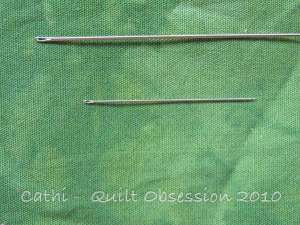
When I do any applique, my method of choice is back basting.  I’ve found a few tricks that really help me.  First of all, I use a larger needle.  In the above picture, the top needle is a #8 straw and the bottom one is a #12 sharp.  I use the #8 straw for back basting with a thicker thread, as shown below.  And I always wear a thimble when doing this as getting that needle through some fabrics, particularly a batik, requires some protection for the finger!

The thread on the left is the normal heirloom 80 weight thread I use for piecing and applique.  The thread on the right is 30 weight DMC thread I use for backbasting.

With the applique design printed on the back of my background fabric, I pin a piece of fabric that’s large enough to cover the shape to be appliqued on to the right side of the background, with the right side of the fabric to be appliqued facing up.  Then, from the wrong side of the background and following the lines, I baste the pieces on to the background fabric using the large needle and large thread and taking relatively small stitches.  Here you can see all the pieces on the quarter block basted down.  If you click on the picture to enlarge it, you’ll see the basting stitches quite clearly on the pieces to be appliqued.
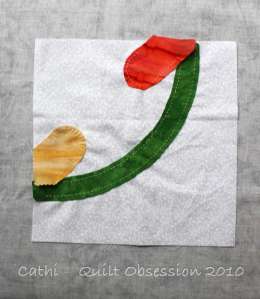
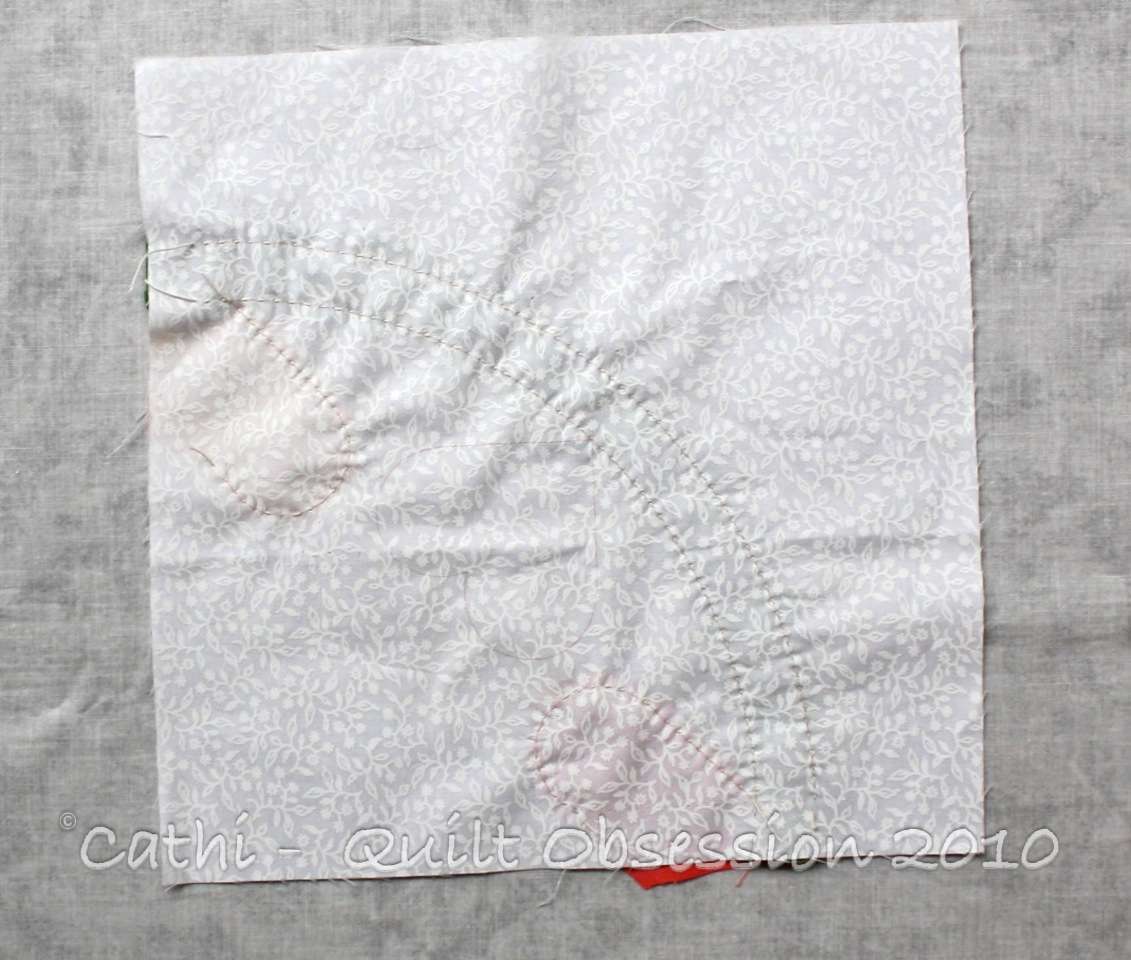
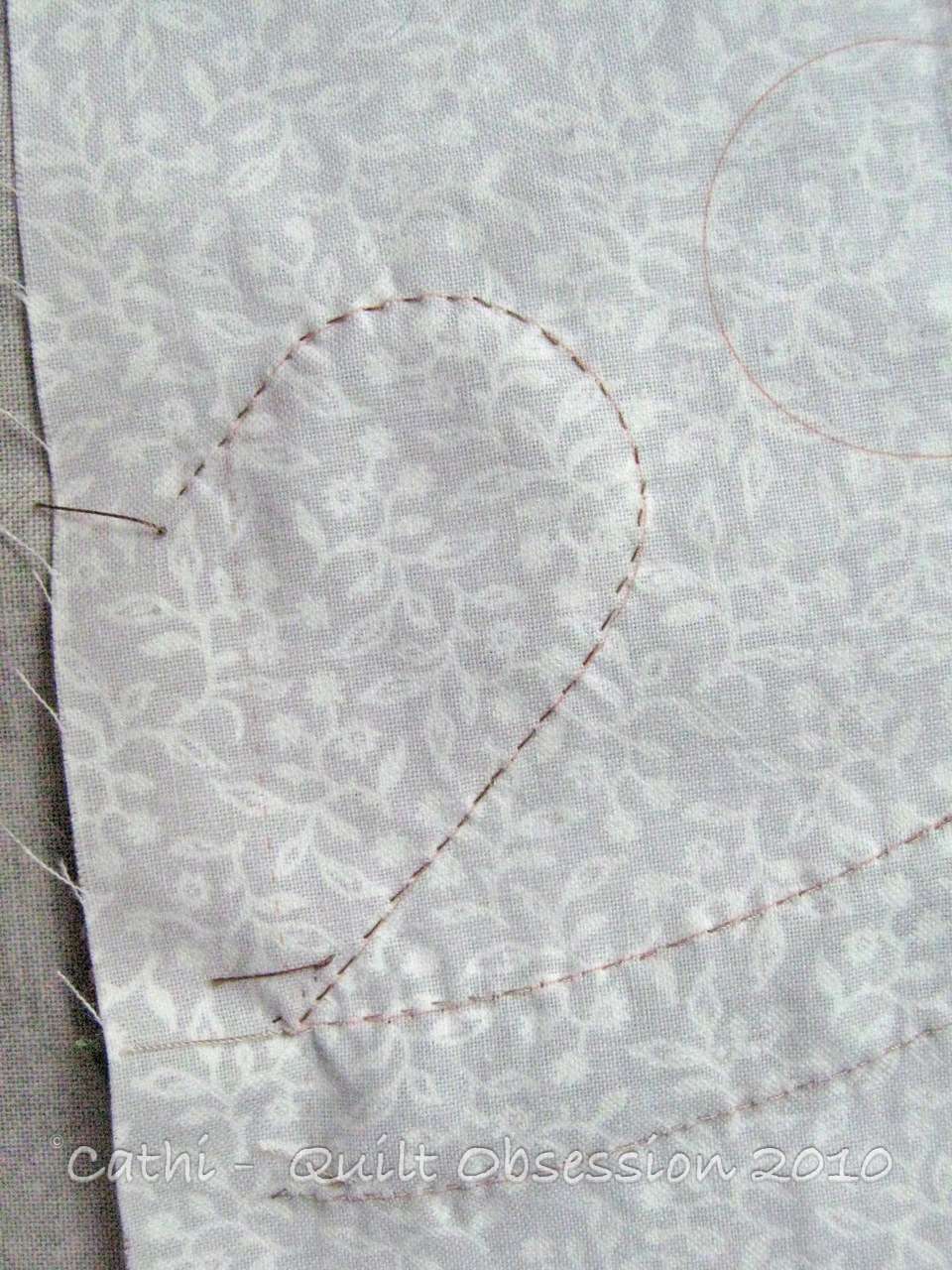
This is the back and it shows the basting following along the lines of the shapes that are printed on the wrong side of the background.
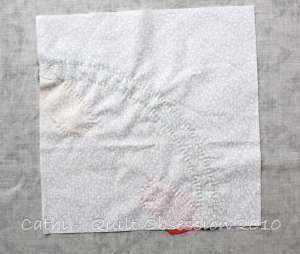
What this picture doesn’t show, and I wish I had taken one after this next step, is how flat it sits after I run my nail along the lines of basting to relax any gathers that have occurred as a result of pulling the basting thread a bit too tight.  Running a nail along the stitching line is all that’s needed to ease out those little gathers.

I’ve found that leaving a piece that’s basted overnight before starting to applique it makes the next step a lot easier.  The next day I pick up the piece and clip the basting  thread at about every 5th or 6th stitch as seen in this picture.

This next step is where the magic of this technique appears. After clipping the threads, I pull out the first one or two sections. Take a look at this picture and you’ll see the perforations in the fabric to be appliqued where the basting line was.

The fabric folds along that perforation line so easily it’s always amazing to me. With my needle, I fold it under and start to applique. I don’t look at the back again where the lines are until I finish all the applique. And every time my applique stitches are close to being perfectly on the line. The reason I leave the basting stitches in overnight is that I’ve found that it makes that little perforated line really do its job. Think of it like a piece of paper that has some perforations to make it easier to remove. I think the basting line does the same thing but, in the case of fabric, makes the fabric easier to turn under.

I begin to applique, pulling out a section or two of the basting thread as I go along.  The basting thread also serves to hold the fabric being appliqued in place.  So no fighting with pins, no freezer paper to remove, no overlay to try to keep out-of-the-way and no lines that might show on the front if the applique isn’t right on the lines of the design.  Just needle, thread and fabric.

In this picture you can see how closely my applique stitches are right on the line of the design.  It also shows the lines of another shape, which I chose not to add to this part of my applique block.

Again, another picture showing how closely the applique stitches follow the line of the design.

Everyone has their favourite method, but I hope this little tutorial gives you the information you need if you’d like to try the back-basting method.

Smudge is hoping you found this relaxing and informative.
A Little Applique

This is clearly a work in progress, but it’s one I’m thrilled about.  I haven’t really done much applique at all in the past few years, partially because tracing lines with any sort of precision is … well, difficult.  My hand cramps up after a minute or two and it becomes such a chore that I give up.  But now?  Now I’ll be doing a little applique again because there are a couple of Inklingo applique collections with the promise of more to come.  At the moment, there’s a free collection found here and a Celtic applique found here.  The Celtic applique is by designer Scarlett Rose and is called San Kamon.  I’ve always been fascinated by Celtic applique and, as soon as I can settle on a fabric for the applique, intend to make one of the San Kamon designs.
My favourite method of applique is backbasting as it makes it so easy to get perfect placement with no overlay or pins or freezer paper.  Just needle, thread and fabric.  With Inklingo printing the lines on the back of the fabric, it makes backbasting a breeze.  You could also print your lines on the front of the background fabric, and use that for placement if desired.  Or print the shapes only on the applique fabric with or without turn-under allowance.  All the options are there.  I chose what size my block would be.  The picture I showed is one-quarter of a block that will finish at 16″.   My plan is to add a small border, and have a small table topper.  With a wide-format printer, one could print larger backgrounds.   I love the idea of having the choice regarding what size my finished blocks will be.

The other benefit for me is that by being able to make a larger block by using smaller quarters of that block, my left hand won’t cramp up when holding it to do the applique.  I know that’s not an issue for everyone, but it has been a real stumbling block for me.  Holding a 16″ block while doing the applique is not something I can handle.  But a quarter of that?  No problem!  This week is looking rather overwhelming again with work, but I’m hoping to stitch the four quarters together — by machine, no less — and have it ready to show sometime this week.

It got very cold here on the weekend.  They’re saying there may be frost all around us overnight tonight.  I suppose the only good thing about that is that we may well have a real colour show on Thanksgiving weekend, which is the traditional weekend for people to go for drives north of the city to see the leaves.  I still can’t quite believe that Thanksgiving weekend is this coming weekend for us.  It seems like yesterday it was still warm and  felt like summer.  It always surprises me just how quickly the temperatures go from hot to cold in the fall.

Lester was relaxing on the pink loveseat.

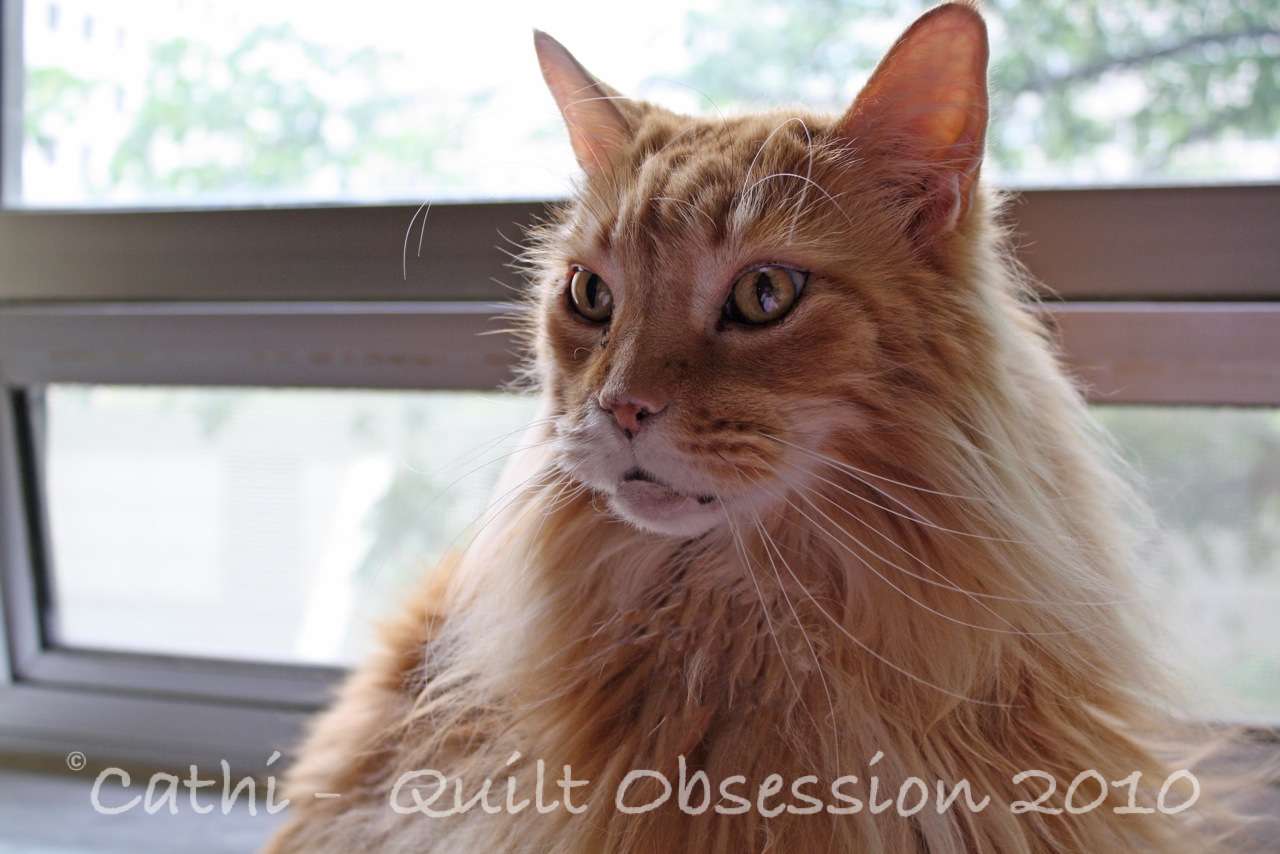
Smudge spent some time on the windowsill.  The fall seems to be his time for the window as he loves to watch the leaves swirling around on a windy day.   There are still lots of green leaves on the trees, but a fair number have turned colour and fallen.

September Clamshell Report

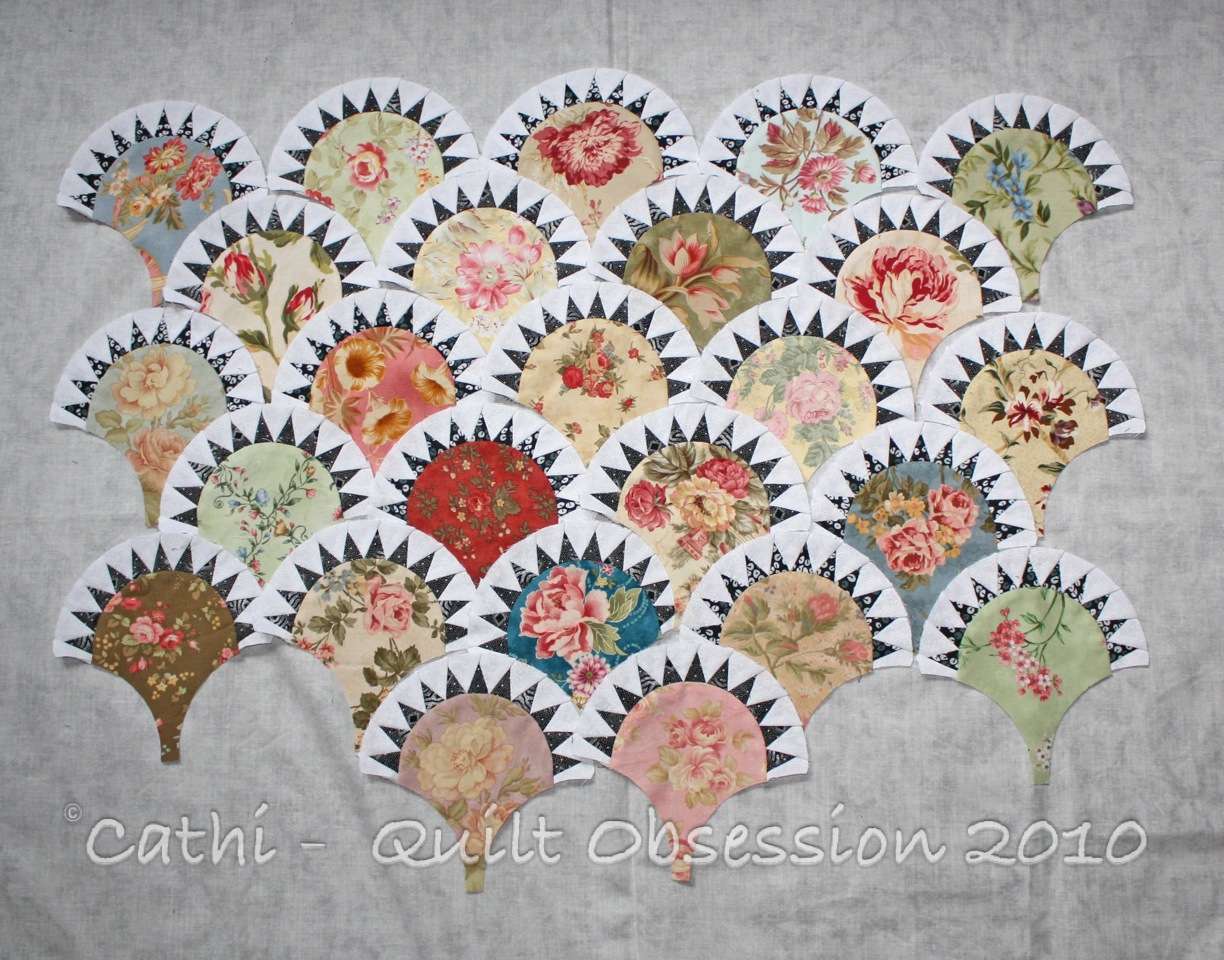
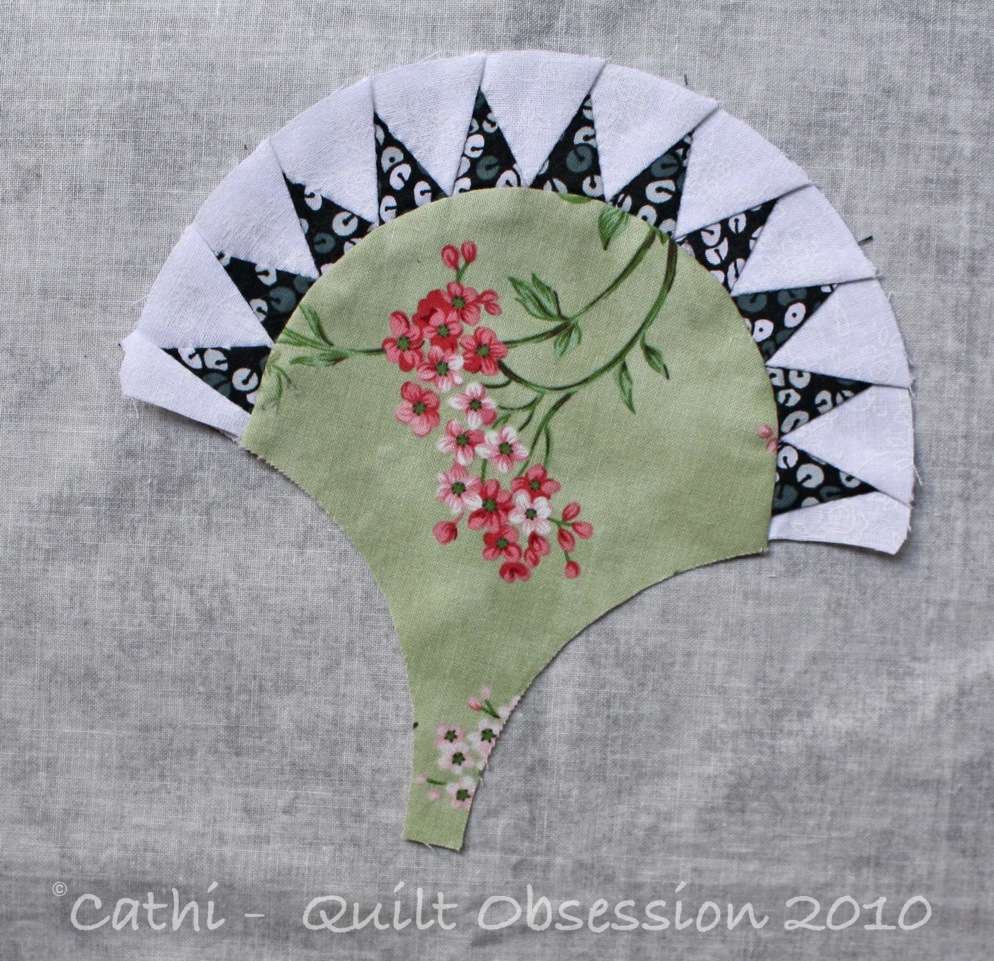
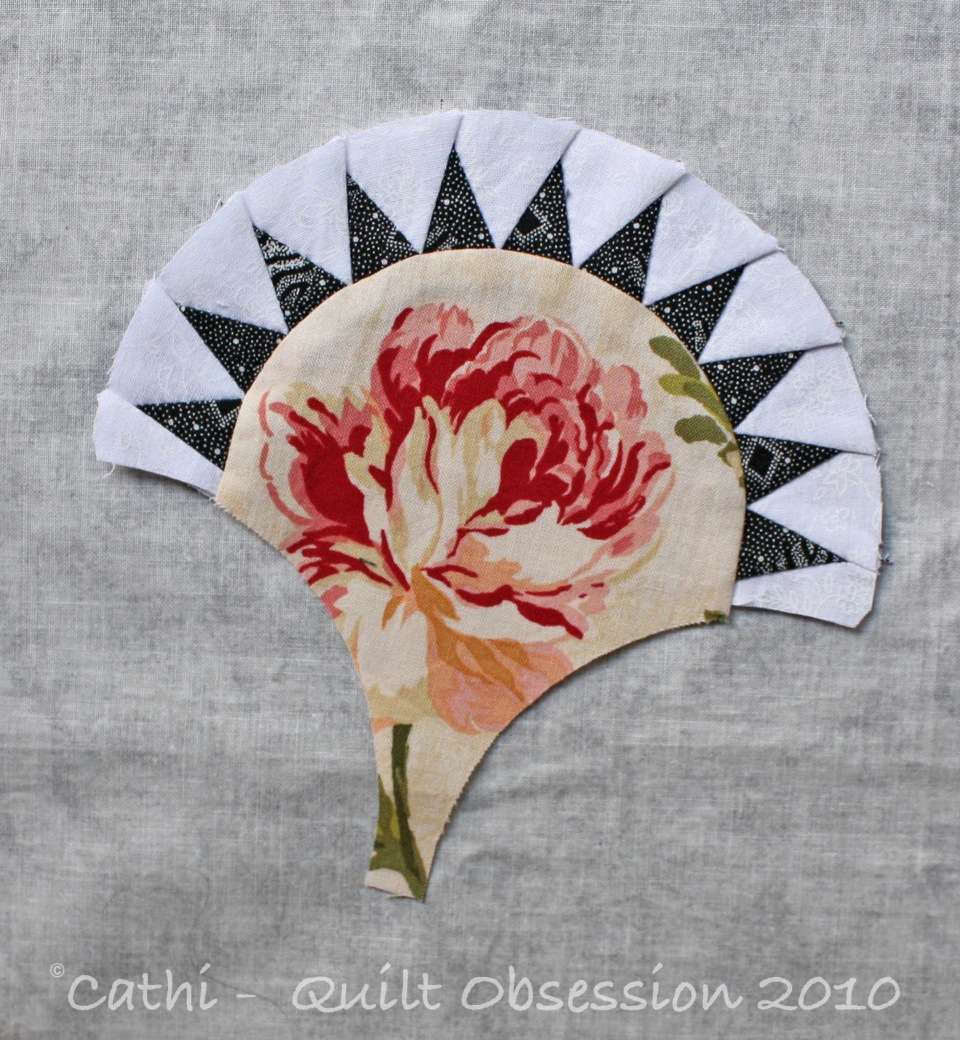
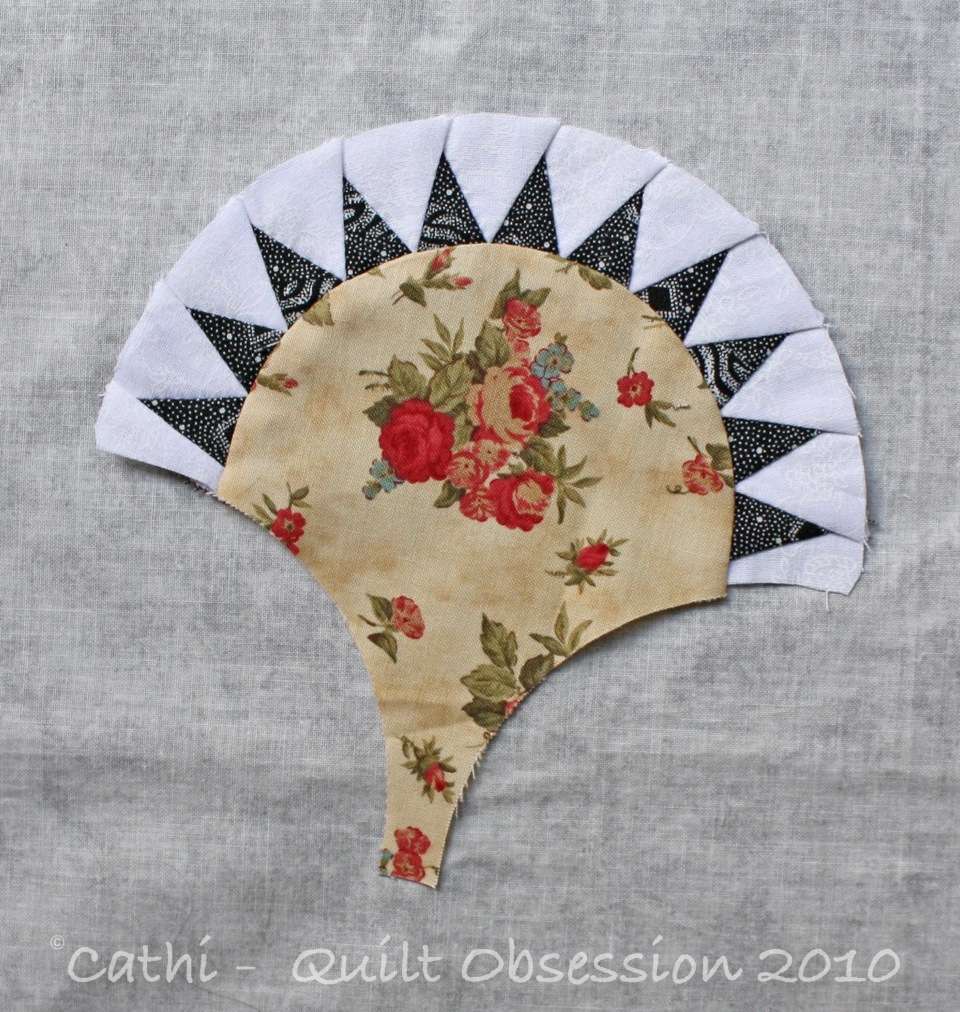
Over the past month I have been working on these 6″ pickled clamshell blocks almost exclusively.  So far, there are 25 of  them done.  I first saw the block on Barbara Brackman’s blog back in June and fell in love with it.  When the Inklingo collections for the clamshell pickles came out, I got an idea almost immediately about the florals for the clamshells and black and white for the arcs surrounding each.  I’m calling this the Pickled Ladies quilt as I have visions of some very elegant, almost Audrey Hepburn-like, ladies in an upscale Art Deco bar.  Once I got the idea, I immediately started going through my stash for florals that I could fussy cut/print for the clamshells.  With the aid of a window template, which was easy to prepare by just printing one shape on a piece of paper that was 5.25″ x 6.5″, I was able to quickly cut my fabrics and print the clamshell templates on the back of each.

Stitching the blocks is much simpler than they may appear.  Putting each arc together is just lots of quick continuous stitching.  Adding an arc to each clamshell is a very quick stitch.  Stitching the pickled ladies together hasn’t begun yet as this will be at least a lap-sized quilt, if not larger, and I know I’ll want to play with the placement of them once the piecing is finished.

With the 11″ clamshell pickle collection, I have started this sunshiny quilt but I’m using an alternate setting and various colours for the end pieces of the arcs so that a little star-type shape appears at the intersection.  While I haven’t added to this in a week or so, it won’t take long to get this to a good size for a lap quilt.  Maybe in October I can tear myself away from the Pickled Ladies to add a few more blocks to this so there’s some progress.

That said, I have lots of clamshells printed and ready to stitch more Pickled Ladies.

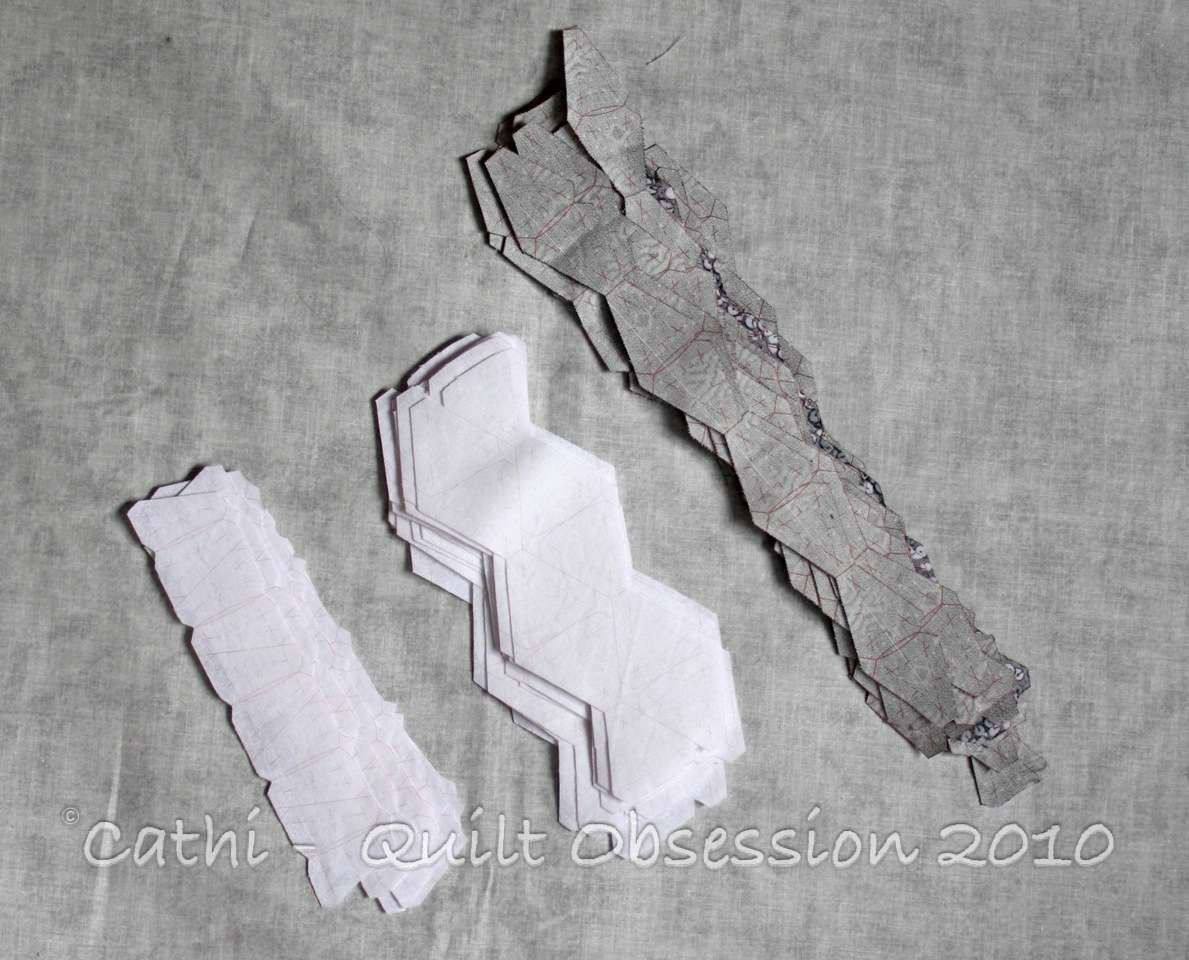
As well as the pieces needed for a number of the arcs.

To see more clamshell quilts, go to Cybele’s Patch here and you’ll see the list of those participants in the clamshell club who have posted their progress this month.

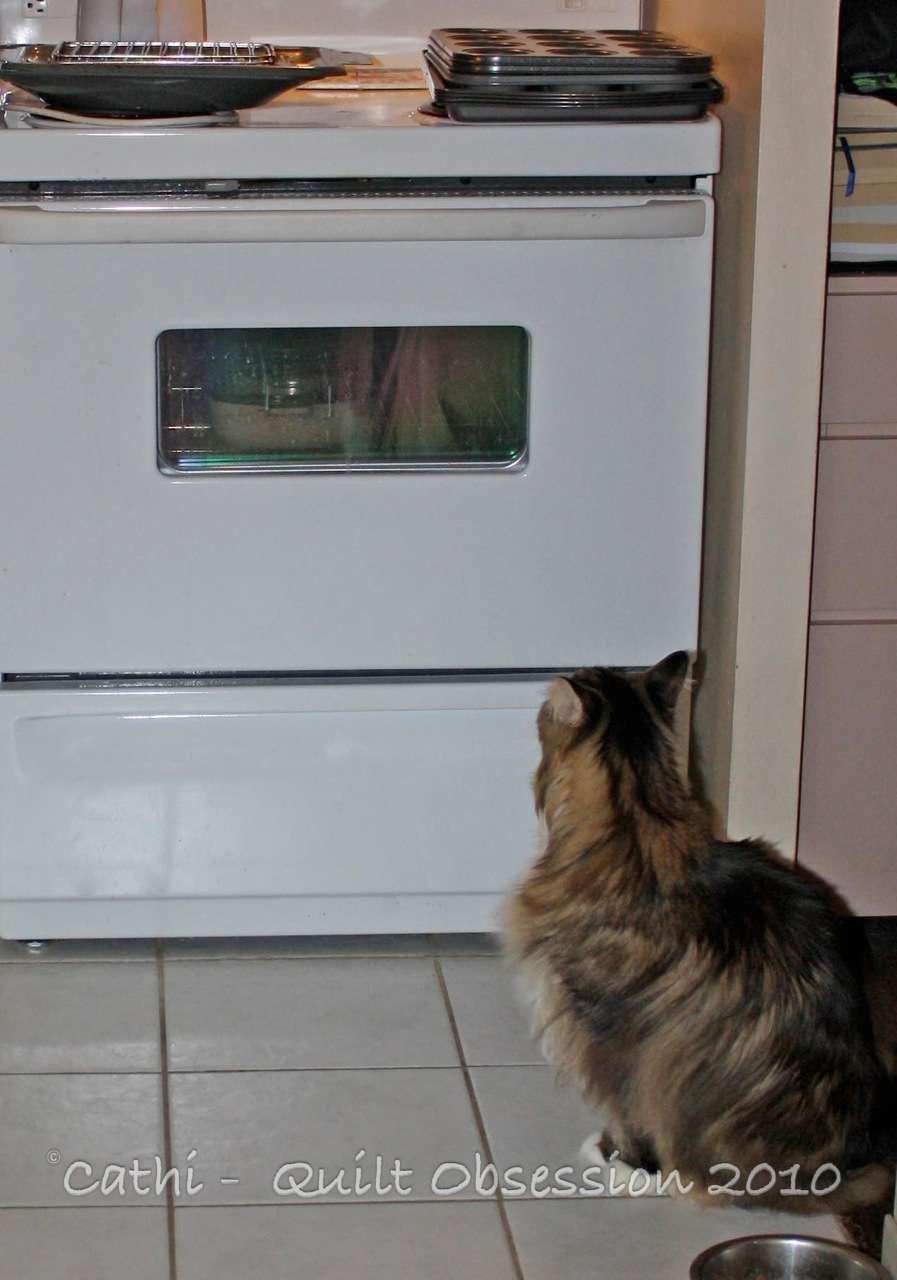
Wednesday evening we were cooking some chicken for dinner.  Almost the entire time it was cooking, Smudge was sitting in the kitchen staring at the oven and meowing.  He seemed a bit impatient to get the bit of chicken we always give them when we cook it.

Lester was somewhat more restrained and just sat on the back of the pink loveseat staring into the kitchen.

Another Six Pickled Ladies

Now that I’ve been stitching these for a couple of weeks, I’m getting into a routine of stitching a few of the arcs each evening until I have 8 or 10 of them and then add them to the clamshells.  I think that process is faster as, once the arcs are done, I can easily stitch 5 or 6 of them in an evening on to the clamshells.  I sort of timed it and I think putting each arc together takes about 40 minutes.  Adding an arc to its clamshell takes much less time, as I can stitch 3 or 4 of those in an hour.  Tomorrow I’ll be showing these as well as another five new ones together with all the others that I’ve finished to date for the month-end clamshell report.

Looking out at the roof garden on Tuesday afternoon, I was surprised at just how many leaves had fallen on to the grass.  There still are lots of green leaves on the trees, but it’s sure a sign that fall is definitely here no matter how much I may want to deny it.

Lester got in some windowsill time on Tuesday.

While Smudge was reclining on a chair.

Cabin Quilt Block 1

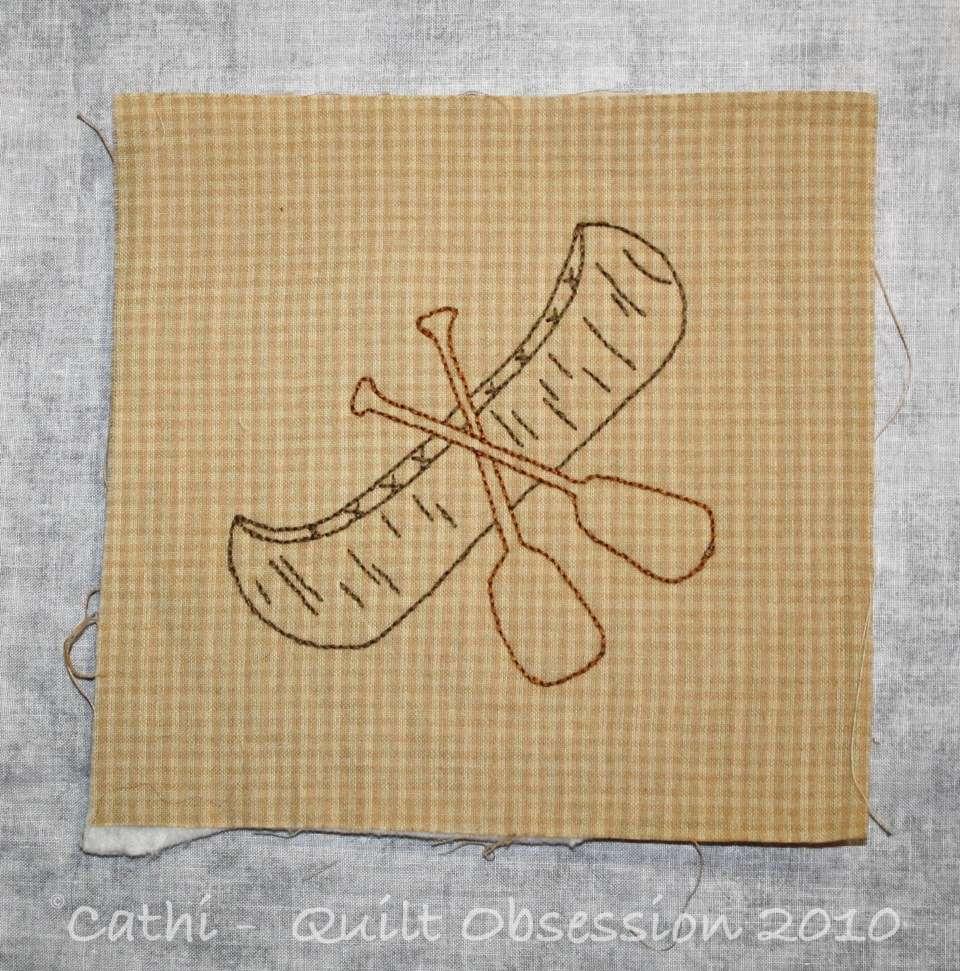
This is the first of 12 stitchery blocks for a lap quilt that is from the other kit that I had mentioned last week.  Once the stitchery blocks are done, then it’s a matter of some quick machine stitching.  I said quick machine stitching??  It involves cutting some flannel squares into triangles to surround the stitchery and pieced blocks and I’m a bit concerned about the flannel stretching.  Mr. Q.O. really likes this quilt, though, so I’m going to give it a try.

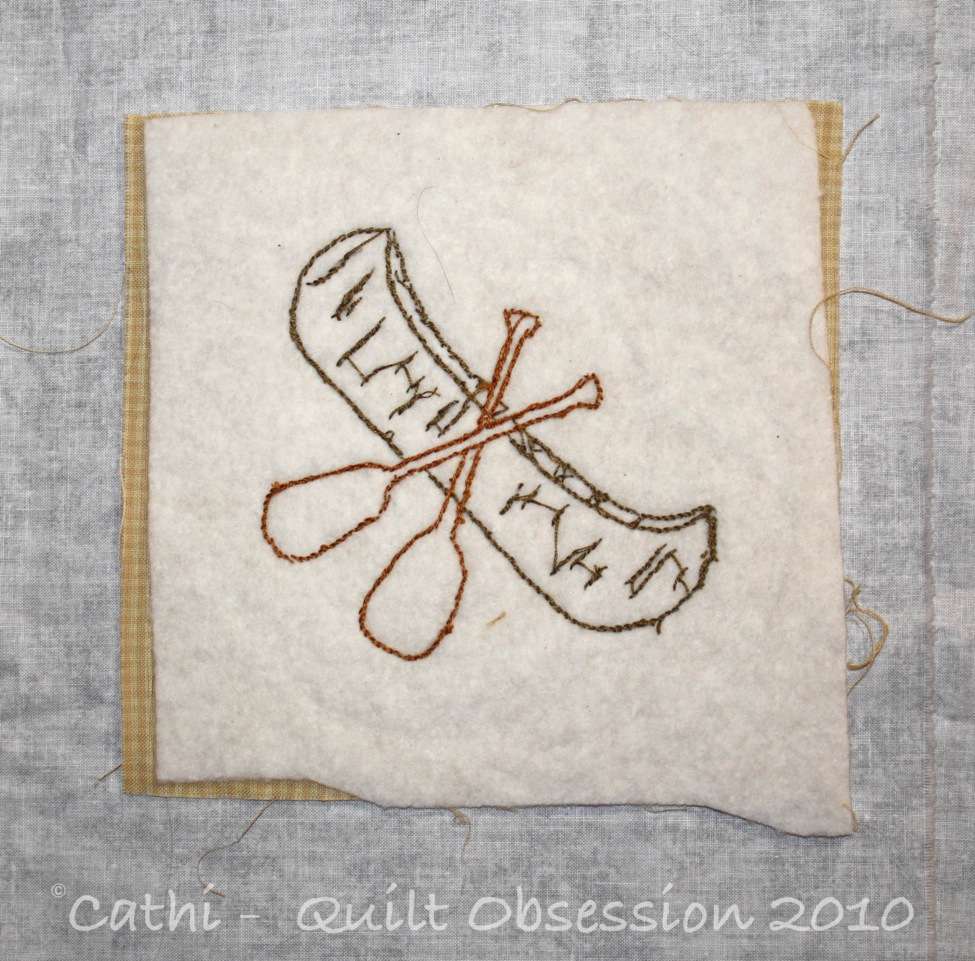
I managed to do the first stitchery block last night.  When we were at Sew Sisters on the weekend, I asked what they used behind fabric when doing stitcheries and they suggested either a fusible batt or fusible fleece.  I got a small fusible batting and I’m sold!  It makes it quite easy to travel thread for a bit when stitching without it shadowing through on the front.  As the back shows, I took advantage of that capability a few times.

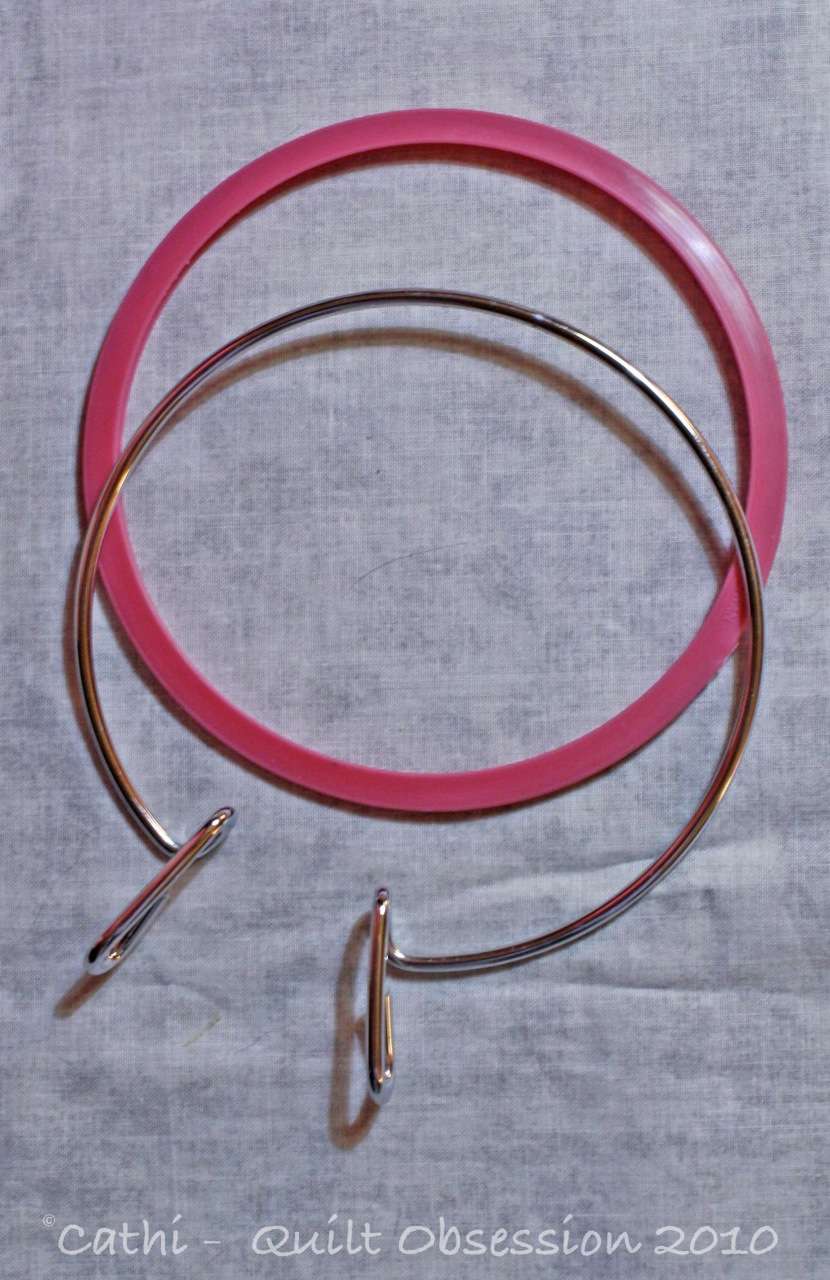
I have always loved doing a little hand embroidery but the hoop has been my biggest issue for the past few years as tightening and loosening it was almost impossible.  So I found this hoop and tried using it.  What an amazing difference!  It’s easy and quick to use, holds the fabric perfectly for stitching and there’s no hardware on which to catch the thread.

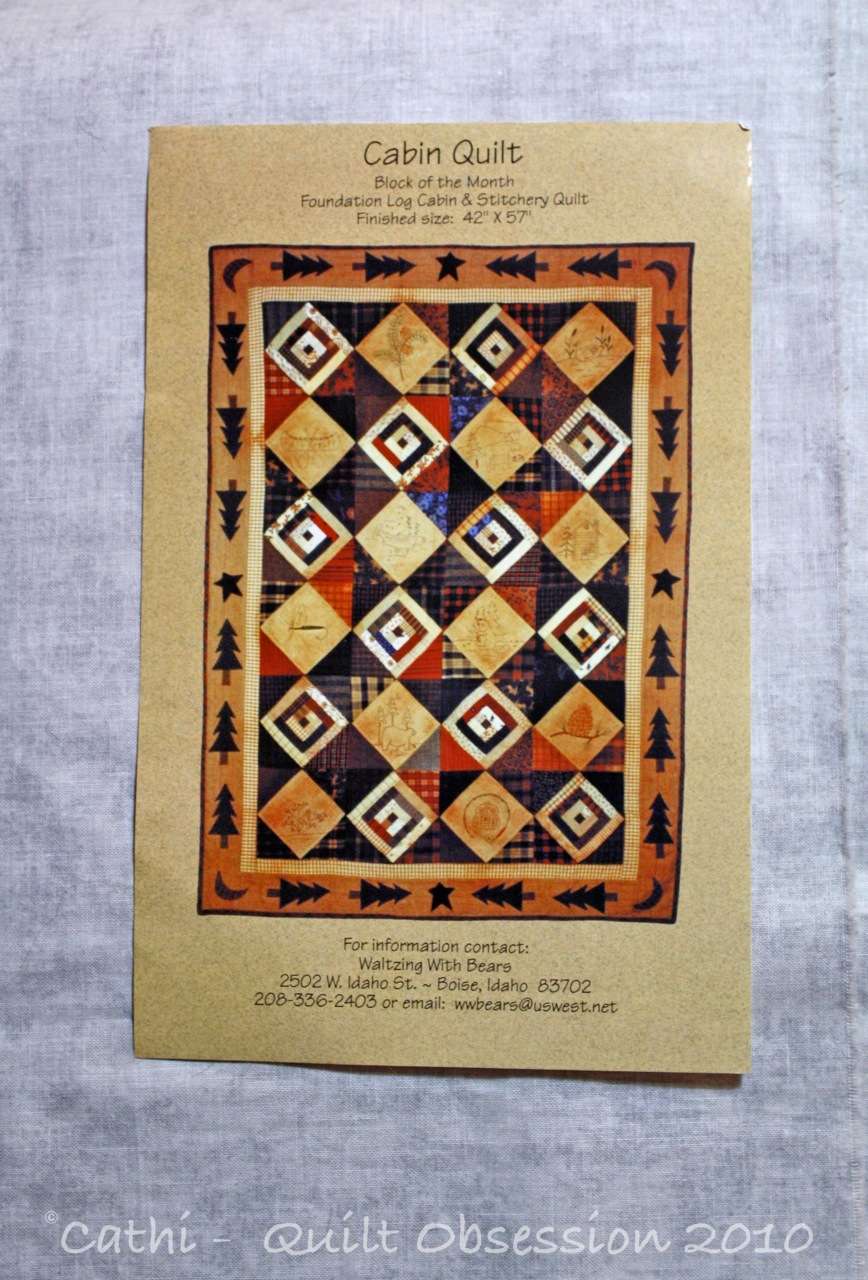
This is what the quilt will look like when finished, although I’m not sure I’m going to do the tree appliques on the border.  I’ll decide that when I get that far.  The pattern calls for tea-dying the stitchery blocks when finished.  As I like the look of the stitchery blocks in the photo of the quilt, I think I may try that as well.

Monday, like Friday, was a migraine day.  While not quite as bad as Friday when I could barely move, yesterday was bad enough.  Today is the bruised head feeling that always seems to follow.  So once again I’m behind in replying to comments but hope to get caught up through the week.

Smudge curled up sound asleep.

I have to use an antique DOS program for work so, rather than cluttering up my Mac with any Windows software, I have an older laptop just for that purpose. Lester is constantly trying to “help” and I’m usually on guard for a paw on the laptop keys.  I think he watches the cursor moving on the screen.

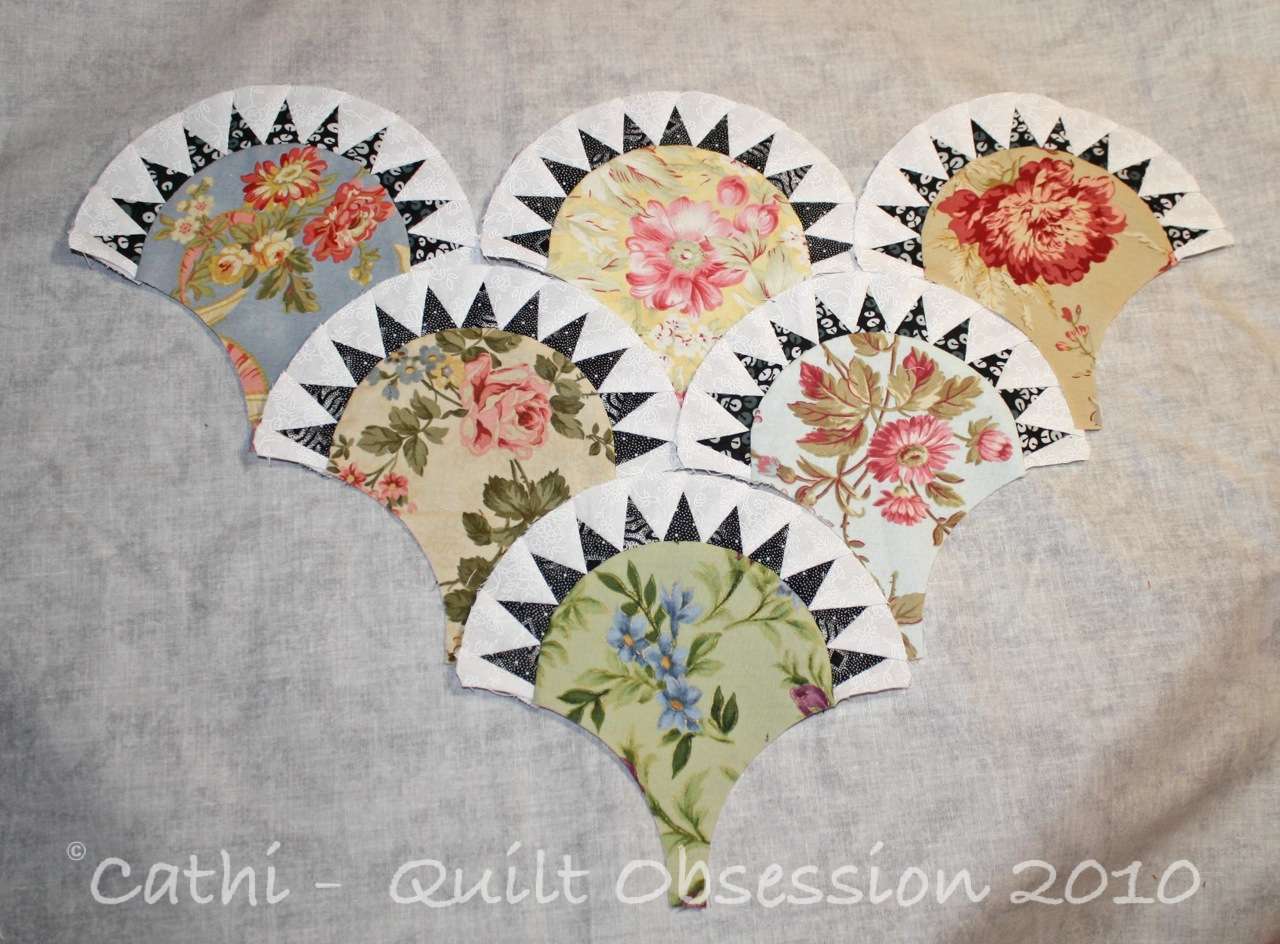
Pickled Ladies 13 & 14 and Progress to Date

Two more pickled ladies were completed this week.

And here’s the group of pickled ladies so far.

They were laid out on the floor and, while I was picking them up after the photograph was taken, Lester was very interested!  I was racing to pick them up before he came to inspect as he has a tendency to want to lick and/or bite things like quilt blocks.

Smudge was curled up in a kitty bed with his favourite toy, Cappy, well and truly anchored beneath him and a couple of other toys within paw’s reach.  You can just see the tip of Cappy peeking up.

Pickled Ladies 10, 11 and 12

Three more of the pickled ladies are ready.  As they are 6″ blocks I’m thinking that for a small lap quilt I’ll need somewhere in the range of 130 of them.  I do plan on adding a border to these, so that number may decrease.  The deciding factor will probably be just how many shabby chic florals I have that are appropriate for fussing cutting/printing.

These two are among my current favourites.

It’s getting to the point now that I need to print more of the black spiky triangles for the arcs, and go through more of the shabby chic prints looking for appropriate florals to fussy cut/print.  It takes no time to prepare a few dozen, so I hope to get that done sometime between now and Monday.

We had a gloriously warm sunny day on Tuesday.  It felt like a summer day rather than the first day of autumn.  The longer it stays this way, the better.

A close-up of Smudge:

Lester was relaxing on the pink chair: